Sign up with Google
 Sign in with Zoho

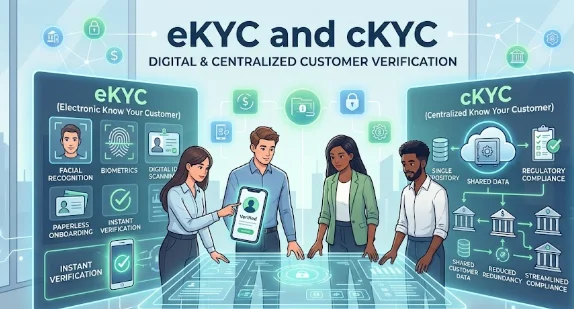
In the digital age, where online verification is paramount, a robust identity verification system is essential for businesses and financial institutions. Among various methods available, two commonly discussed specifications are eKYC and cKYC.
Understanding the difference between eKYC and cKYC is crucial for individuals and organizations alike. This article will delve into the definitions, processes, time frames, required documents, and additional insights about these two important identity verification methods.
What is eKYC?
eKYC, or Electronic Know Your Customer, is a digital process that allows businesses to verify the identity of their customers through electronic means. This method leverages technology to authenticate users via Aadhar-linked information, facial recognition, and other biometric measures. eKYC has become a popular choice for banks, fintech companies, and various sectors that demand customer identification.
What is cKYC?
On the other hand, cKYC stands for Central Know Your Customer. It is a centralized database introduced by the Reserve Bank of India (RBI) to record customer identification and verification information. cKYC streamlines the KYC process across multiple financial institutions, thus reducing redundancy for the customer, who may rely on different service providers.
Key Differences Between eKYC and cKYC
Process
- eKYC Process: Involves electronic submission of documents through platforms that utilize recognition technology. Customers can easily complete the verification process from the comfort of their homes, with minimal paperwork.
- cKYC Process: Involves submission of physical documents that are then digitized and uploaded to a central repository. Unlike eKYC, cKYC requires the customer to visit a partner institution initially to complete the verification.
Time
- eKYC: The processing time for eKYC is generally swift, often completing within minutes. As long as the documents are in place and the technology is functioning correctly, customers enjoy a hassle-free experience.
- cKYC: The processing time for cKYC can take longer, often ranging from 2 to 5 business days. This delay occurs due to the manual verification and uploading process.
Documents Required
- eKYC Document Requirements:
- Aadhaar number or a government-issued identification card
- A clear photograph
- Valid contact number and email address
- cKYC Document Requirements:
- Proof of Identity (Aadhaar, passport, driving license)
- Proof of Address (utility bills, bank statements)
- PAN card (Permanent Account Number)
The Role of Pay Later in eKYC and cKYC
The difference between eKYC and cKYC significantly impacts financial options like “pay later”. For platforms implementing eKYC, customers can use quick verification to leverage immediate credit through “pay later” services. With cKYC, while it offers centralization, the lag in processing can cause delays in accessing similar financial products. Therefore, understanding which KYC type a service provider uses could affect your financial flexibility.
Steps to Buy a Product Using the Bajaj Finserv Insta EMI Card
If you are considering using the Bajaj Finserv Insta EMI Card for easy financing, here’s a simple step-by-step guide:
1. Visit a Bajaj Finserv Partner Store: Locate a nearby store that collaborates with Bajaj Finserv.
2. Choose Your Preferred Brand and Model: Browse through various products and choose what you want to purchase.
3. Select a Suitable Easy EMI Plan: Evaluate and pick an EMI plan that fits your budget.
4. Complete Your Purchase Using the EMI Network Card: Present your card at the checkout to finalize your transaction.
These steps not only streamline your shopping experience but also empower you with flexible payment options.
FAQs
1. What is the main difference between eKYC and cKYC?
The main difference lies in the method of implementation. eKYC is done electronically and is generally faster, while cKYC is a centralized process that requires more time due to manual verification.
2. Which is better for quick funding – eKYC or cKYC?
eKYC is usually preferable for quick funding options due to its faster processing time, allowing for immediate access to services like “pay later”.
3. Can I use cKYC for all financial institutions?
Yes, cKYC allows you to share your verified identity across various financial institutions, minimizing the need for repeat submissions.
4. What documents are necessary for eKYC?
Typically, an Aadhaar number or government ID, a recent photograph, and contact information are required for eKYC.
Conclusion
In conclusion, understanding the difference between eKYC and cKYC is essential in today's rapidly evolving digital landscape. eKYC stands out for its quick and flexible processes, making it a preferred choice for immediate customer verification. Conversely, cKYC emphasizes security and centralization, which is beneficial for multiple banking relationships. As consumers continue to embrace digital financial solutions, the insights provided in this article equip you to navigate these systems effectively. Knowing the distinct features of these two methods not only enhances your understanding but also informs your decisions in digital finance. Whether you're leveraging the Bajaj Finserv Insta EMI Card or other services, being well-informed is your best asset.