Sign up with Google
 Sign in with Zoho

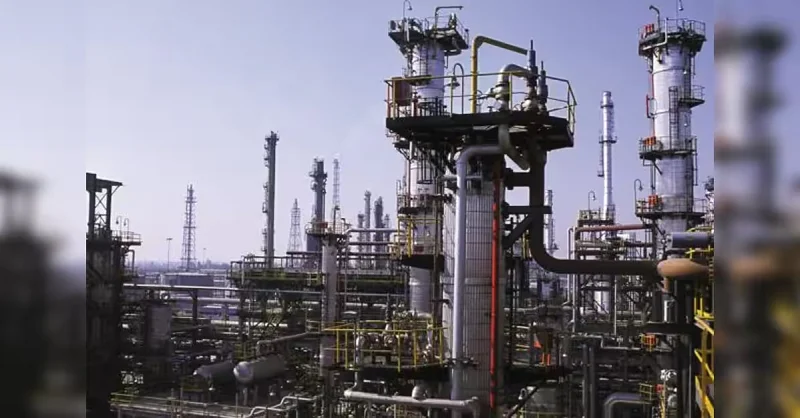
Every few months lately, another petroleum refinery in India announces an expansion, and that's not a coincidence. India is in the middle of one of the biggest refining capacity build-outs anywhere in the world right now, and understanding why says a lot about where the country's economy is headed.
Where India's Petroleum Refinery in India Network Stands Today
As things stand, India's installed refinery capacity sits at roughly 258 million metric tonnes per annum (MMTPA), making it the fourth-largest refiner globally and the second-largest in Asia. That's not a small feat for a country that was importing most of its fuel needs a few decades ago. Today, India runs 23 refineries, including the Jamnagar complex in Gujarat (still the single largest refining site on the planet) alongside a growing network of state-run and joint-venture plants.
What's driving this growth? Simple math, really. Domestic oil consumption is climbing fast, and it isn't slowing down anytime soon. Crude oil consumption is projected to grow at a compound rate of roughly 4.6% annually, potentially touching 500 million tonnes by FY40, up from around 233 million tonnes in FY24. Diesel demand alone is expected to double to 163 million tonnes by 2029-30, with diesel and petrol together making up close to 58% of the country's total oil demand by 2045.
The New Wave of Capacity
The big news this year has been the commissioning of the 180,000 barrels-per-day Barmer Refinery in Rajasthan, operated by HPCL Rajasthan Refinery Limited. It's a grassroots facility with an integrated petrochemical complex, and it alone has pushed India's total crude processing capacity from around 5.72 million to 5.9 million barrels per day.
The plant is still ramping up (its crude unit is currently running at about half capacity while downstream units go through phased commissioning), but once fully online, it'll churn out ultra-low sulfur diesel and BS-VI compliant gasoline alongside a healthy slate of petrochemicals like polypropylene and polyethene.
It's not the only site adding muscle. Barauni is getting a new 180,000 barrels-per-day crude unit, Numaligarh is expanding by 120,000 barrels per day, and Panipat is adding 200,000 barrels per day. Together with smaller bumps at Digboi and Kochi, industry watchers expect India's total refining capacity to touch around 6.32 million barrels per day by the end of 2027, and government-industry estimates put every petroleum refinery in India combined crossing 450-500 MMTPA by 2030, nearly double where it stood just a few years back.
For a Punjab-based example of how integration is reshaping the sector, look no further than HMEL (HPCL-Mittal Energy Limited), which operates the Guru Gobind Singh Refinery at Bathinda, one of the country's better-known crude oil refinery success stories in India. What started as a 9 MMTPA facility has grown to 13.5 MMTPA of crude processing, paired with one of the country's largest dual-feed petrochemical crackers. It's a good illustration of how India's newer refining capacity isn't just about pumping out more fuel; it's about squeezing more value from every barrel by co-locating fuel and petrochemical production.
Here's the Twist: A Demand Gap Is Forming
Now here's where it gets interesting. Even as refiners pour money into new capacity, there's a structural shift quietly working against pure fuel demand. The government's push toward 20% ethanol blending, combined with rapid EV adoption in the two- and three-wheeler segment, is expected to moderate longer-term gasoline demand growth. In other words, India is building capacity for a fuel-hungry future while simultaneously working to reduce how much fuel that future actually needs.
This isn't a contradiction so much as a hedge. Petrochemicals (plastics, polymers, and industrial chemicals) are expected to be the biggest driver of global oil demand growth going forward, outpacing gasoline and diesel by 2030. That's exactly why refiners like HMEL and Reliance are leaning so heavily into petrochemical integration rather than just adding more crude-processing towers.
What This Means Going Forward
For now, the system remains remarkably reliable, with average capacity utilisation exceeding 96% through 2025, among the best in the world for any crude oil refinery in India. Petroleum product exports touched 61.4 MMT in FY26, underscoring India's role as a fuel supplier to the region, not just a consumer. The government has also opened the door to 100% foreign direct investment in upstream and private refining projects, and companies like Saudi Aramco are reportedly in talks with BPCL and ONGC to build fresh capacity on Indian soil.
The bottom line: the outlook for petroleum refining in India projects over the next decade is really two stories running in parallel: a capacity boom to meet near-term demand, and a slow pivot toward petrochemicals and cleaner fuels to manage the demand gap that ethanol blending and EVs are starting to create. Refiners that get the balance right, the way integrated players like HMEL have, are likely to be the ones that come out ahead.