Sign up with Google
 Sign in with Zoho
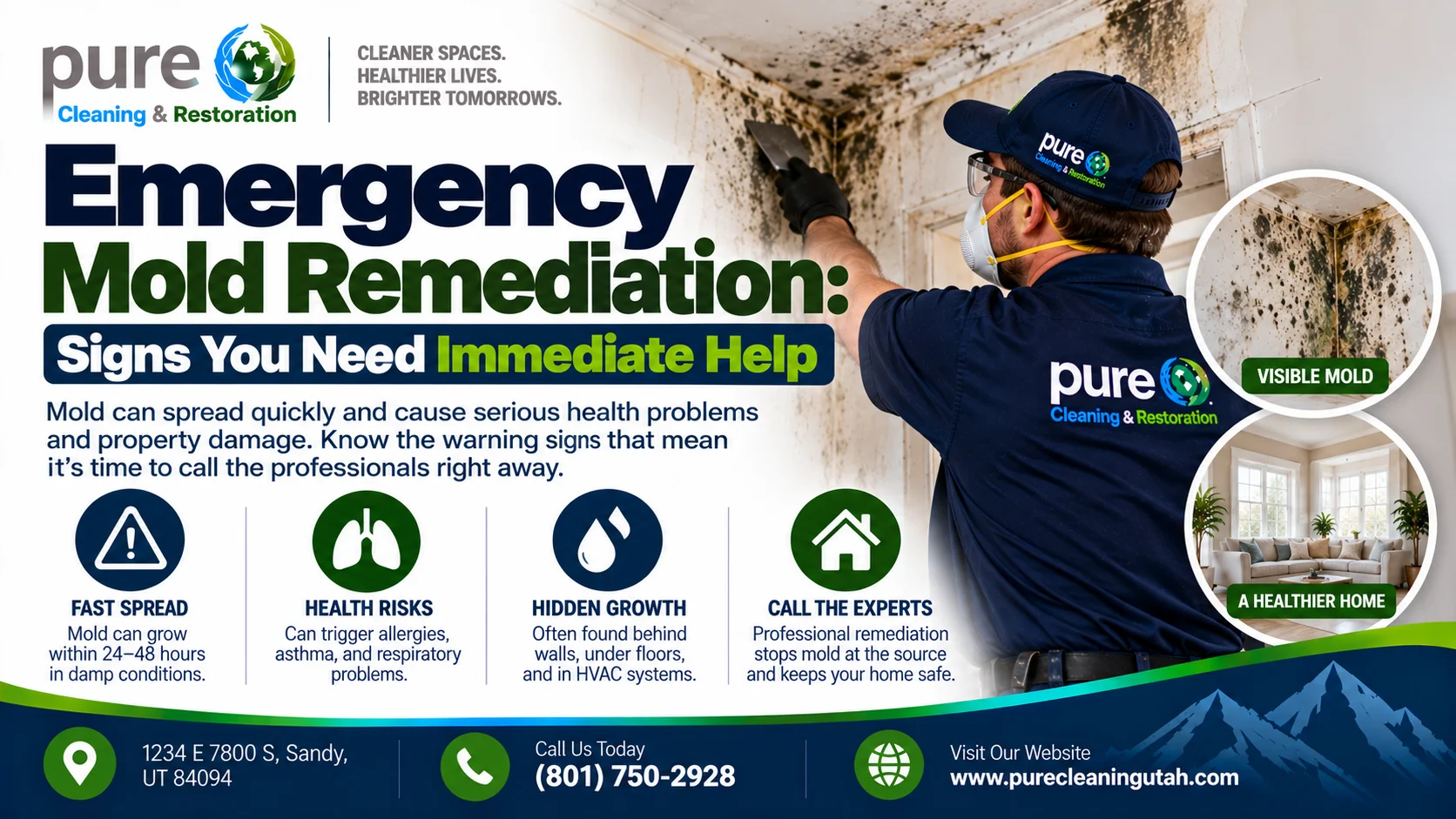
Learn the warning signs of serious mold problems and when professional remediation may be needed to protect your home.
Finding mold in your home can be worrying, especially when it seems to appear out of nowhere. You may notice a few dark spots on a wall, a strange musty smell, or mold growing around a damp window. Sometimes the problem is small. Other times, it can be a sign of a much bigger moisture issue.
The difficult part is knowing when mold needs immediate attention.
Mold tends to grow in places where moisture has been sitting for too long. A leaking pipe, recent flooding, roof damage, or even constant humidity can create the right conditions for growth. If the moisture problem is left alone, mold can continue spreading into areas that are not easy to see.
That is why recognizing the warning signs early can make a big difference.
When Does Mold Become an Urgent Problem?
Not every spot of mold means you need emergency service. However, certain situations deserve faster attention than others.
For example, if a pipe suddenly breaks and leaves part of your home soaked, waiting several days before dealing with the moisture can create additional problems. The same is true if you discover mold covering a large area or find that it keeps coming back after cleaning.
A good rule is to look at the bigger picture. How much mold is there? Where is it growing? Is there still moisture present? Did the problem start after water damage?
The answers can help determine how quickly you should act.
Signs You May Need Emergency Mold Remediation
Mold Is Spreading Quickly
A small patch that suddenly becomes much larger should not be ignored. Rapid growth may mean the area has an ongoing moisture problem.
Mold can spread across certain building materials, particularly when they stay damp. If you notice new growth appearing in nearby areas, it may be time to have the situation professionally assessed.
There Has Been Recent Water Damage
A flooded room, broken pipe, overflowing appliance, or roof leak can leave behind more than visible water damage.
Even after the standing water disappears, walls, flooring, insulation, and other materials may still contain moisture. If those materials are not dried properly, mold can develop.
This is one reason it is important to respond quickly after a water emergency.
You Notice a Strong Musty Smell
Sometimes your nose notices a problem before your eyes do.
A persistent musty odor may come from mold growing somewhere you cannot easily see. It could be behind drywall, underneath flooring, inside a cabinet, or in another damp area.
If the smell remains after cleaning the room, it is worth investigating instead of simply covering the odor with air fresheners.
Mold Keeps Returning
Have you cleaned the same spot several times only to see mold come back?
That can be a sign that the real problem has not been addressed.
Cleaning the visible growth may improve the appearance temporarily, but if a leaking pipe, roof problem, condensation, or another moisture source is still present, the mold may return.
In these situations, finding and fixing the moisture source is just as important as cleaning the mold itself.
Mold Is Covering a Large Area
A small spot is very different from mold covering a wall, ceiling, floor, or several rooms.
When the affected area is large, trying to handle everything without knowing how far the problem has spread can make the situation more difficult. Professional evaluation can help identify the extent of the affected area and determine the appropriate cleanup approach.
Why Moisture Control Is So Important
Mold and moisture are closely connected.
If moisture enters a home and stays there, it can create an environment where mold has a chance to grow. This is why simply removing visible mold is not always enough.
Imagine cleaning mold from a wall while a pipe behind that wall is still leaking. The surface may look clean for a while, but the underlying moisture problem has not gone away.
A proper remediation process should therefore look at where the moisture came from and whether affected materials have been adequately dried.
Common sources of moisture include:
- Plumbing leaks
- Roof leaks
- Flooding
- Poor ventilation
- High indoor humidity
- Condensation
- Wet carpets or flooring
- Water entering through walls or foundations
Finding the source early can help prevent the same problem from happening again.
What Professional Mold Remediation Usually Involves
Every mold situation is different, so the exact process can vary from one property to another.
Generally, the first step is to look at the affected area and understand what caused the problem. Professionals may inspect visible growth, moisture levels, surrounding materials, and areas where hidden growth could be present.
The work may then involve containing the affected area, addressing the moisture problem, cleaning suitable surfaces, and removing materials that cannot be properly restored.
The goal is not simply to make the mold disappear from sight. The underlying conditions also need attention.
Mold Removal in Utah Homes
Utah homes can experience mold problems for many different reasons. Plumbing issues, basement moisture, roof leaks, humidity, and water damage can all contribute to unwanted growth.
For homeowners looking for mold removal Utah, it is important to understand that the right approach depends on the situation. A small area of surface growth is not the same as widespread mold following a flood.
Getting the problem evaluated can help determine what needs to be cleaned, what may need to be removed, and whether there is hidden moisture involved.
Mold Problems in Salt Lake City Homes
Homeowners dealing with moisture problems may also search for mold removal Salt Lake City Utah when they discover mold in their property.
The location of the mold can provide useful clues. Growth around a bathroom may be related to ventilation or humidity, while mold near a ceiling could point toward a roof or plumbing issue.
Sometimes the source is not obvious at all. Mold can develop behind walls or beneath flooring where homeowners cannot easily inspect it themselves.
That is why recurring odors or unexplained mold growth deserve attention.
Residential Mold Removal: What Homeowners Should Know
A home should feel like a safe and comfortable place, so discovering mold can be unsettling.
For homeowners researching residential mold removal of Salt Lake City Utah, one important thing to remember is that there is no single cleanup method that works for every property.
The right approach depends on the affected material, the size of the area, the source of moisture, and whether the mold has spread into hidden spaces.
Trying to solve a larger problem without understanding its cause can sometimes lead to repeated cleanup and frustration.
Can You Handle Mold Yourself?
For a very small surface area, some homeowners may choose to clean it themselves. However, larger or recurring problems require more caution.
If mold has spread significantly, followed major water damage, or appears to be growing in hidden areas, professional assistance may be more practical.
You should also avoid disturbing materials unnecessarily when you are unsure how extensive the problem is. What looks like a small patch on the surface may not represent the full affected area.
How to Reduce the Chance of Mold Returning
Once a mold problem has been addressed, preventing excess moisture can help reduce the chance of future growth.
Simple steps include:
- Fix leaks as soon as they are discovered.
- Dry wet carpets and flooring quickly.
- Use bathroom exhaust fans during and after showers.
- Keep an eye on areas where condensation forms.
- Check basements and crawl spaces for moisture.
- Keep gutters and downspouts working properly.
- Watch for water stains on ceilings and walls.
- Address plumbing problems before they become larger issues.
These habits may seem basic, but they can help homeowners catch moisture problems before they turn into bigger restoration projects.
Frequently Asked Questions
Is mold always an emergency?
No. A small amount of surface mold may not require emergency service. However, widespread growth, major water damage, recurring mold, or hidden moisture can require prompt professional attention.
Can mold grow behind walls?
Yes. If moisture gets behind drywall or into other enclosed areas, mold can develop where it is difficult to see. A persistent musty odor can sometimes be a clue that something is happening behind the surface.
Can mold return after cleaning?
Yes. Mold may return if the source of moisture has not been corrected. Cleaning the visible growth without addressing the underlying moisture problem may only provide a temporary solution.
How quickly should water damage be addressed?
It is best to address water damage as soon as possible. The longer materials remain wet, the greater the chance of additional damage and mold growth.
Should I remove mold myself?
Small surface problems may sometimes be handled by homeowners. Larger, recurring, hidden, or water-related mold problems are better evaluated by a qualified professional.
Conclusion
Mold is easier to deal with when it is caught early. A strong musty smell, rapidly spreading growth, recurring mold, or mold following serious water damage should not be brushed aside.
The most important step is to understand why the mold appeared in the first place. Fixing the moisture source and addressing affected materials properly can help prevent the problem from becoming a repeating cycle.
If you are dealing with a mold or water-related property problem, Pure Cleaning and Restoration can provide professional assistance and help you understand the next steps toward getting your home clean, dry, and comfortable again.
Add a stronger opening hookImprove the local SEO sections





 (1) (3).webp)