Sign up with Google
 Sign in with Zoho

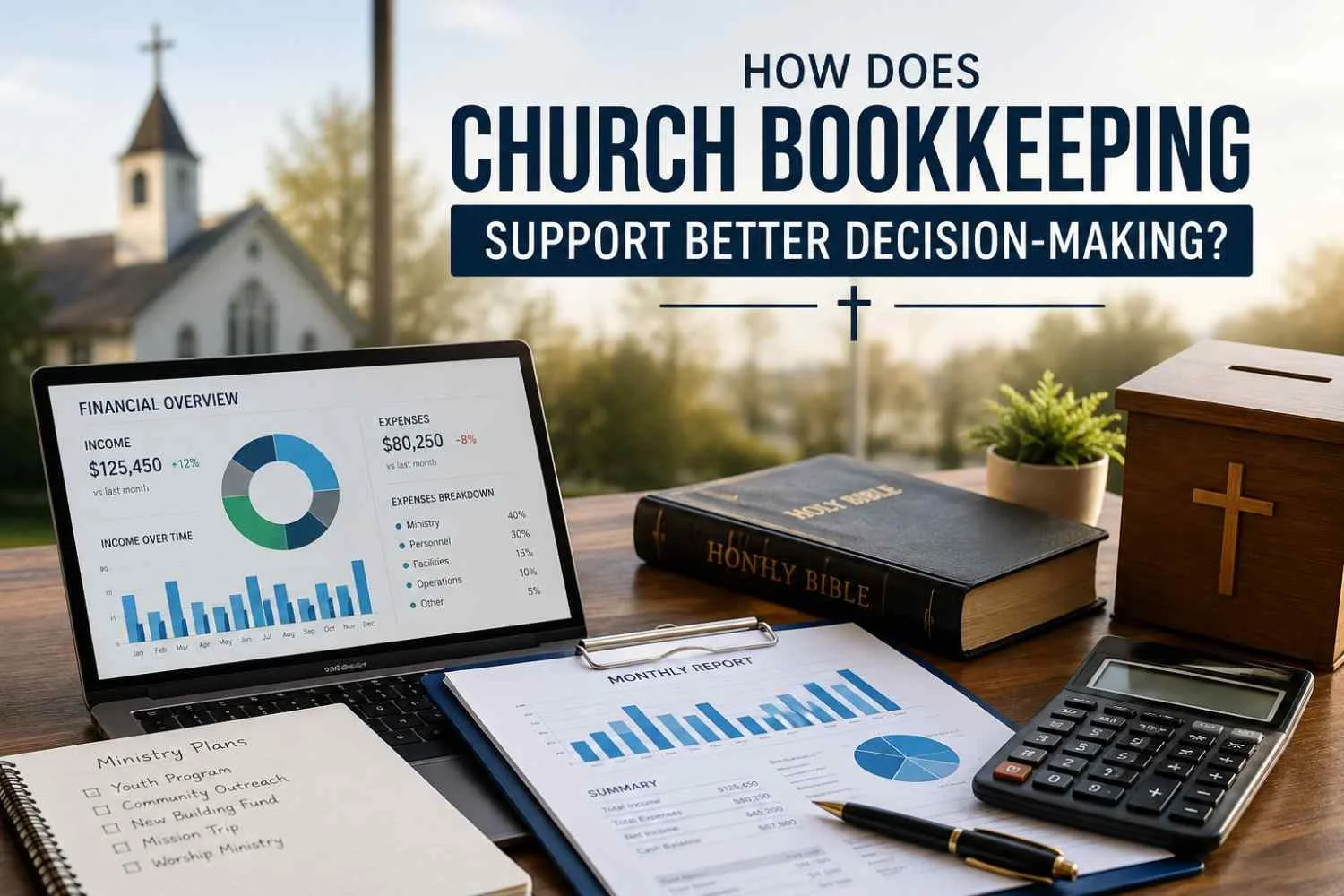
Every church makes financial decisions that shape its ability to serve the community. Whether the goal is expanding a ministry, hiring staff, supporting missionaries, or maintaining the church building, those decisions should be based on accurate financial information rather than assumptions.
This is where church bookkeeping becomes invaluable. More than simply recording income and expenses, it provides church leaders with a clear understanding of their financial position. Organized records, timely reports, and accurate tracking of donations make it easier to plan wisely, remain accountable, and use resources responsibly.
Churches are entrusted with funds that come from generous members who believe in the ministry's mission. Maintaining transparent financial records is one of the most effective ways to honor that trust while equipping leadership teams to make informed decisions with confidence.
Why Financial Clarity Is Essential for Church Leadership
Imagine a church leadership meeting where the board is discussing the possibility of launching a new youth ministry. The vision is exciting, but an important question quickly arises: Can the church afford it without affecting existing ministries?
Without reliable financial reports, the answer is often based on estimates. With accurate bookkeeping, leaders can review current giving trends, operating expenses, available reserves, and designated funds before making a commitment.
Financial clarity helps church leaders answer questions such as:
- Are weekly offerings covering monthly expenses?
- Is there enough cash available for future projects?
- Which ministries require additional funding?
- Are operating costs increasing faster than donations?
- Can the church confidently invest in new outreach programs?
Rather than relying on guesswork, leadership teams can make decisions supported by accurate financial data.
Better Budget Planning Starts With Accurate Records
Every successful ministry depends on thoughtful financial planning. A well-prepared budget allows churches to support their mission while avoiding unnecessary financial pressure.
When bookkeeping records are accurate, budgeting becomes much easier because leaders can review previous years' financial activity instead of relying on rough estimates. Historical data often reveals seasonal giving patterns, recurring maintenance costs, and ministry expenses that might otherwise be overlooked.
For example, many churches experience higher giving during the final months of the year but lower contributions during the summer. Understanding these trends allows finance committees to prepare budgets that reflect actual income rather than optimistic projections.
Accurate bookkeeping also helps churches:
- Plan for facility maintenance before repairs become emergencies.
- Allocate ministry funds based on real financial performance.
- Build emergency reserves for unexpected expenses.
- Evaluate whether new initiatives fit within the current budget.
A realistic budget creates confidence for both church leaders and congregation members because financial decisions are supported by reliable information rather than assumptions.
Stewardship Builds Trust Within the Congregation
Every donation represents a person's faith in the church's mission. Members expect their contributions to be managed responsibly, and transparent financial practices help reinforce that confidence.
Effective bookkeeping creates a detailed record of tithes, offerings, designated gifts, missions support, and special fundraising campaigns. Instead of simply tracking deposits, it ensures that funds are used according to the donor's intent and that financial reports accurately reflect church activities.
For example, if members contribute specifically toward a building renovation or overseas mission project, those funds should remain separate from the church's general operating account. Proper bookkeeping makes this possible and reduces the risk of accidental misallocation.
When churches consistently maintain organized financial records, they demonstrate responsible stewardship while strengthening the trust that is essential to long-term ministry growth.
Supporting Ministry Growth With Better Financial Insight
Every ministry begins with a vision, but turning that vision into reality requires careful financial planning. Whether a church wants to expand children's programs, organize community outreach, or renovate its worship space, leaders need a clear understanding of available resources before moving forward.
Accurate bookkeeping provides that insight. Instead of looking only at the current bank balance, leadership can review cash flow, recurring expenses, and upcoming financial commitments. This broader view helps determine whether new initiatives are financially sustainable.
For example, a church may have enough funds to purchase new equipment for its youth ministry. However, bookkeeping records might also reveal that major building maintenance is scheduled within the next few months. Having this information allows leaders to prioritize spending without placing unnecessary pressure on the church's finances.
When financial decisions are backed by reliable data, ministry growth becomes more intentional and sustainable.
Financial Accountability Strengthens Leadership
Healthy churches thrive on trust. While spiritual leadership is central to every ministry, financial accountability also plays an important role in maintaining confidence among church members, volunteers, and governing boards.
Organized bookkeeping ensures that every transaction is properly documented and easy to verify. Monthly financial reports provide leadership teams with a clear picture of income, expenses, and budget performance, making discussions during board meetings more productive.
Good financial oversight also helps churches:
- Monitor spending throughout the year.
- Compare actual expenses with approved budgets.
- Review designated and restricted funds separately.
- Detect unusual transactions before they become larger concerns.
- Prepare accurate reports for finance committees and church boards.
When everyone works from the same reliable financial information, decisions are based on facts rather than assumptions. This level of transparency strengthens internal accountability and supports responsible stewardship.
Why Payroll Accuracy Matters for Churches
Managing payroll within a church often involves unique responsibilities. In addition to pastors and administrative staff, churches may employ worship leaders, childcare workers, maintenance personnel, and part-time ministry coordinators. Each role may have different compensation structures and reporting requirements.
Accurate payroll records help ensure employees are paid correctly and on time while reducing the risk of reporting errors. Keeping payroll organized also makes it easier to manage tax filings, employee records, and year-end documentation.
As staffing grows, many churches find value in using church payroll and bookkeeping services because payroll and financial reporting work together. Maintaining both functions within a coordinated system reduces administrative work while improving the accuracy of financial records.
Rather than spending valuable ministry time resolving payroll issues, church leaders can focus their attention on serving the congregation.
Responding Quickly to Financial Changes
Church finances naturally fluctuate throughout the year. Attendance patterns change, seasonal giving varies, and unexpected expenses can arise with little warning. Without current financial information, these changes may go unnoticed until they begin affecting daily operations.
Regular bookkeeping helps leadership identify trends early.
For instance, if giving decreases over several consecutive months, monthly financial reports can highlight the pattern before it becomes a serious concern. Leaders may decide to adjust spending, postpone nonessential purchases, or revise upcoming budgets to maintain financial stability.
Likewise, when donations exceed expectations, churches can confidently invest additional resources into ministry opportunities while maintaining healthy reserves for future needs.
Access to timely financial information allows leaders to respond thoughtfully instead of reacting under pressure.
Staying Organized for Financial Reporting and Compliance
Churches manage a variety of financial responsibilities throughout the year, from preparing board reports to maintaining payroll documentation and organizing contribution records. Having accurate bookkeeping in place makes each of these tasks significantly easier.
Well-maintained financial records support:
- Monthly and annual financial statements.
- Budget reviews.
- Donation tracking.
- Payroll documentation.
- Audit preparation.
- Internal financial reviews.
Rather than scrambling to gather paperwork at reporting time, churches with organized bookkeeping systems already have the information they need. This saves time, reduces administrative stress, and allows leadership to focus on ministry instead of paperwork.
Giving Church Leaders More Time for Ministry
Most pastors and ministry leaders entered church leadership to serve people, not to spend hours reconciling accounts or organizing financial records. Yet managing church finances remains an essential responsibility.
An organized bookkeeping process reduces administrative burdens by keeping financial information current and accessible. Instead of searching through receipts or manually preparing reports before every board meeting, leaders can quickly access the information they need.
Many growing congregations choose bookkeeping services for churches because experienced professionals understand the unique financial responsibilities churches face, including designated funds, donor contributions, ministry budgets, and nonprofit reporting. Outsourcing these tasks allows pastors, finance committees, and administrative teams to devote more time to discipleship, outreach, and caring for their congregation.
Turning Financial Reports Into Better Decisions
Financial reports should do more than summarize numbers. They should help leaders understand what those numbers mean.
A monthly statement showing lower donations, for example, is only the starting point. Reviewing cash flow, ministry expenses, and budget performance together provides valuable context that supports better decisions.
Consistent financial reporting helps church leaders:
- Measure giving trends throughout the year.
- Monitor ministry spending against approved budgets.
- Identify areas where expenses are increasing.
- Plan future investments with greater confidence.
- Support discussions during board and finance committee meetings.
When financial information is accurate and easy to understand, leadership conversations become more productive. Decisions are based on reliable data rather than assumptions, helping churches remain financially healthy while continuing to fulfill their mission.
Planning for Long-Term Financial Stability
Strong financial stewardship is not only about meeting today's expenses. It is also about preparing for tomorrow's opportunities and challenges.
Churches often plan years in advance for building improvements, technology upgrades, staff growth, or expanded ministry programs. These goals require careful financial planning, and bookkeeping provides the historical data needed to make realistic projections.
For example, reviewing several years of financial records may reveal steady growth in giving or recurring maintenance expenses. These insights help leadership develop long-term budgets that support sustainable ministry without placing unnecessary strain on church finances.
Planning ahead also allows churches to build emergency reserves, making them better prepared for unexpected repairs or changes in giving patterns.
Choosing the Right Financial Support
Every church operates differently. A small congregation with a handful of staff members has different financial needs than a multi-campus ministry with several departments and employees.
As responsibilities grow, many churches benefit from partnering with professionals who specialize in church financial management. In addition to maintaining accurate bookkeeping records, some providers offer payroll services for churches, helping ensure employee compensation, tax reporting, and payroll records remain accurate and compliant.
Selecting experienced financial support gives church leaders confidence that routine financial responsibilities are handled correctly, allowing them to focus on serving their congregation and advancing the church's mission.
Conclusion
Effective church bookkeeping is about much more than balancing the books. It gives church leaders the financial clarity needed to make thoughtful decisions, manage resources responsibly, and plan for future ministry opportunities.
From creating realistic budgets to tracking donations, managing payroll, and preparing accurate financial reports, organized bookkeeping strengthens accountability across every area of church operations. It also builds trust with congregation members by demonstrating that every contribution is managed with care and integrity.
As churches continue to grow and serve their communities, reliable financial records provide the confidence needed to make decisions that support both today's ministry and tomorrow's vision.
Frequently Asked Questions
Why is church bookkeeping important?
Church bookkeeping provides accurate financial records that help leaders manage donations, monitor expenses, prepare budgets, and make informed decisions while maintaining accountability.
How often should churches review their financial reports?
Most financial professionals recommend reviewing reports every month. Regular reviews help leadership identify trends, monitor budgets, and address potential concerns before they affect church operations.
What financial records should every church maintain?
Churches should keep organized records of donations, operating expenses, payroll, bank reconciliations, budgets, financial statements, and any restricted or designated funds.
Can accurate bookkeeping improve ministry planning?
Yes. Reliable financial information helps leaders evaluate available resources, forecast future expenses, and confidently plan new ministry initiatives based on actual financial performance.
When should a church consider professional bookkeeping support?
As financial responsibilities become more complex, many churches choose professional bookkeeping assistance to improve accuracy, save administrative time, and ensure financial records remain organized throughout the year.