Sign up with Google
 Sign in with Zoho

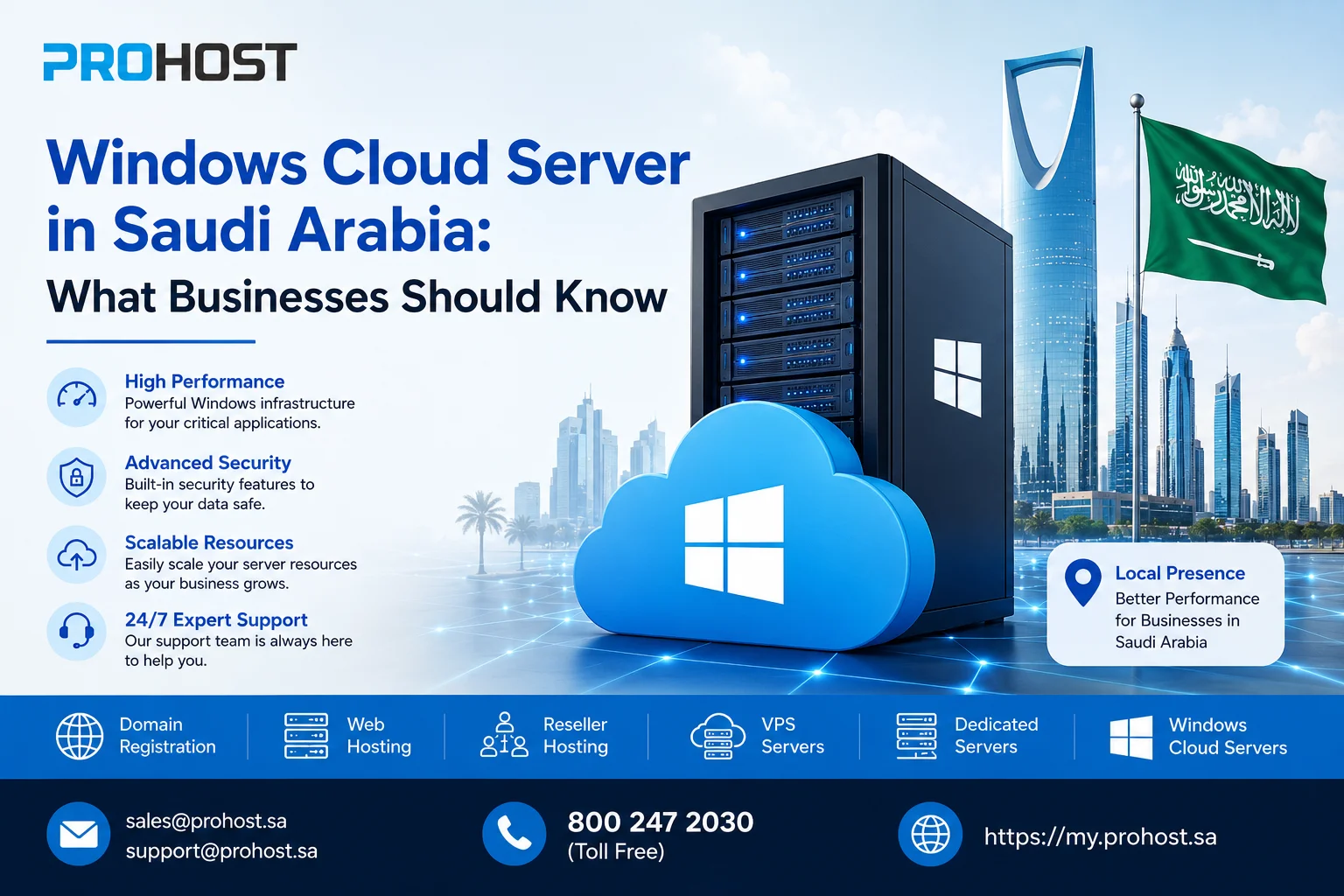
If you're trying to figure out the right hosting setup for your business in Saudi Arabia, you've probably noticed how confusing the choices can get. Everyone throws around technical terms without explaining what actually matters. So let's keep this simple and talk about a Windows cloud server, what it actually does for your business, and how to pick one without wasting money on the wrong plan.
Why Hosting Choices Matter More Than Ever
Business in Saudi Arabia is moving online at a pace nobody expected a few years back. Vision 2030 gets credit for pushing digital growth, but honestly, it's also just customer expectations changing. People want fast websites, smooth checkouts, and apps that don't freeze up when traffic gets heavy. If your hosting can't handle that, customers won't wait around, they'll just go somewhere else.
There's also a growing push for businesses to keep their data closer to home. Companies dealing with finance, healthcare, or anything regulated by SAMA are paying more attention to where their servers are physically located, not just how fast they run.
What You're Actually Getting With a Windows Cloud Server
Think of it as a virtual machine that runs on Windows, but instead of sitting on one physical box, it's spread across cloud infrastructure. That setup means better uptime, since your server isn't tied to a single point of failure. You also get to run tools like IIS, .NET applications, and MS SQL databases without the compatibility headaches you'd run into on a Linux setup.
If your company already depends on Microsoft based software, this matters a lot. Trying to squeeze Windows-only applications onto a non-Windows server usually causes more problems than it solves, and you end up spending time fixing things that shouldn't have been broken in the first place.
What You Should Actually Check Before Signing Up
Where Is the Server Located
This gets ignored way too often. If your customers are mostly browsing from Riyadh, Jeddah, or Dammam, but your server sits somewhere across the world, you're adding delay to every single page load. Pick a provider with servers based in or near the region so your site actually loads fast for the people visiting it.
What Happens If Uptime Promises Fail
Every hosting company advertises 99.9% uptime, but that number alone doesn't mean much. Ask what they actually do when they miss it. Do you get credited? Compensated? A provider willing to answer that clearly is usually more trustworthy than one that just repeats the percentage.
Can You Grow Without Starting Over
Your traffic today isn't going to stay the same forever. Maybe a sale goes viral, or your app suddenly gets more downloads than expected. A decent provider lets you add more RAM or CPU power in a few clicks, without forcing you to migrate everything or deal with hours of downtime.
Security Can't Be an Afterthought
Windows servers get targeted often, so don't skip this part. Ask providers directly about firewall setup, how often they patch vulnerabilities, DDoS protection, and how frequently backups run. If they can't give you a straight answer, that's worth noticing.
Support That Actually Helps
Nobody wants to deal with a scripted chatbot when their server goes down at midnight. Look for round the clock support from people who genuinely know Windows environments, not generic hosting agents reading from a script.
Shared Hosting, VPS, or Full Cloud, Which One Fits
Linux shared hosting works fine if you're running something small, like a basic blog or an informational site with low traffic. It's cheap, sure, but you're sharing server space with a bunch of other websites, and it won't support Windows-specific software at all. If your business runs on .NET or MS SQL, this option is off the table.
For businesses that need more consistency but aren't ready to jump into a full cloud setup, the best windows vps hosting plans give you dedicated resources with admin level access. It's a reasonable middle step for companies that are growing but still keeping an eye on their budget.
If your business deals with unpredictable traffic or runs applications that simply can't afford downtime, a full cloud server is the safer long term choice. You get flexibility, better scaling, and infrastructure that adjusts as your needs change.
Spotting a Hosting Provider Worth Trusting
A lot of companies call themselves top website hosting providers, but that label should come with actual proof, not just nice looking marketing pages. Check how long they've been operating in Saudi Arabia or the wider Gulf region. Look at independent reviews instead of testimonials sitting on their own homepage, and don't be afraid to ask for a short trial before committing to anything long term.
Price obviously plays a role, but going with the cheapest plan available often costs more later through downtime, poor support, or lost customer trust. A slightly higher monthly cost with solid backups and real security usually pays for itself.
Final Thoughts
The hosting setup you choose ends up shaping how your customers experience your business every single day, from page load speed to how safely their information is handled. If your operations depend on Windows based tools, a properly set up cloud server gives you far more room to grow, stronger security, and none of the performance issues that come with cramped shared hosting.
Before you commit to any provider, actually compare their uptime record, how quickly their support responds, and how easily you can scale later on. Don't just go with whoever has the flashiest website. Choose a hosting partner that treats your uptime like it's their own reputation on the line, because that's exactly the kind of provider worth sticking with for the long run.
FAQs
What is a Windows cloud server mainly used for? It's used to run Windows dependent applications, .NET software, and MS SQL databases that need a native Windows environment instead of Linux.
Is a Windows cloud server better than shared hosting for a growing business? Yes, since it gives you dedicated resources instead of shared capacity, which means steadier performance even during traffic spikes.
How much RAM does a small business website typically need? Most small business sites run fine on 4 to 8GB RAM, while database heavy applications usually need 16GB or more for smooth performance.
Can I upgrade my server resources later without downtime? Most providers let you scale RAM, CPU, or storage on demand, and it usually doesn't involve major downtime or a full migration.
Why does server location matter for businesses based in Saudi Arabia? A server located within or near the Kingdom reduces loading delays for local visitors and often supports better alignment with regional data regulations.