Sign up with Google
 Sign in with Zoho
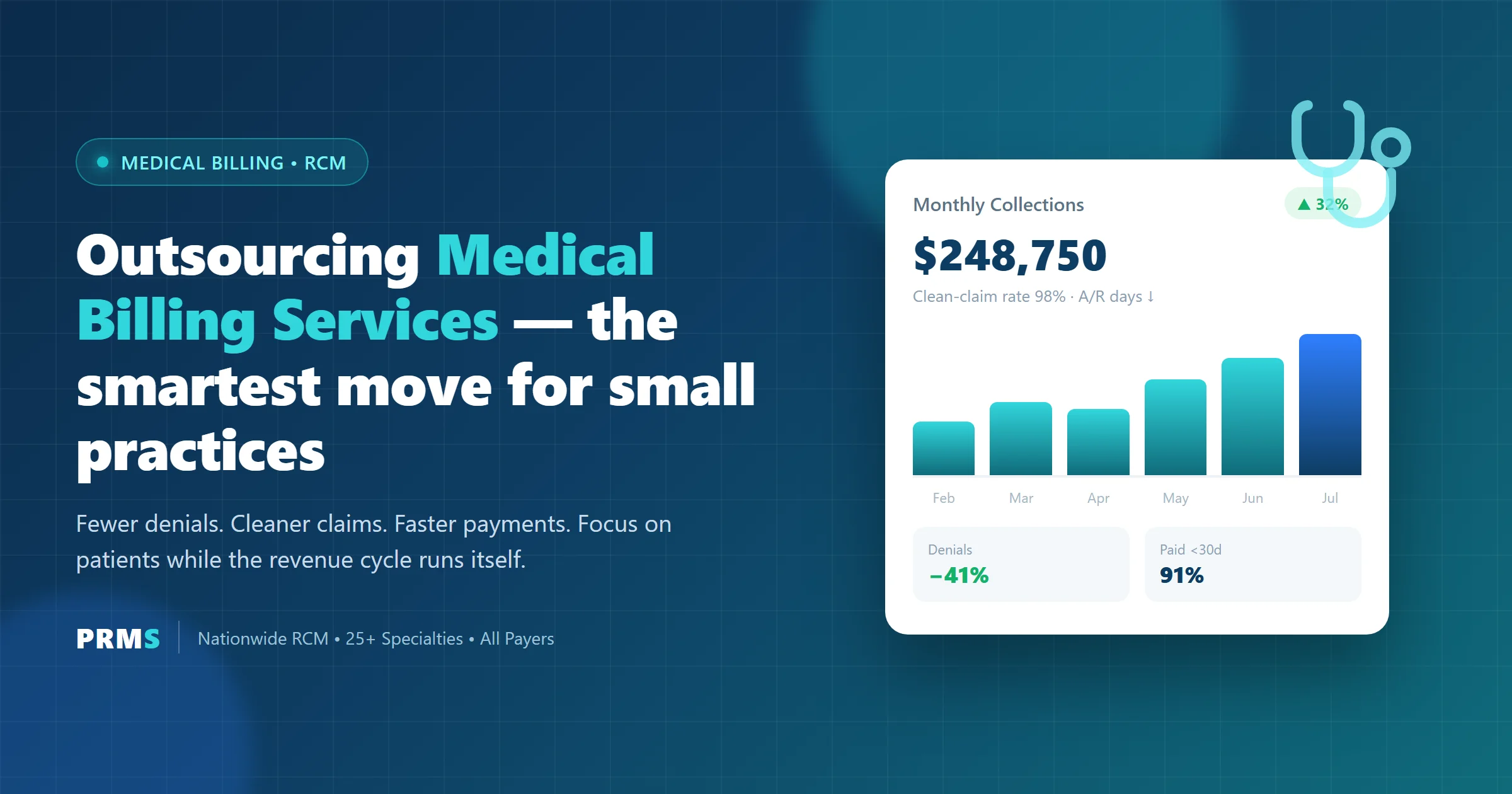
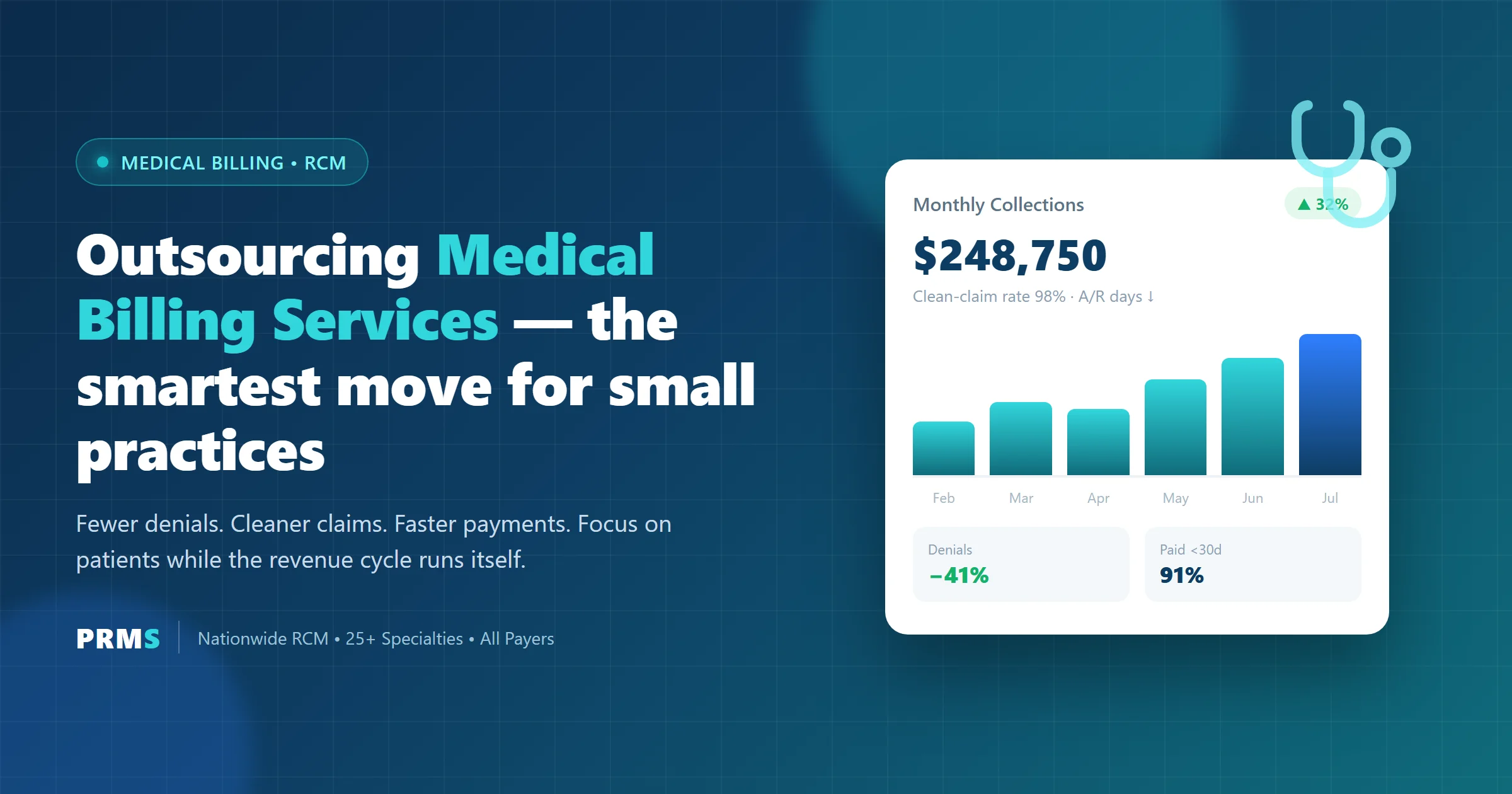
Every practice owner eventually asks the same question: should we keep billing in-house, or hand it to a professional company? It sounds like a simple operational choice, but it quietly decides how much money your practice collects, how many hours your staff lose to paperwork, and how well you sleep at the end of the month.
There is no single answer that fits everyone. A large hospital group runs very differently from a three-provider clinic. So instead of declaring a winner up front, let us honestly compare both paths on the things that count.
The case for keeping billing in-house
In-house billing gives you control and proximity. Your biller sits down the hall, knows your patients, and can answer a question in seconds. For very small or highly specialized practices with predictable, low claim volume, that closeness can work well.
But that control comes with real costs that are easy to underestimate. You pay salaries, benefits, software subscriptions, and ongoing training. Coding rules change every year, and keeping one or two people current is a constant effort. Worst of all, in-house billing usually means a single point of failure: when your biller is sick, on leave, or quits, your entire cash flow slows down with them.
The case for outsourcing
Outsourcing flips the equation. Instead of one overworked employee, you effectively rent an entire billing department, complete with coders, accounts-receivable specialists, denial experts, and compliance staff, without carrying any of them on payroll. The team has backups, defined processes, and specialists for each stage of the revenue cycle.
The biggest advantage shows up in denials. Anyone can drop a claim into a clearinghouse; very few in-house teams have the time to appeal every wrongly denied claim. A dedicated partner works those denials relentlessly, which is often where a practice quietly loses the most money.
Cost: the comparison most people get wrong
On the surface, in-house looks cheaper because you see one or two salaries. Outsourced companies typically charge a percentage of what they collect. But the honest comparison is not salary versus percentage; it is total collected revenue. If a professional partner raises your clean-claim rate, shortens your days in accounts receivable, and recovers denials you would have written off, the extra money collected usually dwarfs the fee.
So which one wins?
For a practice with high volume, complex payer mixes, frequent denials, or staffing headaches, professional billing almost always wins. For a tiny, simple practice with a rock-solid in-house biller and steady volume, keeping it in-house can be perfectly fine. The right answer depends on your specialty, your claim volume, and how much of your week you want to spend on paperwork instead of patients.
A quick self-check
Ask yourself: Do denials pile up unworked? Does billing stall whenever one person is away? Are you unsure of your own collection rate or days in accounts receivable? Do coding changes catch you off guard? If you answered yes to even two of these, your practice is likely leaving money on the table.
If you decide the in-house model is costing more than it saves, switching is easier than most owners expect, and experienced outsourced medical billing services let you keep clinical control while a specialist team tightens your revenue cycle and gets you paid faster.
Author Bio
Hassan Shah is a Business Development professional at PRMS, a nationwide medical billing and revenue cycle management company serving 25+ specialties across all major payers. He helps independent practices reduce denials, tighten their revenue cycle, and get paid faster.