Sign up with Google
 Sign in with Zoho

Drain problems are not always visible on the surface. A slow-draining sink, recurring blockage, or unpleasant smell could point to a much bigger issue underground. In the past, finding the cause often meant digging up parts of a property. Today, professionals use advanced camera technology to inspect drains without unnecessary excavation.
A CCTV Camera Drain Inspection provides a fast and accurate way to assess the condition of drainage systems. It helps identify hidden defects, locate blockages, and recommend the most suitable repair method. Whether you're dealing with a recurring drainage issue, purchasing a property, or arranging routine maintenance, understanding the inspection process can help you make informed decisions.
This guide explains each stage of the inspection, from the initial assessment to the final report.
What Is a CCTV Camera Drain Inspection?
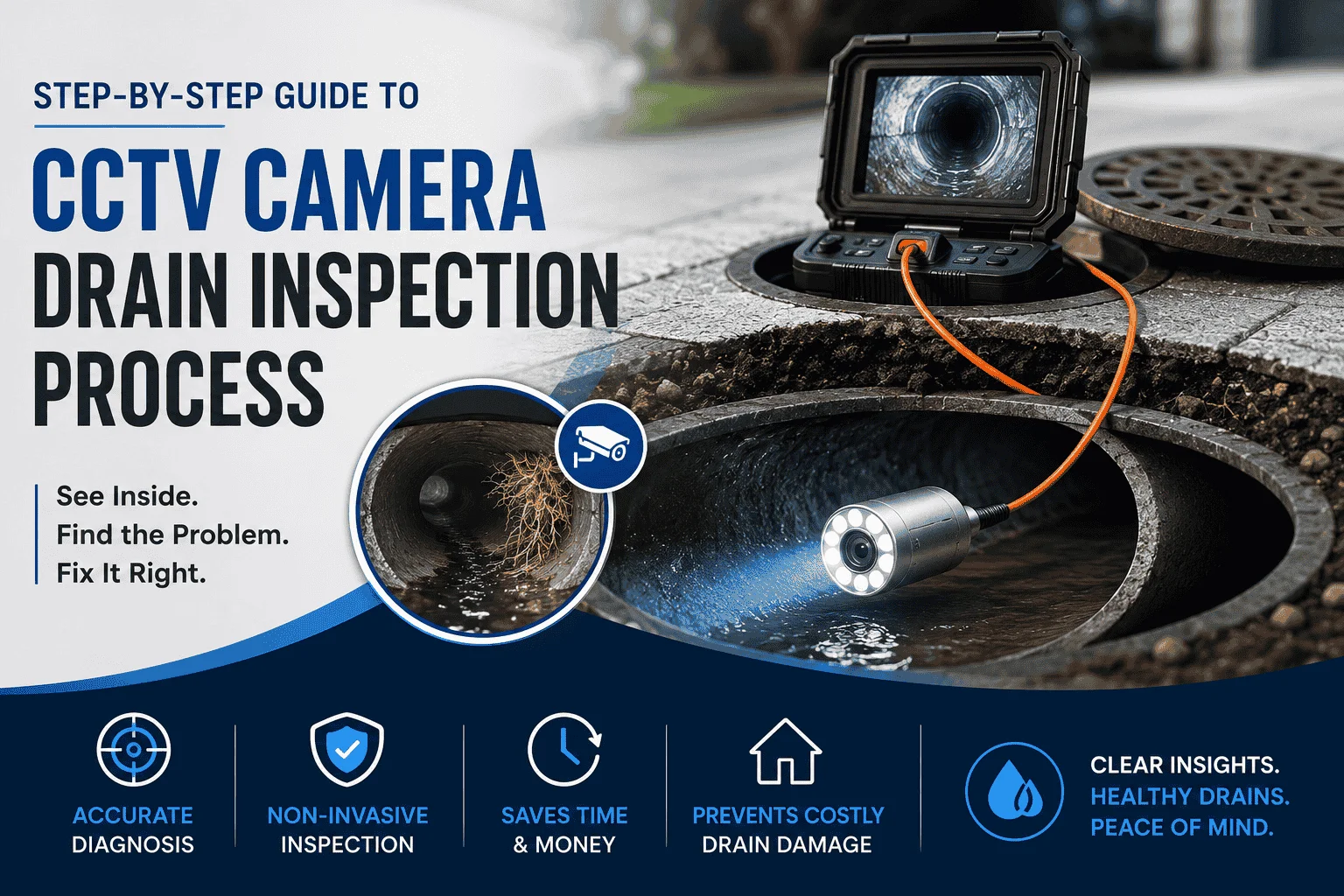
A CCTV Camera Drain Inspection is a non-invasive method of examining the inside of drainage pipes using a high-definition waterproof camera. The camera is attached to a flexible cable and carefully guided through the drain while transmitting live video footage to a monitor.
The inspection allows engineers to identify hidden issues without digging or causing unnecessary disruption. It is commonly used for residential properties, commercial buildings, and public drainage systems.
A professional drain camera survey can reveal problems such as:
- Blocked drains
- Cracked or fractured pipes
- Tree root intrusion
- Pipe collapses
- Joint displacement
- Scale and debris buildup
- Corrosion
Because the exact cause is identified before repairs begin, property owners can avoid unnecessary work and reduce repair costs.
When Should You Book a CCTV Camera Drain Inspection?
Not every drainage problem requires immediate excavation. Many issues can be diagnosed quickly through a camera inspection.
You should consider booking an inspection if you notice:
- Frequent drain blockages
- Slow-draining sinks or toilets
- Bad odours coming from drains
- Water backing up into the property
- Gurgling sounds in pipework
- Damp patches caused by damaged drains
- Suspected collapsed pipework
- Drainage issues before buying a property
A CCTV Camera Drain Inspection is also valuable during an emergency blocked drain situation. Identifying the exact cause helps engineers resolve the problem more efficiently.
Step 1: Initial Drain Assessment
Every inspection begins with an assessment of the drainage system.
The engineer discusses the issues you've noticed, such as recurring blockages, flooding, or slow drainage. They then examine inspection chambers, manholes, and accessible drain points to determine the most suitable location for the camera.
This initial assessment helps create a clear inspection plan while reducing unnecessary delays.
Step 2: Cleaning the Drain if Necessary
If the drain contains heavy debris, grease, or standing water, it may need to be cleaned before the inspection begins.
High-pressure water jetting is often used to remove:
- Mud
- Grease
- Silt
- Fat deposits
- Loose debris
Cleaning improves camera visibility, allowing the engineer to inspect the pipe walls more accurately. A clear drain also helps ensure the inspection captures every section of the system.
Step 3: Inserting the CCTV Camera
Once the drain is ready, the engineer carefully inserts the waterproof camera into the drainage system.
During the drain CCTV inspection, the camera records live video while moving through the pipework. The engineer monitors the footage in real time, making it easier to identify defects as they appear.
Modern cameras can travel through long sections of pipe while capturing high-resolution images that reveal even small signs of damage.
Step 4: Identifying Drainage Problems
As the inspection progresses, the engineer carefully checks the condition of the entire drainage system.
Common issues identified during a CCTV Camera Drain Inspection include:
- Drain blockages
- Tree root intrusion
- Pipe cracks
- Pipe collapse
- Offset joints
- Corrosion
- Fat and grease accumulation
- Scale buildup
- Foreign objects inside the drain
Finding the exact problem early helps prevent unnecessary repairs and ensures the correct solution is recommended.
Step 5: Recording Findings and Preparing the Report
After completing the inspection, the recorded footage is reviewed and documented.
The inspection report typically includes:
- Images from inside the drain
- Video recordings
- The location of defects
- Pipe condition assessment
- Recommendations for repairs
- Preventive maintenance advice
This detailed report can also be useful for insurance claims, property purchases, or future maintenance planning.
Step 6: Recommending the Right Repair
Once the inspection is complete, the engineer recommends the most suitable repair based on the condition of the drainage system.
Possible solutions include:
- Drain jetting
- Root removal
- Drain patch repairs
- Drain relining
- Pipe replacement
- Local excavation when necessary
Because the issue has already been accurately identified, repairs can be completed more efficiently and with minimal disruption.
Benefits of CCTV Camera Drain Inspection
A CCTV Camera Drain Inspection offers several practical advantages over traditional investigation methods.
Some of the key benefits include:
- No unnecessary excavation
- Accurate fault diagnosis
- Faster inspections
- Lower repair costs
- Reduced disruption to your property
- Early detection of hidden issues
- Better maintenance planning
- Useful evidence for insurance and property surveys
Regular inspections can also help extend the life of your drainage system by identifying small problems before they become expensive repairs.
CCTV Drain Inspections for Commercial Properties
Businesses often rely on complex drainage systems that experience heavier daily use than residential properties.
Routine inspections help minimise disruption by detecting issues before they lead to operational downtime.
A CCTV Camera Drain Inspection is commonly used as part of commercial drainage solutions for:
- Restaurants
- Hotels
- Office buildings
- Warehouses
- Retail premises
- Industrial facilities
- Schools
- Healthcare buildings
Preventive inspections can reduce unexpected repair costs while supporting ongoing maintenance programmes.
What Happens During an Emergency Blocked Drain?
An emergency blocked drain requires a quick and accurate diagnosis.
A camera inspection allows engineers to identify the cause without unnecessary guesswork. Whether the blockage is caused by grease, tree roots, collapsed pipework, or a foreign object, the footage helps determine the most effective repair method.
Many professional drainage companies also provide 24/7 drainage solutions, allowing urgent drainage problems to be assessed and resolved as quickly as possible.
Keep Your Drainage System in Good Condition
A CCTV Camera Drain Inspection provides a clear picture of what's happening inside your drainage system without unnecessary excavation. By identifying issues early, property owners can reduce repair costs, minimise disruption, and make informed decisions about maintenance.
If you're experiencing recurring drainage issues or need a professional assessment before repairs or a property purchase, Precise Drainage Solutions offers expert CCTV Camera Drain Inspection services to help identify problems accurately and recommend the most appropriate solution.
Frequently Asked Questions
How long does a CCTV Camera Drain Inspection take?
Most inspections take between 30 minutes and two hours, depending on the size and complexity of the drainage system.
Is a drain camera survey messy?
No. A professional drain camera survey is designed to inspect drains with minimal disruption. Cleaning is only carried out when necessary.
Can a CCTV inspection detect collapsed drains?
Yes. High-definition cameras can identify collapsed pipes, cracks, root intrusion, joint displacement, and many other structural issues.
Do all blocked drains require a CCTV inspection?
Not always. Simple blockages may be cleared without one. However, recurring or unexplained problems often benefit from a camera inspection to identify the underlying cause.
How often should drains be inspected?
Residential properties generally only require inspections when problems arise. Commercial properties may benefit from routine inspections as part of a preventive maintenance programme.