Sign up with Google
 Sign in with Zoho


A blocked drain can quickly turn from a minor inconvenience into a serious household problem. Water may begin draining slowly, unpleasant odours can develop, and in severe cases, wastewater can back up into sinks, showers or other areas of the property. When a blockage refuses to clear, many homeowners start looking for a heavy duty drain opener to solve the problem quickly.
While strong drain-opening products can sometimes help with minor organic build-up, they are not always the right answer for stubborn or recurring blockages. Understanding what is causing the obstruction and choosing the correct solution can prevent further damage and save you from repeated problems.
Key Takeaways
- A heavy duty drain opener may help with some minor blockages, but it is not suitable for every drainage problem.
- Recurring blockages can indicate a deeper issue within the pipework.
- Chemical products should always be used carefully and according to their instructions.
- Mechanical cleaning and high-pressure water jetting can tackle stubborn physical obstructions.
- CCTV drain inspections can help identify hidden problems inside underground pipes.
- Preventing grease, hair, food waste and garden debris from entering drains can reduce future blockages.
- Professional assessment is recommended when DIY methods fail or wastewater begins backing up.
What Causes a Drain to Become Blocked?
Drain blockages can develop for several reasons, and the cause often determines how difficult the problem will be to resolve.
In kitchens, grease, cooking oils, food particles and detergent residue can gradually accumulate inside pipes. Bathroom drains commonly become blocked because of hair, soap deposits and other debris. Outdoor drains can collect leaves, soil, silt and garden waste.
More serious problems can occur when tree roots enter underground pipes, damaged sections collapse or a drainage system becomes heavily contaminated with scale and debris. In these situations, simply pouring a chemical product down the drain may not remove the underlying obstruction.
Is a Heavy Duty Drain Opener Always the Best Solution?
The term heavy duty drain opener generally refers to a powerful chemical or mechanical product designed to break down or dislodge stubborn blockages. Such products can be useful in certain situations, but they should be selected and used carefully.
A chemical drain opener may work against some organic material, but it cannot necessarily resolve physical problems such as collapsed pipes, tree root intrusion or badly displaced debris. Using increasingly strong chemicals when the first attempt has failed can also create unnecessary risks.
There is another important consideration: if a blockage remains and a professional subsequently needs to inspect or clear the pipe, residual chemicals may make the work more hazardous.
For persistent drainage problems, identifying the cause is usually more valuable than simply choosing a stronger product.
Signs That a Blockage Needs Professional Attention
Not every blocked drain requires an emergency callout. However, certain warning signs suggest that the issue may be more serious than a simple surface obstruction.
Look out for:
- Water draining much more slowly than usual
- Repeated blockages in the same drain
- Gurgling sounds coming from sinks or toilets
- Unpleasant smells coming from drainage points
- Water backing up when another appliance is used
- Several drains becoming slow at the same time
- Overflowing outdoor drains
- Wastewater returning into sinks, baths or showers
If multiple fixtures are affected, the blockage could be further along the main drainage line rather than inside one individual fixture.
Professional Drain Unblocking Methods
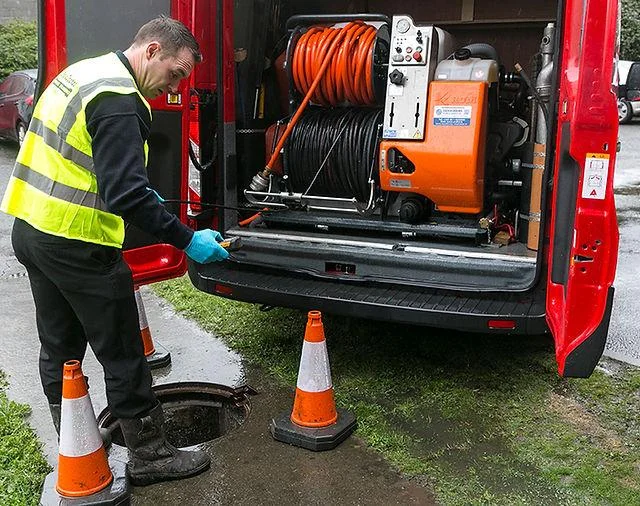
Professional drainage specialists have access to equipment that can tackle blockages without relying solely on chemical products.
One commonly used approach is mechanical drain cleaning, where specialist equipment is used to break through or remove an obstruction. This can be particularly useful when debris has become firmly lodged inside a pipe.
For heavier blockages, high-pressure water jetting can be an effective option. Water is directed through specialist equipment to break down deposits and flush unwanted material from the drainage system.
Another valuable method is CCTV drain inspection. A small camera can be introduced into the drainage system to help identify what is causing the problem. This can reveal issues that would otherwise be difficult to locate, including cracks, root intrusion, structural damage or recurring debris.
Why Finding the Cause Matters
Clearing a blockage is only part of solving a drainage problem. If the reason for the obstruction is not addressed, the same issue may return.
For example, a household might repeatedly experience slow drainage because of a damaged or poorly functioning pipe. Using a heavy duty drain opener every few weeks may provide temporary relief, but it does not repair the underlying defect.
Likewise, if tree roots have entered an underground pipe, chemical treatment may not provide a lasting solution. Professional inspection can establish whether the issue requires cleaning, root removal, repair or another drainage service.
This approach is particularly important when blockages occur frequently or affect several parts of the property.
How to Reduce the Risk of Future Blockages
Prevention is often easier and less expensive than dealing with a major drainage emergency.
Avoid pouring cooking oil or grease directly down kitchen sinks. Use sink strainers to catch food particles and clean them regularly. In bathrooms, hair-catching drain covers can reduce the amount of hair entering the pipe.
Outdoor drains should also be kept clear of leaves and garden debris. If you notice slow drainage, investigate the issue early instead of waiting until the pipe becomes completely blocked.
Regular professional maintenance can also be worthwhile for properties that experience recurring drainage problems.
When Should You Call a Drain Specialist?
A professional should be considered when DIY methods fail, the blockage keeps returning or several drainage points are affected. You should also seek specialist help when there is standing wastewater, sewage backing up or evidence of a potentially damaged underground pipe.
Professional drain unblocking services can assess the situation and select a method appropriate to the blockage instead of relying on trial and error.
For homeowners looking for specialist help with blocked drains, Precise Drainage's drain unblocking service provides a dedicated option for dealing with drainage problems.
Need Help With a Stubborn Blocked Drain?
A blocked drain should not be ignored when the problem is persistent, recurring or getting worse. Instead of repeatedly relying on a heavy duty drain opener, consider having the drainage system properly assessed so the real cause can be identified and addressed.
For professional assistance with blocked drains and difficult drainage problems, visit Precise Drainage – Drain Unblocking and explore the available drainage services.
FAQs
1. What is a heavy duty drain opener?
A heavy duty drain opener is a strong product or tool designed to deal with difficult blockages. Chemical versions may break down certain organic materials, while mechanical solutions physically remove or dislodge obstructions.
2. Can I use a heavy duty drain opener for every blockage?
No. Drain openers are not suitable for every situation. They may not resolve tree roots, collapsed pipes, structural damage or major physical obstructions. Recurring problems should be professionally assessed.
3. Why does my drain keep becoming blocked?
Repeated blockages can be caused by grease accumulation, hair, foreign objects, pipe damage, tree roots or poor drainage flow. If the same drain repeatedly becomes blocked, identifying the underlying cause is important.
4. When should I call a professional for a blocked drain?
Consider professional help when a blockage does not respond to reasonable DIY measures, repeatedly returns, affects several drains or causes wastewater to back up. These symptoms can indicate a more significant drainage issue.
5. Is professional drain unblocking better than using chemical products?
For straightforward minor blockages, a suitable household solution may sometimes be enough. However, professional drain unblocking is more appropriate for persistent, severe or unexplained problems because specialists can identify the cause and use equipment designed for stubborn obstructions.