Sign up with Google
 Sign in with Zoho

A canvas painting can catch your attention in seconds. Imagining it on your own wall takes a little more thought. The room shown in a product photograph may have taller ceilings, a smaller sofa or lighting that differs from your home.
Before ordering, move beyond the photograph and consider how the artwork will fit into your everyday surroundings. If you are browsing Vibecrafts for wall art, a few measurements and a clear idea of your room can help you compare designs more confidently.
Start With the View You See Every Day
Think about where you usually sit and how you enter the room. A painting should be enjoyable from those positions, rather than arranged only for a photograph.
Above a sofa, check whether the artwork will remain visible when people are seated. Near an entrance, consider whether an open door could hide part of it. In a dining area, look at the wall from the chairs as well as from across the room.
These small checks help you identify a useful position before choosing a design.
Understand the Difference Between Artwork and Styling
A product photograph often includes cushions, furniture, lamps and plants. Those objects help present the artwork, but they can also influence what you like about the image.
Ask yourself which details attract you. Is it the painting’s subject, its colours or the complete room arrangement?
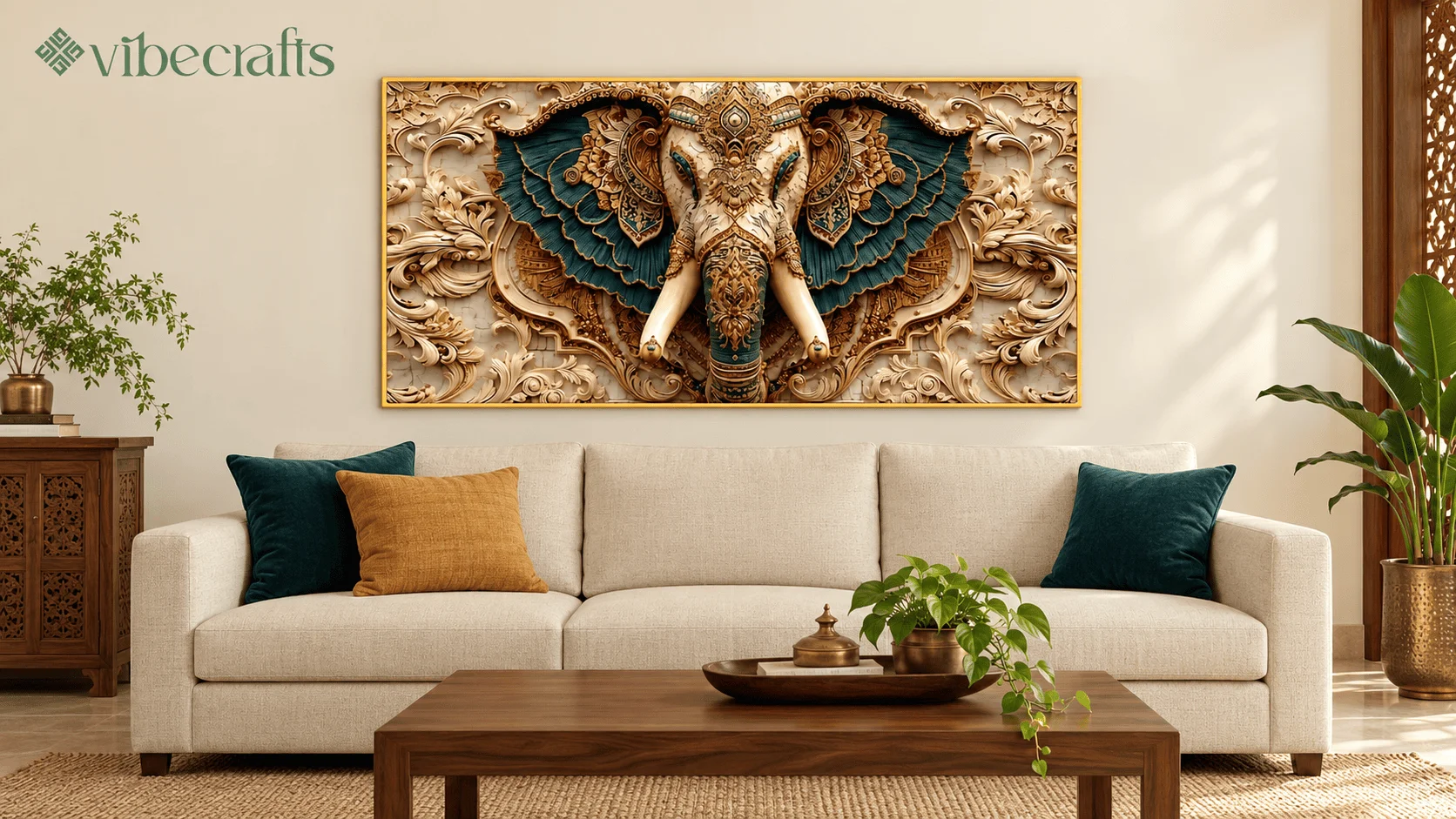
For instance, an ornate elephant canvas with deep teal and gold details may appeal because of its intricate composition. The cream sofa and matching cushions beneath it are separate styling choices. You can borrow the colour connection while keeping your existing furniture.
This distinction makes it easier to buy for your own room.
Use Measurements to Narrow Your Options
Write down the available wall width and height, then measure the furniture below it. Compare those figures with the artwork’s listed dimensions.
Check whether the measurements include the frame. For a set, confirm whether the size refers to one panel or the complete arrangement.
A paper template can make the dimensions easier to understand. Cut paper to the proposed size and temporarily position it using tape suitable for the wall finish. Step back and assess the layout before committing to a purchase.
Connect Colours Without Copying a Showroom
Look for one or two shades that already appear in your room. A painting might repeat the green of a cushion, the warmth of wooden furniture or a small colour within your rug.
The connection does not need to be exact. What matters is whether the combination feels comfortable to you.
If the furnishings are mostly plain, detailed artwork can provide interest. If the room already contains several patterns, a quieter composition may give the eye somewhere to rest.
To compare different subjects and colour combinations, explore the Vibecrafts canvas painting collection:
https://vibecrafts.com/collections/canvas-wall-paintings
Check What the Listing Includes
The word “canvas” does not explain every part of the product. Read the description to understand whether you are buying a print or a hand-painted piece, whether it is stretched, and whether a frame is included.
Look for information about hanging fittings and care. Close-up photographs can help you inspect the visible finish and edges, although they cannot replace clear written specifications.
Review delivery details and return conditions before ordering. If an important measurement or product detail is missing, ask the seller before making a decision.
Plan the Hanging Position Before Drilling
Once you have selected the artwork, test its height and alignment. Above seating, leave comfortable clearance so people can move without touching it.
Centre the painting over the furniture grouping it belongs to. This may differ from the centre of the entire wall, particularly when doors, windows or an off-centre sofa affect the layout.
Use fixings suitable for the artwork’s weight and wall construction. Follow the hardware manufacturer’s instructions and seek installation help if you are unsure.
Let the Artwork Settle Into the Room
After hanging the painting, spend some time with the arrangement before buying more accessories.
Check it in daylight and under your normal evening lighting. You may find that moving an existing cushion or removing a nearby ornament creates a better balance.
Keep the artwork away from persistent moisture and prolonged direct sunlight, and follow the supplier’s care instructions.
Buy for Your Home, Then Style Around It
A useful artwork shortlist combines personal taste with practical details: dimensions, colour, finish and placement.
Start with the room you already have. When those details are clear, explore Vibecrafts for a canvas painting whose subject you enjoy and whose proportions suit your wall. The result should feel comfortable in daily life, long after the first photograph.