Sign up with Google
 Sign in with Zoho

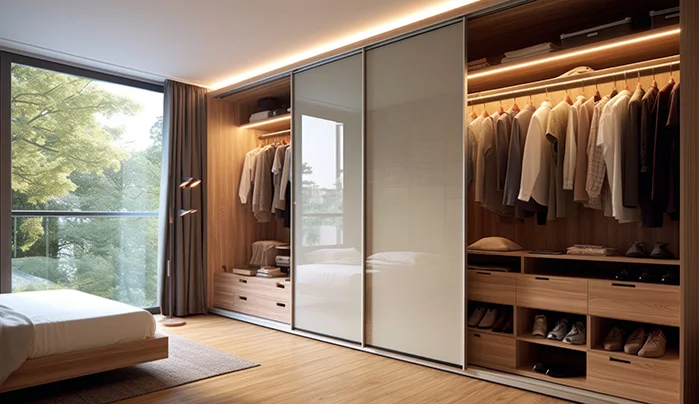
The selection of the appropriate thickness is not a trifle in interior planning. It has a direct influence on durability, load-bearing strength and long-term stability. Surface finish and colour are the first things that many homeowners are concerned with. But structure is even more important in everyday application. The choice of Plywood Sheets should start with the knowledge of usage. Thickness determines performance, whether it is a kitchen cabinet or a storage unit.
The choice of plywood to use in the wardrobe is even more critical since the wardrobe is subjected to constant weight and repeated movement.
The Thickness of Cabinet Construction:
Cabinets are subjected to frequent stresses of utensils, appliances, and constant opening and closing. When the board is not thick enough, the structure can start to sag with time. This affects alignment and overall appearance. Selecting the right Plywood Sheets will make sure that the cabinet panels are straight and stable even after years of use.
In the case of base kitchen cabinets, a thickness of 18 mm is usually suggested. This thickness offers load-bearing strength in areas like shutter panels and shelves. In designing plywood to fit wardrobe compartments, the same strength considerations are applicable since clothing weight provides a consistent pressure on internal shelves.
The appropriate thickness ensures that it does not bend and also increases the screw holding capacity.
Recommended Thickness for Wardrobes:
Wardrobes are long-term storage facilities and have to accommodate different loads. Different stress levels are experienced by hanging sections, shelves and drawers. In the case of structural frames and shutters, 18 mm Plywood Sheets will offer reliable support. This thickness provides durability without the needless bulk.
In choosing plywood to use in a wardrobe, internal partitions may at times be made of boards of 16 mm, depending on the design needs. But the heavier storage areas are better with 18 mm thickness to provide rigidity. This harmony ensures structural safety and makes the wardrobe visually proportional.
Thicker panels also enhance the stability of hinges and minimize the chances of misalignment.
Back Panels and Internal Components:
All components do not have to be the same thickness. Back panels tend to have less weight than shelves and frames. In these parts, 6 mm or 9 mm Plywood Sheets suffice. This maintains the balance of the entire structure without adding unnecessary cost and weight.
With plywood used to back the wardrobe, the correct thickness will eliminate wobbling and increase the overall structural integrity. Although these panels are thinner, they also add to the stability in general when properly fixed.
Thinner boards can also be used in internal drawer bottoms, but the selection should always be determined by the load expectations.
Kitchen Cabinets and Moisture:
Kitchens are even more problematic because of humidity and temperature changes. Thickness is not sufficient. Longevity is also affected by quality and grade. Plywood Sheets of high-grade with the right thickness give resistance to bending and swelling.
In case of moderate humidity in the areas where the wardrobes are installed, it is also necessary to use durable plywood to construct the wardrobes. Quality bonding and thickness enhance structural life. Sturdy 18 mm panels are especially useful in cabinets beneath sinks and in those close to cooking areas.
This will minimize the chances of structural damage in the long run.
Strength and Design Proportion:
Thickness beyond what is needed does not necessarily enhance performance. Too much thickness may increase weight and influence the accuracy of installation. The choice of Plywood Sheets is a matter of structural requirements and proportionality.
As an illustration, 18 mm thickness can sustain most cabinet structures, but decorative features might not need the same thickness. Likewise, the selection of plywood as a wardrobe frame should be in accordance with the door design and compatibility with hardware. Hinges, sliding systems and handles work well when the thickness is within the recommended ranges.
Careful design makes cabinets solid without being bulky.
Long Term Stability and Load Bearing:
Shelves can be quite heavy, particularly when it comes to wardrobes with folded clothes or accessories. Under continuous pressure, thin panels can start to curve. Main shelves should be made out of 18 mm Plywood Sheets to minimize deflection and ensure alignment of the surface.
In designing plywood to be used in wardrobe shelving, performance is also affected by spacing. Correct support intervals are beneficial even to strong boards. The use of thicker panels and appropriate installation provides durability.
Stability in the long run safeguards structure and appearance.
Modern Homes: Professional Recommendation:
In the majority of residential cabinets and wardrobes, 18 mm thickness is the standard structural option. It gives strength to frames, shutters and heavy shelves. In the meantime, back panels can be supported by 6 mm or 9 mm thickness.
The choice of plywood sheets of good quality and proper thickness will make cabinets strong and reliable. Homeowners must also consider the weight load, the location of hinges, and the method of installation when considering plywood as a wardrobe project.
Such a systematic method avoids repair issues in the future and ensures consistency of the interiors.
Conclusion:
The choice of thickness directly affects the durability of the cabinet and the stability of the wardrobe. The selection of the appropriate Plywood Sheets guarantees strength, correct alignment, and structural confidence in the long term. Meanwhile, choosing quality plywood to use in wardrobe applications is a way of maintaining the functionality of everyday use.
To provide reliable solutions to homeowners, CenturyPly has provided engineered plywood products that are in line with the current construction standards. Having the appropriate thickness and reliable quality, interiors do not change, are organized, and are ready to be used every day for years.