Sign up with Google
 Sign in with Zoho

When most people think of Dubai, their minds immediately jump to the blinding
Going off the beaten path allows you to bypass the curated luxury and discover authentic local neighborhoods, historic wind-tower architecture, and secret culinary spots. This comprehensive guide will walk you through the ultimate self-guided itinerary, secret hotspots, and insider tips to ensure your alternative desert adventure is completely unforgettable.
Why You Need an Alternative Itinerary in 2026
The travel landscape has shifted significantly. Modern travelers no longer just want to look at landmarks; they want to connect with communities. Dubai has masterfully preserved its roots amidst its rapid modernization, creating a thrilling contrast between the old world and the new.
By booking or designing a curated Dubai hidden gems tour, you peel back the ultra-modern layers to experience the sights, sounds, and aromas that defined the region long before oil wealth transformed the skyline.
Stop 1: The Historic Al Fahidi Quarter
Your journey back in time begins in the Al Fahidi Historical Neighborhood, fondly known by locals as the Bastakiya Quarters. Established in the late 19th century by Persian merchants, this labyrinth of narrow pedestrian lanes is entirely removed from the city's frantic highway system.
The Magic of Wind-Tower Architecture
As you wander the stone-paved alleys, look up at the high rectangular structures topping the buildings. These are barjeels, or traditional wind towers. Long before modern air conditioning, these structural marvels captured coastal breezes and funneled cool air downward into homes, serving as an ingenious form of natural climate control. The buildings themselves are constructed from raw local materials like coral stone, gypsum, teak, and sandalwood.
Secret Cultural Hubs
Tucked inside these sandy-hued buildings are vibrant independent spaces that most tourists completely walk past:
- The Coffee Museum: A cozy sanctuary dedicated to the global history of coffee manufacture. You can view century-old brewing artifacts and sample traditional Emirati, Ethiopian, or Turkish roasts inline.
- XVA Art Hotel & Gallery: A stunning bohemian courtyard featuring contemporary Middle Eastern art, shaded by a massive tree. It is the perfect place to sit with a fresh mint lemonade.
- Coins Museum: A specialized heritage site across eight rooms, highlighting rare currencies used throughout the region's historic trading eras.
Stop 2: Walking the Al Seef Waterfront
Right next to Al Fahidi lies Al Seef, a beautifully developed waterfront promenade stretching along the historic Dubai Creek. This area seamlessly blends a hyper-realistic recreation of a mid-19th-century Emirati trading village with contemporary design.
Exploring the Old-World Souk
While the architecture looks centuries old—complete with weathered plaster, faux-cracked walls, and vintage lanterns—it houses modern boutique shops, artisan craft stores, and open-air markets. It provides a highly photogenic look at what life along the maritime trade routes looked like.
The Local Specialty Coffee Scene
Dubai has quietly evolved into a world-class specialty coffee hub. For an authentic homegrown taste, skip the global chains and head to Cypher, a local specialty roaster tucked into the nearby industrial creative districts, or sit at one of Al Seef’s independent terraces to watch wooden dhow boats glide across the saltwater creek.
Stop 3: Navigating Dubai Creek via Traditional Abra
No authenticDubai hidden gems touris complete without crossing the historic saltwater creek that splits the oldest districts of the city: Bur Dubai and Deira.+-------------------------------------------------------------+| DUBAI CREEK CROSSING |+-------------------------------------------------------------+| [Bur Dubai Side] =======( Abra Boat )======> [Deira Side] || Historical Hub 1 AED Fare Spice & Gold |+-------------------------------------------------------------+
The 1-Dirham Water Taxi Experience
Instead of booking an expensive luxury yacht tour, walk down to the Al Ghubaiba or Bur Dubai water taxi stations.Board a motorized woodenabraferry alongside local commuters. The journey across the water costs exactly 1 AED (roughly $0.27 USD), which you hand directly to the captain in cash.As the spray of the creek hits your face, you will hear the overlapping calls to prayer echoing from nearby minarets, completely immersing you in Old Dubai’s vibrant ecosystem.
Stop 4: Uncovering the Secret Souks of Deira
Once your abra docks on the Deira side of the creek, you will step straight into a sensory explosion. While most tourists flock to the primary pathways of the glittering Gold Souk, the real magic lies hidden deep in the adjacent alleys.
The Aromatic Spice Souk
Follow your nose into the covered walkways of the Spice Souk. Here, burlap sacks overflow with colorful raw materials imported from across India, Iran, and Zanzibar.
- Saffron: Often referred to as “red gold,” this is the most prized item here. Ensure you look for deep red threads without yellow tips for the highest quality.
- Medicinal Herbs & Teas: Discover blue indigo powder, dried hibiscus flowers, whole star anise, and chunks of natural frankincense resin.
- Local Dates: Sample sweet, premium local dates stuffed with orange peel, almonds, or dipped in dark chocolate. They make the perfect authentic gift for friends back home.
Meena Bazaar and the Textile Districts
If you head back toward the Bur Dubai side, explore Meena Bazaar. This bustling enclave is the beating heart of the city’s South Asian community. It is an incredible maze of vibrant textile shops where you can purchase raw silks, pashminas, and intricate fabrics, or watch local tailors custom-make garments on vintage sewing machines.
Stop 5: Authentic Street Food Safaris
Forget the Michelin-starred hotel dining rooms for an evening. The culinary core of Dubai resides in the historic working-class neighborhood of Al Karama and Oud Metha.
How to Eat Like a Local
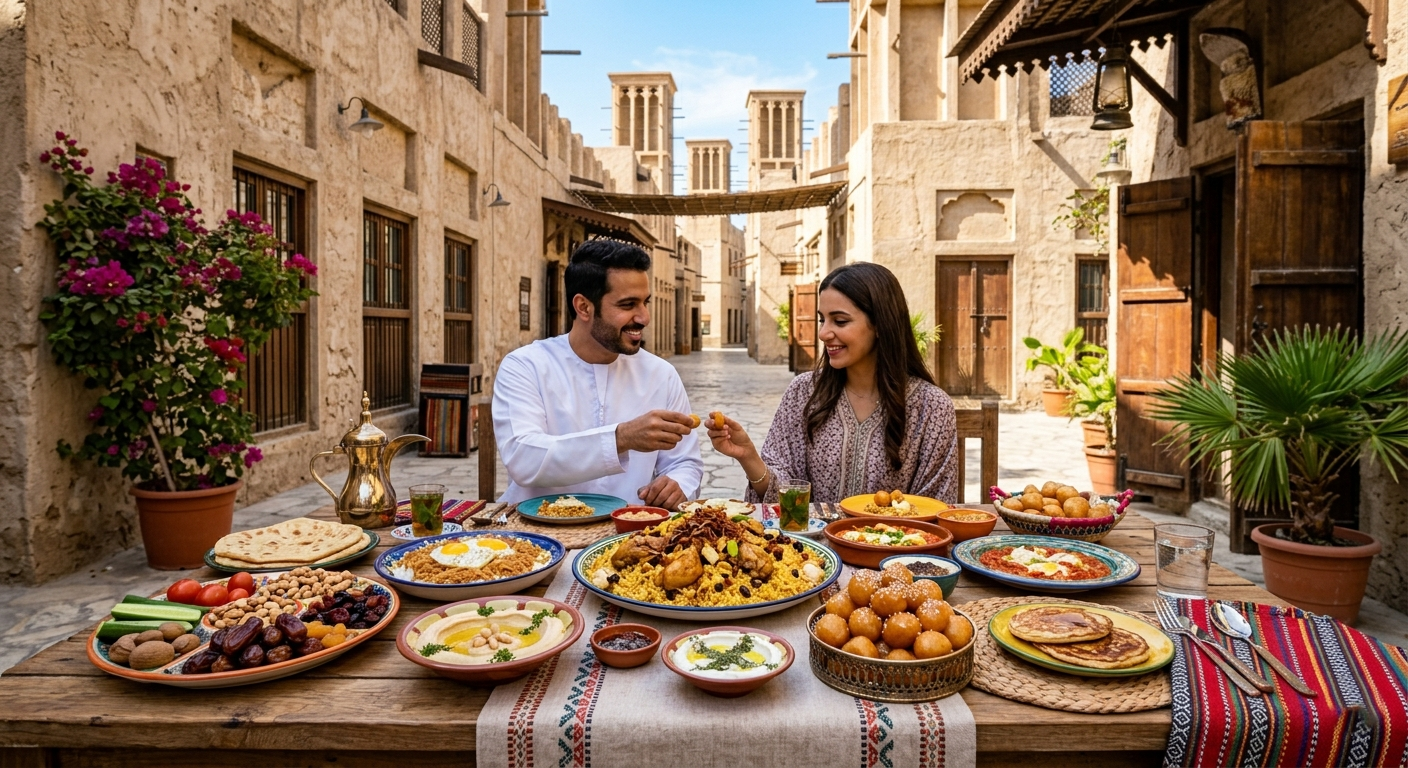
Start your food tour at the iconicArabian Tea House.Hidden inside a sun-drenched courtyard decorated with white benches and turquoise lace curtains, this venue serves incrediblemachboos—a highly seasoned, savory rice and chicken dish infused with loomi (dried lime) and local spices. Finish your meal withluqaimat, which are crunchy, sweet fried dough balls drizzled in sticky date syrup.Next, venture deeper into Karama for a late-night street food crawl. The shawarma rolls at Al Reef Lebanese Bakery are legendary among long-term residents. They feature perfectly charred meat scraped from vertical spits, rolled tightly with garlic paste, pickles, and french fries in fresh, pillow-soft flatbread.