Sign up with Google
 Sign in with Zoho

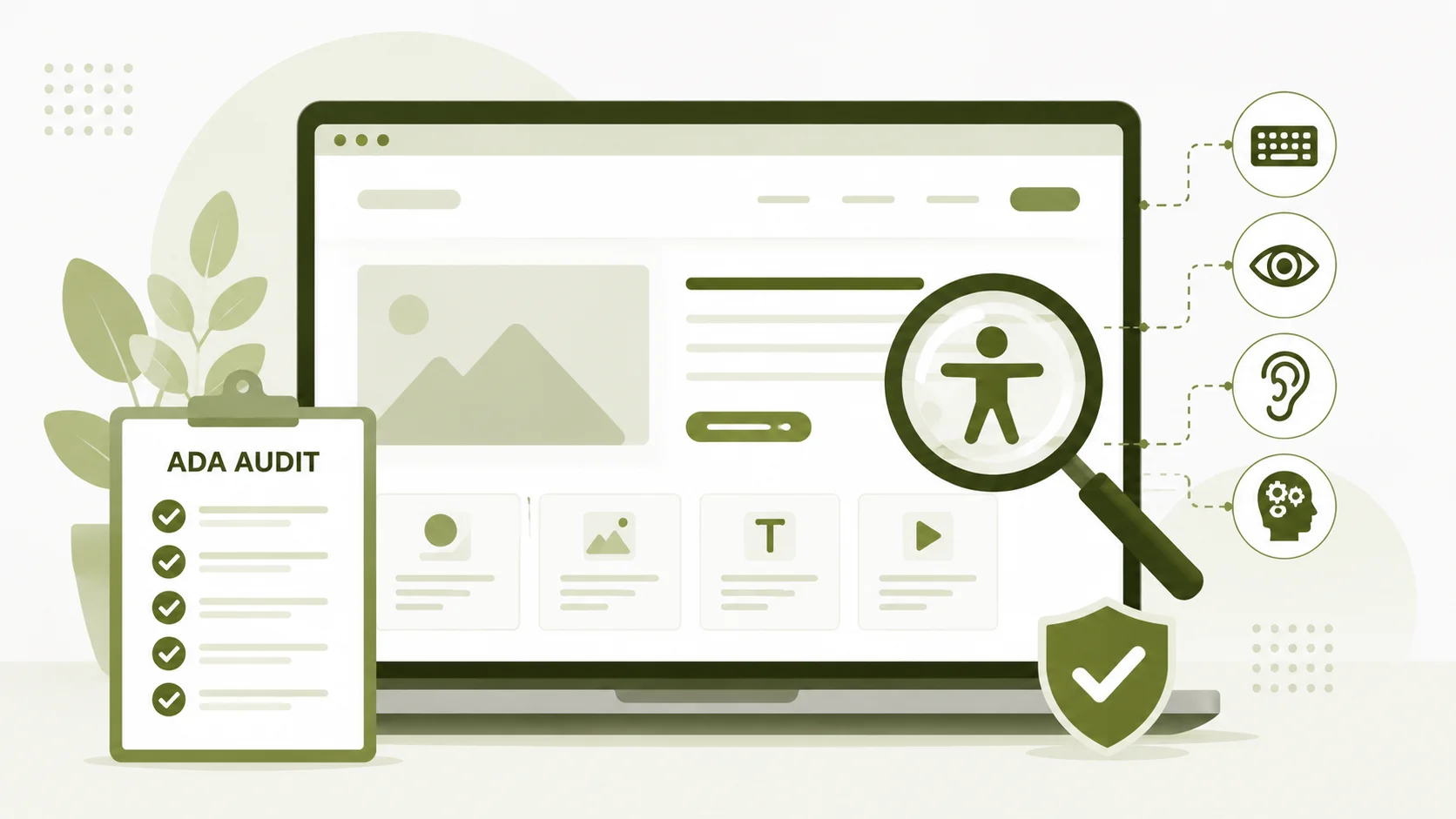
Your website should work for everyone who visits it. But even a modern, professional website can have accessibility problems that are easy to miss. From difficult navigation to unreadable text and inaccessible forms, small issues can affect the entire user experience. An ada website audit helps businesses find these barriers and make meaningful improvements.
An ada website audit provides a practical way to identify accessibility concerns and understand where a website can be improved. It focuses on how visitors experience the site, not just how the website looks on the surface.
What Is an ADA Website Audit?
An ADA website audit is a review of a website to identify potential accessibility barriers. It can include automated checks, manual testing, and an evaluation of important website elements.
A typical review may examine:
- Keyboard navigation
- Color contrast and text readability
- Alternative text for images
- Headings and page structure
- Links and buttons
- Accessible forms
- Screen reader compatibility
- Mobile usability
- Multimedia content
The purpose is to understand whether visitors can access and interact with important website content without unnecessary difficulties.
Common Accessibility Issues to Look For
Some accessibility problems are easy to overlook during everyday website management.
Difficult Keyboard Navigation
Visitors who cannot use a mouse may depend on keyboard navigation. Menus, buttons, links, and forms should have a logical and usable keyboard flow.
Poor Color Contrast
Text that blends into its background can be difficult to read. Good contrast helps make important information clearer and more accessible.
Missing Alternative Text
Images can contain useful information. Appropriate alternative text helps communicate that information to people who use screen readers.
Unclear Forms
Forms should have descriptive labels, clear instructions, and useful error messages. A visitor should be able to understand what information is required and how to correct mistakes.
Confusing Page Structure
Clear headings and logical content organization help visitors scan pages and understand how information is connected.
Why Accessibility Testing Should Be Ongoing
Website accessibility is not a one-time task. Websites change frequently as businesses publish new content, add images, update forms, install plugins, or introduce new features.
These changes can create new accessibility issues.
Regular accessibility testing can help businesses identify problems early and maintain a more consistent user experience. It can also support improvements based on relevant WCAG guidelines, which provide widely recognized recommendations for accessible web content.
What Happens After an Audit?
Finding an accessibility issue is only the beginning. The next step is to decide which problems should be addressed first and how they can be fixed.
A useful audit should provide clear and practical recommendations instead of simply presenting technical errors. Businesses can then prioritize important issues, make appropriate changes, and test the website again.
This process of identifying, improving, and reviewing helps turn accessibility into an ongoing part of website maintenance.
Making Accessibility Part of Your Website Strategy
Accessibility works best when it is considered throughout the website lifecycle. Designers, developers, content teams, and business owners can all contribute to a better experience.
Simple practices can make a difference:
- Use clear and descriptive headings.
- Write meaningful link text.
- Keep navigation consistent.
- Provide alternative text where needed.
- Check color contrast.
- Make forms easy to understand.
- Test important features with a keyboard.
- Review accessibility after major website updates.
At pondSoup, the focus is on creating practical, user-friendly digital experiences while keeping accessibility in mind.
Frequently Asked Questions
What does an ADA website audit check?
It can review navigation, keyboard access, color contrast, images, forms, page structure, links, and compatibility with assistive technology.
How often should a website be audited?
Regular reviews are useful, especially after a redesign, major content update, or significant functionality change.
Can an accessibility audit improve user experience?
Yes. Identifying and addressing accessibility barriers can make a website easier to navigate and use for a wider range of visitors.
Does an audit guarantee ADA compliance?
No. An audit can identify potential issues and provide recommendations, but maintaining accessibility requires ongoing attention and testing.
Conclusion
Website accessibility is ultimately about people. When visitors can navigate pages, understand content, and complete important tasks without unnecessary barriers, everyone benefits.
An ada website audit gives businesses a clearer understanding of where their website may need improvement. Combined with regular testing and thoughtful updates, it can help create a more accessible, inclusive, and user-friendly online experience.
Ready to make your website easier for everyone to use? Explore pondSoup's accessibility solutions and take the next step toward a more inclusive digital experience.