Sign up with Google
 Sign in with Zoho

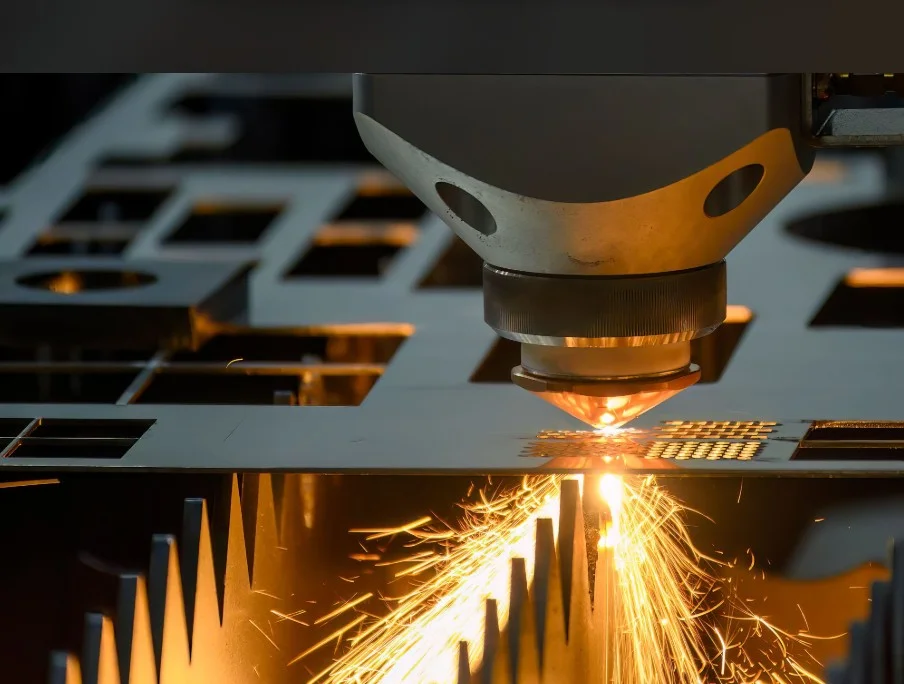
Aluminium is a staple material across Australian manufacturing, construction, and transport engineering. Its lightweight profile, corrosion resistance, and high strength-to-weight ratio make it ideal for everything from custom utility canopy builds to large-scale architectural cladding. However, when working with CNC laser cutting, a recurring question comes up during project planning: does laser cut aluminium actually need secondary finishing, or can parts go straight from the cutting bed to assembly?
The short answer is that it depends on the alloy, sheet thickness, assist gas used, and the final application of the part. Modern high-powered fiber lasers deliver clean, precise cuts, but specific structural, aesthetic, and coating requirements still demand post-processing. Understanding what happens at the cut edge helps project managers and fabricators avoid unnecessary labour costs while ensuring the finished product meets industry performance standards.
What the Laser Cut Edge Really Looks Like
To understand edge quality, it helps to look at how thermal cutting interacts with aluminium. Unlike steel, aluminium is a soft, highly reflective metal with high thermal conductivity. Heat dissipates rapidly across the sheet during cutting, which requires precise beam control to prevent melt back or rough edge profiles.
The Role of Nitrogen Assist Gas
Modern precision laser cutting relies almost exclusively on high-pressure nitrogen as an assist gas when processing aluminium. The nitrogen blasts molten material out of the kerf without reacting with the metal. This yields two distinct advantages:
- Oxide-Free Surface: Nitrogen prevents oxidation along the edge. Oxygen cutting creates a brittle oxide layer that must be mechanically removed before welding or painting.
- Minimal Dross: Correct gas pressure leaves a smooth underside, virtually eliminating the heavy burrs common with older cutting techniques.
Thickness and Edge Character
Sheet thickness plays a direct role in edge finish:
- Thin Gauges (1mm to 3mm): The laser cuts quickly and cleanly. Edges are square, sharp, and almost entirely burr-free. For internal componentry or hidden brackets, secondary finishing is rarely needed.
- Medium to Heavy Plate (4mm to 12mm+): As thickness increases, speed slows down. Vertical striations (slight ridging) become visible along the cut wall, and a tiny burr or micro-dross can form along the bottom edge where molten metal cools as it exits the kerf.
Factors That Dictate Whether Finishing Is Required
Not every job demands a polished edge, but skipping post-processing on critical components can compromise product longevity or assembly fit.
1. Surface Coating Preparation
If parts require powder coating, wet painting, or anodising, edge preparation is critical. Powder coat liquid tends to pull away from sharp 90-degree corners due to surface tension during curing, leaving a thin spot along the edge. Over time, moisture penetrates this weak area, causing filiform corrosion and coating failure. Radiusing or breaking the sharp laser-cut edge ensures even paint coverage and proper film thickness.
For anodising, the cut edge must be completely free of contaminants or micro-burrs to achieve an even chemical reaction across the surface. Guidance on metal preparation standards published by the Aluminium Association emphasizes the importance of uniform surface profiles to ensure consistent anodised film growth.
2. Workplace Health and Safety
Raw laser-cut edges on aluminium are razor-sharp. If components are handled manually by workers during assembly, or if the finished product is accessible to end-consumers (such as handrails, cabinets, or vehicle accessories), edges must be deburred and rounded to meet Australian workplace safety guidelines and prevent injuries.
3. Structural Integrity and Stress Concentrations
In high-stress structural applications, sharp corners and rough striations act as stress risers. Microscopic notches along a rough cut edge can develop into fatigue cracks under cyclic loading. Radiusing edges smooths out these microscopic imperfections, improving the fatigue life of structural frames and trailer chassis.
4. Mating Tolerances
When laser-cut parts assemble into tight enclosures, interlocking tab-and-slot designs, or flush-fitting enclosures, minor burrs on the bottom edge can prevent parts from sitting flat. A quick deburring pass ensures precise fit-up during welding or bolting.
Common Finishing Methods for Laser Cut Aluminium
When secondary finishing is necessary, several efficient methods suit different production volumes and quality requirements.
How Precision Cutting Reduces Post-Processing Costs
Secondary finishing adds extra handling, time, and labour to production costs. The effective way to minimise these expenses is by optimizing the initial cut quality on the machine bed.
Using state-of-the-art CNC fiber equipment with adaptive optics and automated gas mixing produces exceptionally clean edges off the machine. Sourcing components through specialised services like Acute Laser aluminium cutting ensures tight tolerances, square cut faces, and minimal dross right from the initial production pass. This reduces the time spent on manual bench deburring and speeds up overall assembly flow.
Design engineers can also design for manufacturability by specifying realistic tolerances, adding small chamfers in CAD models, and selecting the appropriate aluminium grade (such as 5052 for marine sheet or 6061 for structural parts) prior to cutting.
Frequently Asked Questions
Does laser cut aluminium rust along the cut edge?
Aluminium does not rust like steel, but it forms a thin, natural aluminium oxide film when exposed to air. If cut with nitrogen, this edge remains raw and clean. However, if exposed to harsh marine or industrial environments without a protective coating or anodising layer, surface pitting can occur over time.
Is nitrogen cutting mandatory if I plan to powder coat aluminium parts?
Yes, nitrogen assist gas is strongly recommended. Oxygen cutting creates a heavy oxide skin along the cut edge that prevents powder coat from adhering properly. Nitrogen cutting leaves a clean edge that requires only light deburring or edge rounding before pre-treatment and painting.
Can laser cutting produce countersunk holes, or do they need secondary machining?
Standard 2D laser cutters cut vertically through the sheet, meaning they produce straight-sided holes. While some advanced 3D laser systems or secondary drill setups create countersinks, standard laser-cut holes require a secondary drilling or countersinking pass on a drill press.
What is the maximum thickness of aluminium that can be laser cut cleanly?
High-powered fiber lasers (10kW to 20kW+) can cut aluminium up to 30mm thick or more. However, edge quality is cleanest on sheets up to 12mm. Above 12mm, minor striations and dross become more noticeable, making secondary finishing necessary for visual or precision applications.
How do I stop powder coating from peeling off laser-cut corners?
To prevent powder coat peeling, use an automated deburring machine or manual edge-breaking tool to put a small 0.5mm to 1mm radius on all sharp laser-cut edges. This allows the liquid or powder coating to flow evenly over the corner without thinning out.
Practical Takeaway
Not all laser cut aluminium requires secondary finishing. Thin sheet components for hidden assemblies or internal framing can often go straight to production. However, for parts requiring powder coating, manual handling, or high fatigue resistance, post-processing is a vital step. Partnering with a skilled laser cutting supplier and specifying edge requirements early in the project guarantees high-quality results while keeping production costs under control.