Sign up with Google
 Sign in with Zoho

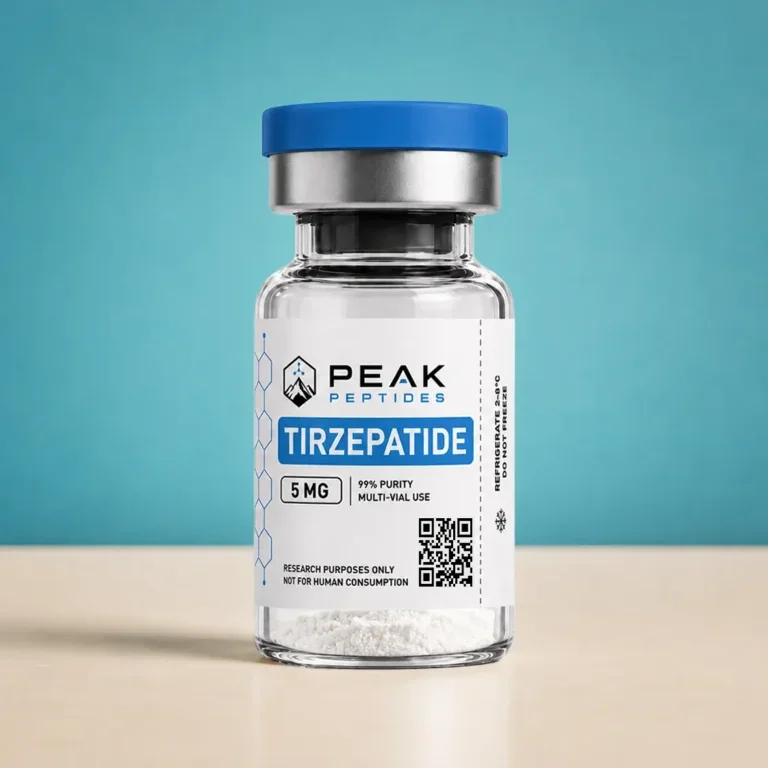
Few molecules have pushed metabolic science forward as fast as this one. In the SURMOUNT-1 trial, which followed 2,539 adults for 72 weeks, the highest dose group lost an average of 20.9% of their body weight. Results like that send scientists straight back to the bench with one question. What is actually happening inside the cell? We see that curiosity every day at Peak Peptides, and it explains why Tirzepatide Peptide now shows up in so many lab notebooks. Here is how researchers study it, step by step.
One Molecule, Two Receptors
Tirzepatide is a synthetic chain of 39 amino acids. Its backbone is built on the GIP hormone sequence, yet it was designed to switch on the GLP-1 receptor too. That dual action is the main reason Tirzepatide research has grown so quickly, since older compounds target GLP-1 alone.
A fatty acid side chain lets the molecule bind to albumin, a common blood protein. This slows its breakdown and gives it a half-life of about five days. For you as a researcher, that long window makes dosing schedules and sampling much easier to plan.
Starting at the Receptor
Most studies begin with receptor assays. Scientists expose cells that carry GIP or GLP-1 receptors to the peptide and measure the signal that follows, usually a rise in cyclic AMP.
These tests revealed something surprising. The molecule binds the GIP receptor more strongly than the GLP-1 receptor. At the GLP-1 receptor, it also favors cAMP signaling over beta-arrestin recruitment, which may keep more receptors active on the cell surface. This pattern, known as biased agonism, has made Tirzepatide Peptide research a key reference point in receptor science.
Moving Into Cells and Animal Models
Once the receptor picture is clear, the work moves to more complex systems. Pancreatic beta cell lines help track insulin release at different glucose levels. Fat and liver cell models show how lipids are stored, burned, or moved around under changing conditions.
Animal studies add the bigger picture. Over several weeks, researchers can watch food intake, energy use, and body composition shift. A large share of Tirzepatide research also compares results against single-pathway peptides like semaglutide, to see exactly what dual signaling adds.
Why Material Quality Shapes Every Result
Even a well-planned study can fall apart if the starting material is off. Impurities, degraded peptide, or a wrong concentration can quietly skew a dose response curve and waste months of work. That is why reliable Tirzepatide Peptide research depends on verified purity and honest documentation. Before you run a single assay, check the Certificate of Analysis for your lot. Confirm the vial size fits your protocol, and follow storage instructions closely, because peptides lose stability fast when handled carelessly.
Conclusion
Tirzepatide has given metabolic scientists a fresh way to study how two hormone pathways work together. Each stage, from receptor assays to long-term animal work, builds on the one before it, and each depends on material you can trust. At Peak Peptides, we supply Tirzepatide Peptide in 5mg, 10mg, 20mg, and 30mg vials, third-party tested with COAs available for applicable lots. Explore our Tirzepatide range and give your next study a dependable starting point. All products are for laboratory research use only.