Sign up with Google
 Sign in with Zoho

Aged Care Asset Management: Why It Matters
Aged care facilities depend on hundreds of assets every day, from medical equipment and mobility aids to HVAC systems, emergency equipment, electrical systems, fire safety infrastructure, and building facilities. Effective Asset Management helps aged care providers keep these assets safe, reliable, compliant, and available when staff and residents need them.
Without a structured approach, maintenance teams may rely on spreadsheets, manual reminders, paper records, or disconnected systems. This can make it difficult to track asset conditions, schedule preventive maintenance, manage contractors, and maintain accurate service histories.
Modern aged care asset management software provides a centralized way to manage the entire asset lifecycle while helping facilities move from reactive repairs toward proactive maintenance.
The Role of Asset Management in Aged Care Facilities
Aged care organizations need more than basic maintenance tracking. They require visibility across physical assets, maintenance activities, inspections, compliance requirements, contractors, and operational costs.
An effective asset management system can help teams:
- Maintain a centralized asset register
- Track asset locations and categories
- Schedule preventive maintenance
- Record inspections and servicing
- Monitor asset condition and performance
- Manage maintenance requests
- Track work orders and completion status
- Store service and maintenance histories
- Manage contractors and external technicians
- Monitor maintenance costs
- Generate operational reports
This creates a more structured maintenance environment and gives facility managers better visibility into the condition and performance of critical assets.
Preventive Maintenance for Aged Care Assets
Preventive maintenance focuses on performing inspections, servicing, testing, and other maintenance activities before equipment fails.
For aged care facilities, preventive maintenance can be particularly important because unexpected equipment failures can disrupt daily operations and create additional safety or compliance concerns.
A preventive maintenance program may include:
Scheduled Inspections
Regular inspections help teams identify signs of wear, damage, deterioration, or performance issues before they become larger problems.
Routine Servicing
Equipment can be serviced according to manufacturer recommendations, internal maintenance policies, or applicable operational requirements.
Compliance Checks
Facilities can schedule recurring inspections and checks for relevant safety and compliance-related assets.
Condition Monitoring
Recording asset condition over time helps maintenance teams identify recurring problems and determine when repair, replacement, or further assessment may be required.
Maintenance History
Maintaining a digital service history creates a record of completed work, previous faults, inspections, and maintenance activities.
Asset Management Software for Smarter Aged Care Maintenance
Traditional spreadsheets can be difficult to scale when a facility manages hundreds or thousands of assets. Information may become duplicated, outdated, or difficult to access.
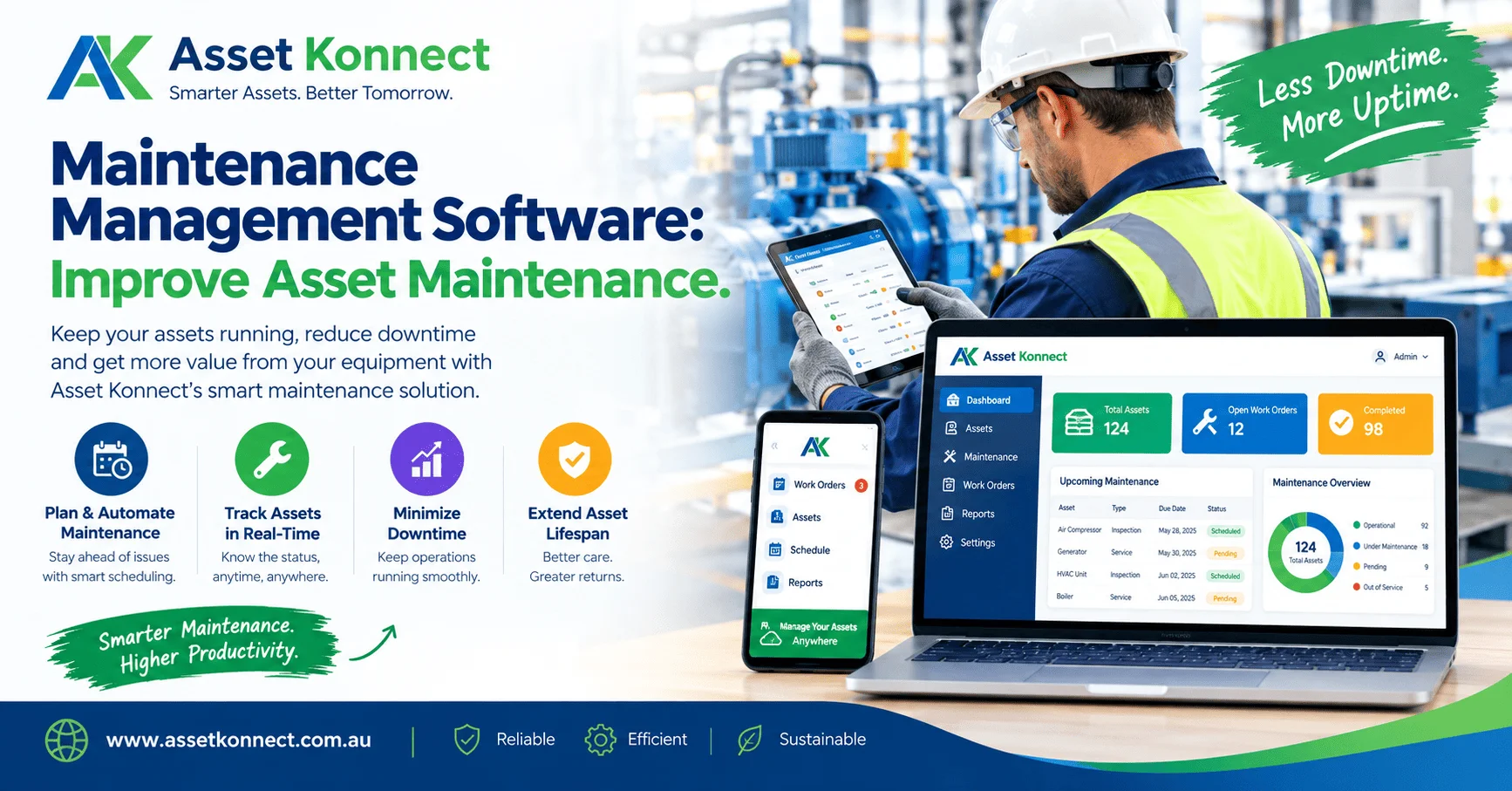
An asset management software platform provides a centralized digital environment where maintenance teams can manage assets and related activities from one system.
For aged care providers, useful capabilities can include:
Digital Asset Register: Create detailed records for equipment, facilities, infrastructure, and other operational assets.
Preventive Maintenance Scheduling: Set recurring maintenance tasks and receive reminders for upcoming activities.
Work Order Management: Assign, prioritize, monitor, and close maintenance jobs through a structured workflow.
Mobile Accessibility: Allow maintenance personnel and contractors to access relevant information while working on-site.
Document Management: Keep manuals, certificates, inspection records, service documents, and other asset-related information organized.
Reporting & Analytics: Analyze maintenance activity, asset performance, outstanding work, and recurring issues.
Contractor Management: Coordinate external maintenance providers and maintain visibility of assigned work.
From Reactive Repairs to Proactive Maintenance
Reactive maintenance generally begins after an asset has already failed. While emergency repairs will always have a place in facility operations, relying heavily on reactive maintenance can make maintenance planning more difficult.
A proactive maintenance strategy instead uses asset information and scheduled activities to identify potential problems earlier.
For example, rather than waiting for an HVAC system to fail, a facility can schedule inspections and servicing at predetermined intervals. Similarly, equipment requiring regular testing can be included in recurring maintenance schedules.
This approach can help maintenance teams improve planning, reduce avoidable disruptions, and make better use of maintenance resources.
Key Benefits of Aged Care Asset Management
A structured asset management strategy can support several areas of aged care operations.
Better Asset Visibility
A centralized asset register gives facility managers a clearer understanding of what assets exist, where they are located, and what maintenance activities are associated with them.
Improved Maintenance Planning
Scheduled preventive maintenance allows teams to organize work before maintenance becomes an emergency.
Centralized Maintenance Records
Digital records can make it easier to review previous repairs, inspections, servicing, and asset-related documentation.
Improved Operational Efficiency
Automated workflows, maintenance schedules, notifications, and work orders can reduce repetitive administrative tasks.
Better Decision-Making
Maintenance data can help managers identify recurring failures, maintenance trends, high-cost assets, and potential replacement requirements.
Stronger Contractor Coordination
A centralized system can provide better visibility into contractor assignments, work orders, service records, and completed maintenance.
How Asset Konnect Supports Aged Care Asset Management
Asset Konnect is a SaaS-based asset and maintenance management platform designed to help organizations manage assets, maintenance activities, contractors, and operational workflows through a centralized digital system.
For aged care facilities, Asset Konnect can provide a structured environment for managing the asset lifecycle—from registering an asset and scheduling maintenance to recording completed work and reviewing asset information.
The platform can support key maintenance processes such as:
- Asset register management
- Preventive maintenance scheduling
- Work order management
- Maintenance request tracking
- Contractor management
- Asset history tracking
- Document and information management
- Maintenance reporting
- Facility and infrastructure management
By bringing these activities together, Asset Konnect can help aged care teams move toward a more organized and data-driven maintenance workflow.
Building an Effective Aged Care Preventive Maintenance Strategy
A successful preventive maintenance program starts with accurate asset information.
A practical implementation process includes:
1. Build a Complete Asset Register Document important equipment, infrastructure, facilities, and operational assets.
2. Categorize Assets by Importance Identify assets based on operational importance, maintenance requirements, and potential consequences of failure.
3. Establish Maintenance Schedules Define appropriate inspection, servicing, testing, and maintenance frequencies.
4. Digitize Work Orders Use structured work orders to assign and monitor maintenance tasks.
5. Record Every Maintenance Activity Maintain service histories to create a reliable record of asset performance.
6. Monitor Maintenance Data Review recurring faults, overdue tasks, maintenance costs, and asset performance.
7. Improve the Program Continuously Use historical data to adjust maintenance schedules and identify opportunities for improvement.
Aged Care Asset Management Checklist
Before implementing or reviewing an asset management strategy, aged care providers can consider:
- Do we have a complete digital asset register?
- Can we quickly locate individual assets?
- Are preventive maintenance schedules documented?
- Are maintenance tasks automatically tracked?
- Can staff submit maintenance requests digitally?
- Are contractor activities recorded?
- Can we access complete asset service histories?
- Are important asset documents centralized?
- Can managers identify overdue maintenance?
- Can maintenance data support replacement planning?
If several answers are "no," there may be opportunities to improve the facility's maintenance management processes through a dedicated SaaS platform.
Frequently Asked Questions
What is asset management in aged care?
Asset management in aged care is the structured process of managing equipment, facilities, infrastructure, and other physical assets throughout their lifecycle. It includes asset tracking, maintenance, inspections, servicing, documentation, performance monitoring, and replacement planning.
Why is preventive maintenance important in aged care?
Preventive maintenance helps facilities identify and address potential asset issues before they develop into unexpected failures. It can support equipment reliability, maintenance planning, operational continuity, and safety-focused facility management.
What is aged care asset management software?
Aged care asset management software is a digital platform that helps facilities maintain asset registers, schedule preventive maintenance, manage work orders, track service histories, coordinate contractors, and analyze maintenance information.
Can Asset Konnect manage preventive maintenance?
Asset Konnect provides SaaS-based asset and maintenance management capabilities that can support preventive maintenance scheduling, work orders, asset records, contractor coordination, and maintenance tracking.
How does asset management reduce reactive maintenance?
By maintaining accurate asset information and scheduling recurring inspections and servicing, teams can identify maintenance requirements earlier and plan work before certain issues become unexpected failures.
What assets should aged care facilities track?
Depending on the facility, organizations may track medical and care equipment, HVAC systems, electrical infrastructure, fire safety equipment, mobility equipment, building infrastructure, security systems, appliances, and other operational assets.
Conclusion
Effective Asset Management gives aged care providers greater visibility into their physical assets and maintenance activities. Combining an accurate asset register with preventive maintenance, digital work orders, contractor management, service histories, and reporting can create a more organized approach to facility maintenance.
With a SaaS platform such as Asset Konnect, aged care organizations can centralize asset and maintenance information while establishing more consistent workflows for managing their facilities and operational assets.







 copy.webp)

.webp)