Sign up with Google
 Sign in with Zoho

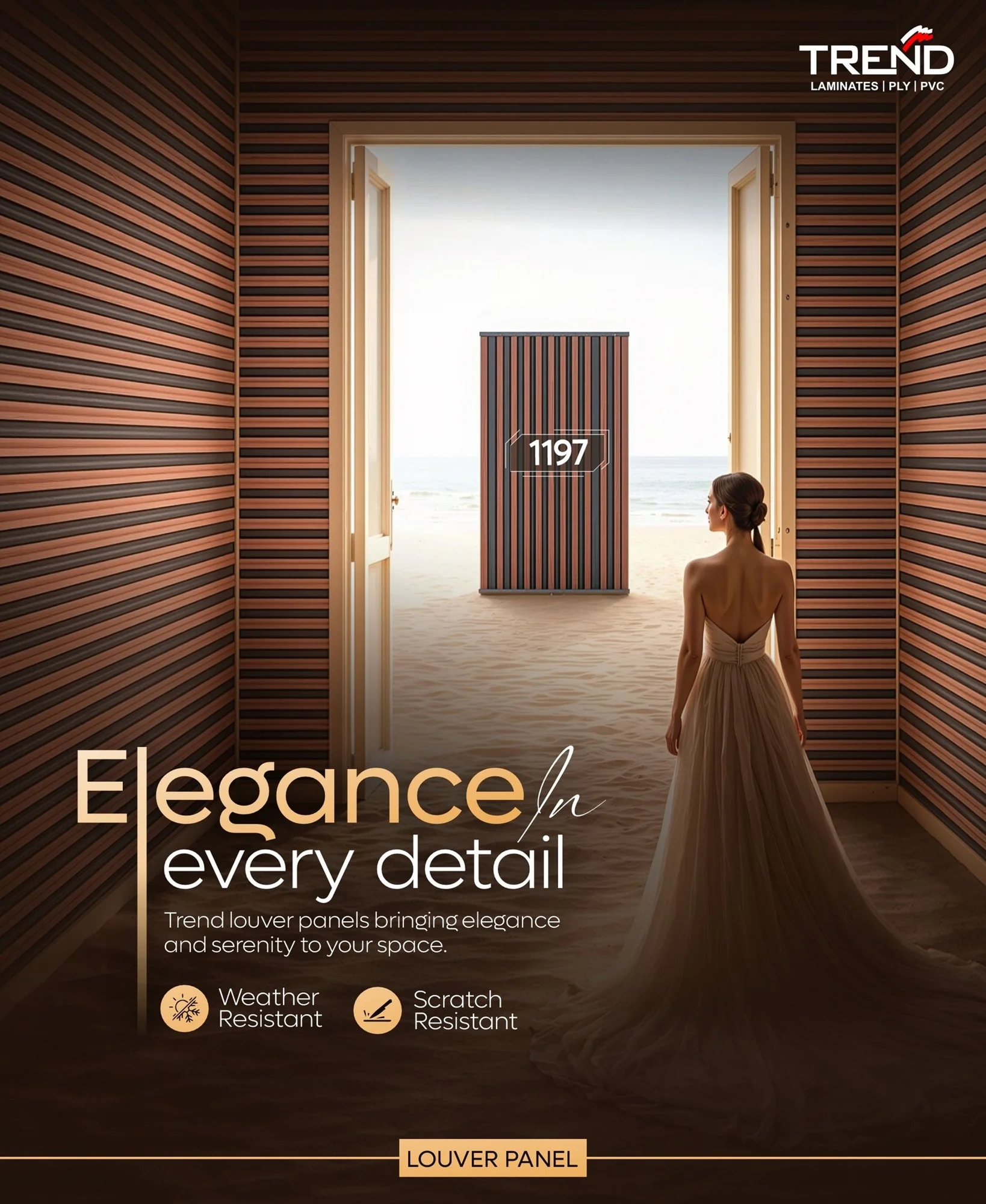
Modern interiors are increasingly focused on creating spaces that look stylish while remaining functional and comfortable. One versatile element that can help achieve this balance is louver design. Louvers can add depth, texture, privacy, and visual separation without making a room feel enclosed.
Modern louvers can fit into residential and commercial interior spaces, whether for feature walls or ceiling accents. Whether it's a renovation or planning a new space, you can get a little creative with these five innovative ideas.
1. Create a Statement Louver Wall
A louver wall can become an attractive focal point in a living room, bedroom, reception area, or office. Vertical or horizontal louvered surfaces add rhythm and dimension to the wall rather than plain wall surfaces.
If you want a modern feel, try vertical louvers with even spacing set in a neutral or darker wood tone. The empty spaces between the slats cast slight shadows and add some dynamism to the wall when the natural or artificial light shifts throughout the day.
A well-designed louver wall can even be positioned behind a TV unit, sofa, bed or reception desk. When choosing the size and spacing of louvers, factor in proportion to the room to avoid a feeling of visual crowding.
2. Use Louvers as a Room Divider
Open-plan homes and offices often need some separation without completely blocking light or visibility. Louvers are an effective solution as they can create zones and still provide a visual connection.
For instance, vertical blinds can be used to divide the living room from the dining room or to delineate a bedroom from a dressing space. They can identify work stations, meeting areas, waiting areas, etc. in an office.
It's especially effective in small spaces since the louver partition is normally lighter than a wall. Space, height and finish can also be varied for a divider that matches the interior theme.
3. Add Louvers Behind the Bed
The bedroom is another excellent space for experimenting with louver interior design. A louvered feature wall behind the bed may serve as a decorative framing behind the bed and introduce an architectural element to the room.
You can cover the entire wall, or you can do so with louvers across the width of the headboard area. The slats can be attached to a warm lighting that is integrated behind or around to provide a relaxing ambiance for an evening lighting.
If you're going for a clean, simple aesthetic, opt for subtle vertical lines and a simple finish. Deeper hues and perfect lighting placement can add contrast for a more upscale look.
Take into account durability, cleaning needs, resistance to moisture, and integration with the existing furniture when choosing materials.
4. Combine Louvers with Lighting
Lighting and Louvers can be used together to produce a stunning visual impact. In between the slats lie open spaces permitting indirect lighting and shadows.
LED strips can be used behind a louver feature wall, under a ceiling installation or around a decorative partition for instance. The louvers add texture during the day, and contours during the night.
This concept is particularly good for reception areas, lounges, restaurants, bedrooms, and entertainment areas. Trend Laminates' decorative surface finishes can be integrated with the louver applications to help the designer match the interior decoration choice with the louvered surface.
But, lighting needs to be considered prior to installation. Take into account wiring, access to carry out maintenance and heat management in the design phase.
5. Extend Louvers from Wall to Ceiling
Fit a louver feature from the wall into the ceiling for a more dramatic effect. This establishes visual continuity and can help to make a mundane room more personalised.
For instance, louvers can be located at the back of a TV set and run up to the ceiling in an uninterrupted feature. They can alternatively be employed around a dining area to help demarcate the room in an open-plan environment.
This kind of louvre style is especially suited for contemporary home, hotel, office and retail interior applications. Inspect ceiling height, structural conditions, electrical fixtures, ventilation and access prior to installation.
How to Choose the Right Louver Design
The best louver design is not necessarily the most elaborate one. It should complement the function, size, lighting and furnishings of the room, as well as its general architectural character.
Before you decide, take these things into account:
- Room size: Wider spaces can accommodate larger or more detailed louver arrangements.
- Materials: Choose materials based on durability, maintenance and installation location.
- Colour and finish: Neutral finishes establish a minimalist atmosphere, while contrasting colours can accentuate a particular feature.
- Spacing: Slats will have a different level of privacy, light, ventilation, and visual density depending on the spacing.
- Lighting: Consider artificial lighting in conjunction with the installation of louvers.
- Maintenance: In kitchens and wear areas, opt for a finish that is easy to clean.
Final Thoughts
Today's louvers are more than a decorative feature. With careful design, they can be used as feature walls, partitions, background for a bed, a lighting fixture, and a ceiling treatment. The trick is to strike a balance between the looks and the functional attributes of the material, including its performance, installation, maintenance and lighting.
Whether you are updating a single room or planning an entire interior, these louver design ideas can provide a contemporary way to introduce texture, depth, and visual character without overwhelming the space.