Sign up with Google
 Sign in with Zoho

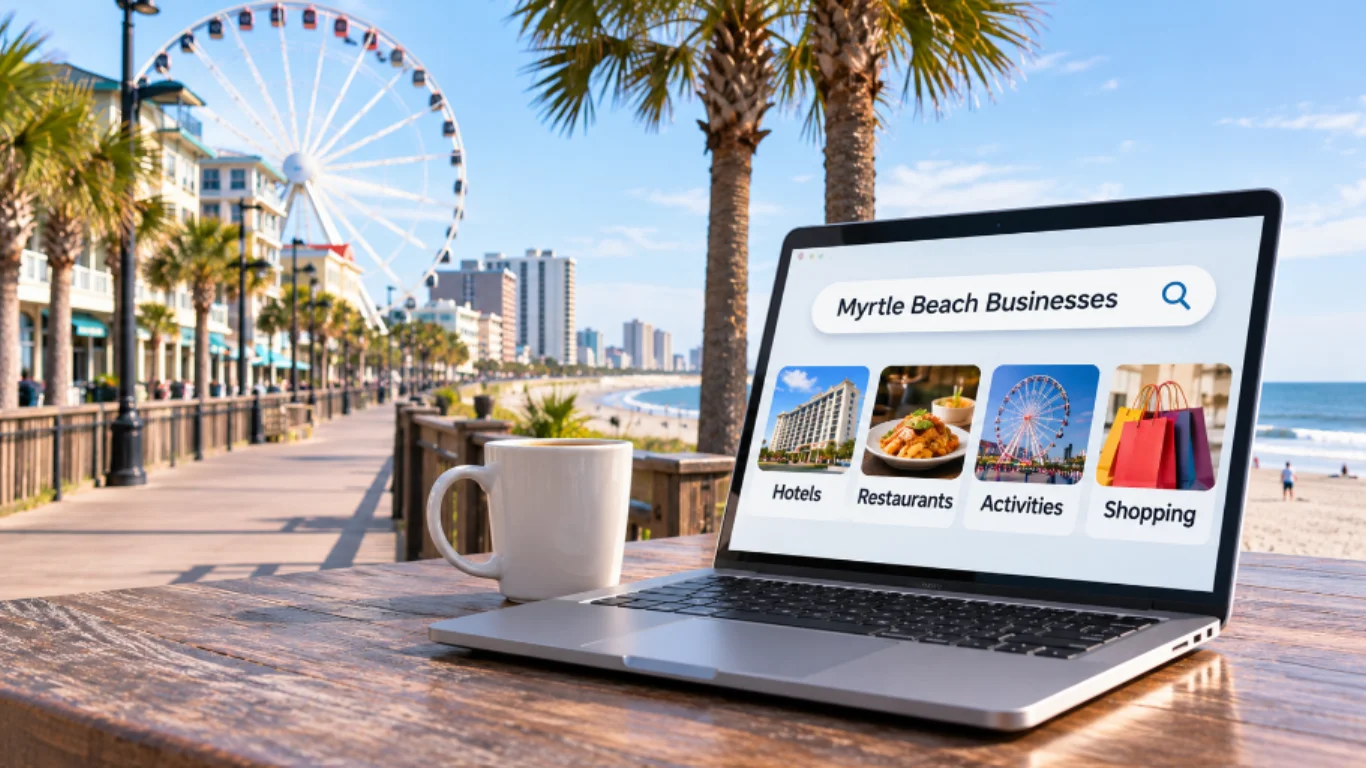
Myrtle Beach is a destination for visitors all year long, but peak tourism seasons create a substantial increase in customer demand for hotels, restaurants, entertainment venues, retail stores and recreational businesses. Seasonal visitors can bring in a lot of money, but relying solely on tourists can be a problem when the season is over.
Attracting customers during peak travel periods is not the only way local businesses can achieve sustainable expansion. It's about building an online presence that is useful and visible throughout the year.
A solid digital marketing strategy can help a business connect with tourists before they arrive, engage with residents during the off-season and keep in touch with past customers. Myrtle Beach businesses can combine search engine optimisation, relevant content and local marketing to create a more consistent customer acquisition strategy.
1. Build a Search Strategy That Works Beyond Tourist Season
Variable customer demand is a major problem for businesses that operate in a tourism driven market. For example, a restaurant may be popular during the summer vacation season but have fewer searches and reservations during the winter.
Which makes a long term search strategy even more important.
Companies should think about the different audiences they serve and how their search behaviour changes throughout the year. Locals may be looking for everyday dining, maintenance and all-year-round entertainment, while tourists may be looking for beachside restaurants, family activities and holiday accommodation.
A targeted SEO strategy helps a business to address both audiences.
Companies exploring reliable SEO services in Myrtle Beach can benefit from a structured approach that connects keyword research, local search optimization, website content, and technical improvements with their business objectives.
Instead of focusing exclusively on seasonal keywords, businesses should build visibility around services and products that generate demand throughout the year.
2. Understand the Different Needs of Tourists and Local Customers
Tourists and permanent residents often look for similar businesses, but their expectations are different.
A family going to Myrtle Beach may want to know what things to do, where to eat, and what to do for entertainment within walking distance of their hotel. A local may be more concerned about affordability, convenience, quality of service, and long-term relationships.
Businesses need to create content that speaks to both sets.
Develop Audience-Specific Website Content
A hotel, for example, could publish separate resources covering:
- Family-friendly activities near the property.
- Weekend getaway recommendations.
- Local dining and entertainment guides.
- Off-season accommodation packages.
- Information about extended stays.
A restaurant, for instance, could develop content about seasonal menus, local events, weekday specials, and dining experiences for visitors.
This strategy helps companies to attract various types of customers without relying on repetitive promotional content.
It’s also good for hospitality SEO by linking website pages to questions potential customers are searching for before making purchasing decisions.
3. Strengthen Local Search Visibility Throughout the Year
Local search visibility is crucial for businesses that rely on customers in a particular geographic area.
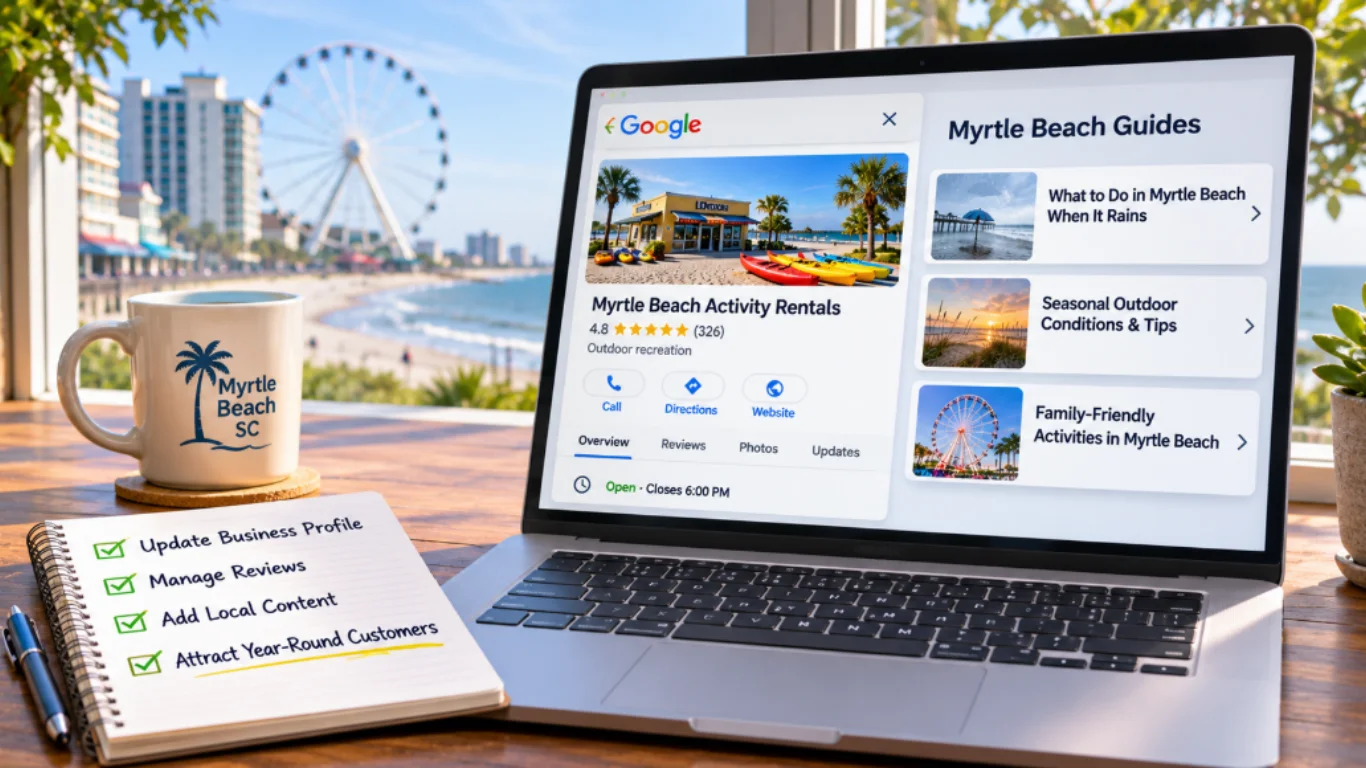
If someone is looking for a restaurant, hotel, repair service, or entertainment venue near them, accurate business information can influence which business gets the inquiry.
You can begin by setting up a Google Business Profile.
Businesses should regularly service:
- Accurate business hours and holiday schedules.
- Updated contact information.
- Relevant business categories.
- Current photographs and service descriptions.
- Accurate website and booking links.
- Genuine customer reviews.
Review management also deserves consistent attention. Responding professionally to customer feedback demonstrates that a business values its customers beyond individual transactions.
Create Useful Location-Based Content
Local content should be of interest to and relevant for the community.
For example, an outdoor recreation company in Myrtle Beach might write guides about activities to do when it rains, seasonal outdoor conditions, family excursions, and nearby attractions.
A property management company could write content on vacation rental maintenance, seasonal preparation, or frequently asked questions from property owners.
These resources could draw relevant searches and display local knowledge.
The aim is to be a valuable online resource, not just another business trying to get noticed.
4. Use Seasonal Business Marketing to Create Long-Term Opportunities
Seasonal marketing should not begin and end with the busiest months.
Businesses can use quieter periods to prepare campaigns, publish helpful content, improve their websites, and reconnect with existing customers.
Plan Content Around Seasonal Search Demand
A practical content calendar can help businesses anticipate changing customer interests.
For example:
Winter: Promote holiday experiences, indoor entertainment, maintenance services, and winter accommodation opportunities.
Spring: Publish vacation planning guides, seasonal offers, and information about upcoming attractions.
Summer: Focus on family activities, restaurant recommendations, accommodation availability, and local experiences.
Fall: Promote weekend getaways, local events, special packages, and off-season services.
Planning content in advance gives search engines time to discover and index new pages before the relevant demand increases.
Encourage Repeat Business
Businesses also should think about what happens after a customer leaves Myrtle Beach.
Hotels may ask former guests to sign up for promotional updates. A restaurant can maintain an email list for special events and seasonal menus. A place for entertainment can show notices about experiences that will be there soon.
These activities help turn one-time visitors into repeat customers.
Marketing communications shall at all times comply with applicable requirements on consent and privacy.
5. Improve Website Experience to Convert More Visitors
Attracting website visitors is valuable, but businesses also need to make it easy for people to take action.
A potential customer who cannot find a booking option, service description, or phone number may simply visit a competitor.
A conversion-friendly website should include:
- Clear descriptions of products and services.
- Simple navigation and organized page layouts.
- Mobile-responsive design.
- Visible contact and booking options.
- Relevant photographs and customer testimonials.
- Fast-loading pages.
- Accurate business information.
Optimising for mobile is particularly important for tourism businesses because visitors are likely to search for restaurants, attractions and services while they are travelling.
Say, a person walking along the Myrtle Beach seashore may look for restaurants around on a cell phone. It’s easier if the restaurant has an accessible menu, correct opening hours, directions and booking information.
Thus, website usability has to be considered as an important aspect of marketing of tourism business.
6. Measure Performance and Adjust Your Marketing Strategy
A sustainable online presence requires regular evaluation.
Businesses should monitor whether their marketing efforts are attracting relevant visitors and generating meaningful customer actions.
Google Search Console can help identify search queries, impressions, clicks, and pages receiving organic traffic. Google Analytics 4 can provide additional insights into website engagement and conversion activity.
Important performance indicators include:
- Organic traffic trends across different seasons.
- Search visibility for important service-related keywords.
- Website visits from local and tourist audiences.
- Booking requests and contact form submissions.
- Phone calls generated through online channels.
- Returning website visitors and customer engagement.
Businesses should compare performance across different periods rather than evaluating results using a single month's traffic.
For example, a hotel might experience increased organic traffic before summer but generate more valuable extended-stay inquiries during quieter months.
Understanding these differences helps businesses make informed marketing decisions.
Frequently Asked Questions
1. Why is SEO important for Myrtle Beach businesses?
SEO enhances business visibility when potential customers search for related products and services. It can help with customer discovery, bring more relevant traffic to your website, and generate leads outside of traditional advertising means.
2. How can tourism businesses attract customers during the off-season?
Businesses can publish off-season travel guides, promote special packages, target local residents, update their Google Business Profile, and reconnect with previous customers through permission-based email marketing.
3. What is hospitality SEO?
Hospitality SEO involves optimizing hotel, restaurant, accommodation, and tourism websites to improve their visibility in relevant search results. It includes content optimization, local search strategies, technical improvements, and customer-focused website experiences.
4. How often should a Myrtle Beach business update its website content?
Businesses should review important pages regularly and update information whenever services, operating hours, seasonal offers, or customer needs change. Publishing genuinely useful articles consistently can also create additional opportunities to attract relevant search traffic.
5. Can local SEO help businesses attract permanent residents?
Yes. Businesses can target location-specific searches, develop content around everyday customer needs, maintain accurate local listings, and build a strong reputation through genuine customer reviews.
Conclusion
Myrtle Beach businesses function in an environment of seasonal fluctuations in consumer demand. But seasonal variations do not have to dictate long-term business performance.
Businesses can create more dependable growth opportunities by investing in search visibility, creating content that targets their audience, optimising website experiences, and staying connected to past customers.
The real advantage comes from thinking of digital marketing as a continuous business investment, not a seasonal promotional activity. When tourists, residents, and returning customers can easily find and trust a business online, seasonal attention can turn into the foundation for success year-round.