Sign up with Google
 Sign in with Zoho


The Indian ophthalmic pharmaceutical market is booming. With millions of people suffering from eye conditions like glaucoma, dry eyes, cataracts, and diabetic retinopathy, the demand for high-quality eye care health solutions has never been higher. If you are a pharma professional, distributor, or entrepreneur looking to build a profitable business in this growing sector, partnering with the right ophthalmic pharma company for a PCD (Propaganda Cum Distribution) franchise is one of the smartest decisions you can make.
But here's the real question — with hundreds of ophthalmic companies claiming to be the "best", how do you make the right choice? This comprehensive guide walks you through every critical factor you must evaluate before signing a PCD franchise agreement.
What Is an Ophthalmic PCD Pharma Franchise?
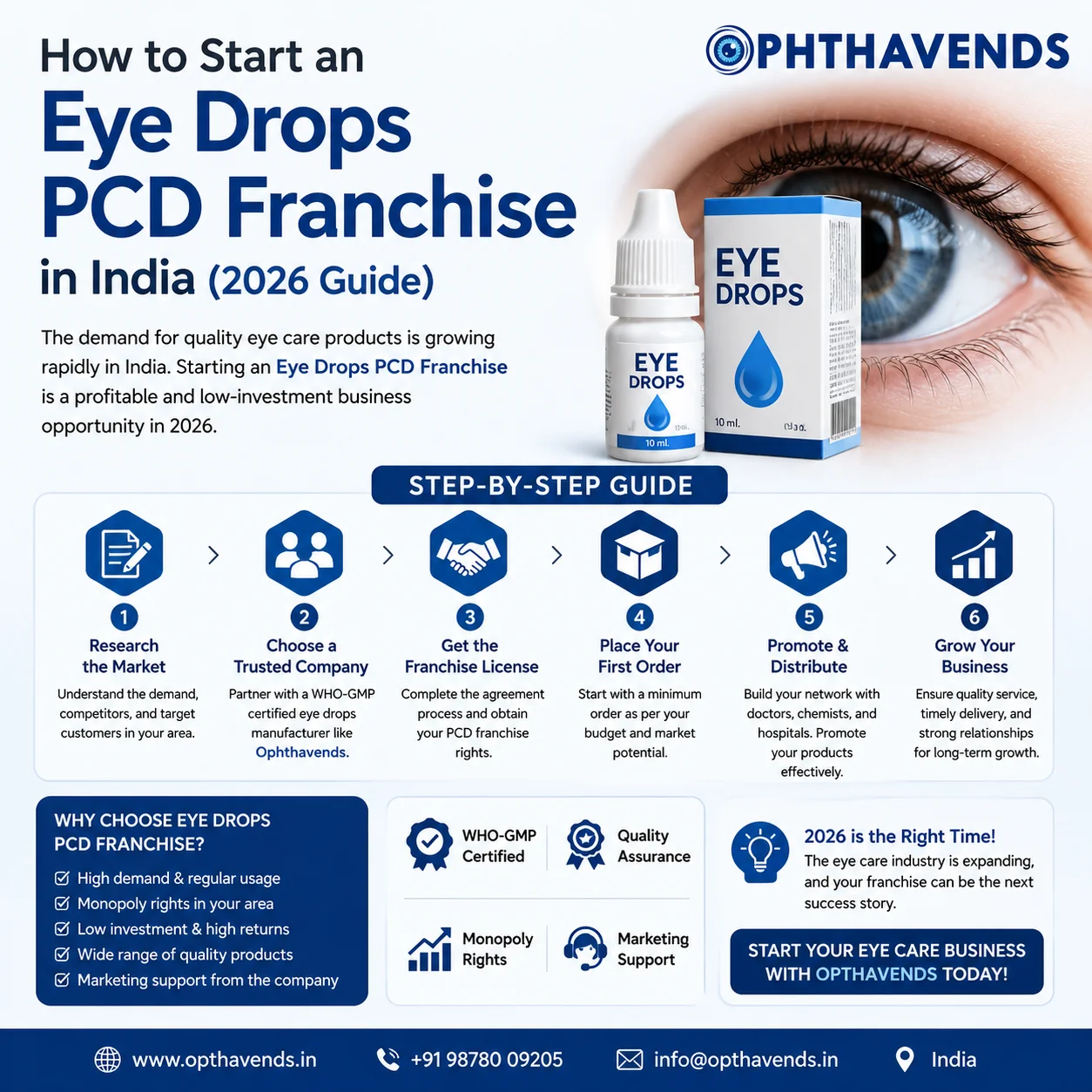
Before diving into the selection process, it is important to understand what an ophthalmic PCD pharma franchise actually means. PCD stands for Propaganda Cum Distribution, a business model where a pharmaceutical company grants distribution and marketing rights to an individual or business in a specific territory.
In the ophthalmic segment, this means you get the right to distribute and promote a company's eye care products — including eye drops, ointments, lubricants, and anti-glaucoma formulations — under their brand name, in your exclusive region.
The biggest advantages of this model include:
- Low investment to start — typically between ₹30,000 to ₹1,50,000 depending on the region
- Monopoly rights — you are the sole authorized seller in your territory
- No manufacturing cost — the parent company handles production
- Ready-made product portfolio — no R&D required
- Marketing and promotional support — provided by the franchisor
With the Indian pharma industry crossing the ₹5,00,000 crore mark and the ophthalmic segment growing at a CAGR of over 10%, now is the perfect time to enter this niche. However, your long-term success depends heavily on which ophthalmic pharma company you choose as your partner.
Why Choosing the Right Ophthalmic Pharma Partner Matters
Not all ophthalmic PCD companies are created equal. A wrong partnership can result in:
- Poor product quality that damages your reputation with doctors and chemists
- Delayed supply that causes stockouts and lost revenue
- Weak marketing support that leaves you struggling in a competitive market
- No monopoly protection, meaning other distributors eat into your territory
On the other hand, the right ophthalmic pharma partner gives you a solid foundation — quality products, regulatory trust, strong branding, and long-term business growth. Here is exactly how to evaluate and choose the right one.
1. Verify Manufacturing Quality and Certifications
The first and most non-negotiable factor is the manufacturing quality of the ophthalmic company. Eye care products are directly applied to the eyes — one of the most sensitive organs of the human body. Quality here is not optional; it is critical.
When evaluating any ophthalmic pharma company for PCD franchise, always check for the following certifications:
- WHO-GMP Certification — Ensures the manufacturing unit follows World Health Organization's Good Manufacturing Practices
- ISO Certification — Confirms quality management systems are in place
- GLP (Good Laboratory Practices) — Validates proper testing and quality checks
- DCGI Approved Products — Confirms all products are approved by India's Drug Controller General
Companies that manufacture in WHO-GMP certified plants use sterile environments, advanced filling machinery, and strict quality control at every stage of production. This protects both patient safety and your business credibility.
Expert Tip: Always ask for a factory visit or request official certification documents before finalizing any PCD partnership. A trustworthy company will always be transparent about its manufacturing standards.
2. Evaluate the Product Range and Portfolio
A wider, more diverse product range gives you more opportunities to serve different types of eye care needs and tap into multiple prescription markets. Before choosing an ophthalmic PCD company, carefully review their complete product portfolio.
A strong ophthalmic company should offer products across all major categories:
- Antibiotic Eye Drops — for bacterial infections
- Anti-Allergic Eye Drops — for seasonal and chronic eye allergies
- Anti-Glaucoma Eye Drops — for managing intraocular pressure
- Anti-Inflammatory Eye Drops — post-surgical and injury recovery
- Lubricant / Dry Eye Drops — for dry eye syndrome, increasingly common among screen users
- Antifungal Eye Drops — for fungal eye infections
- Antioxidant Eye Drops — for protecting and nourishing the eye
- Anti-Cataract Eye Drops — for early-stage cataract management
- Mydriatic Eye Drops — for dilation during eye examinations
A company offering all these product categories positions you to serve ophthalmologists, optometrists, hospitals, and retail pharmacies more effectively — giving you a significant competitive edge in your territory.
3. Check for Exclusive Monopoly Rights
One of the biggest advantages of an ophthalmic PCD franchise is the monopoly rights — meaning no other distributor from the same company can operate in your assigned territory. However, not all companies clearly define or legally enforce these rights.
Before signing any agreement, make sure:
- Monopoly rights are clearly mentioned in the written agreement
- The territory boundaries are specific and well-defined
- The company has a proper conflict resolution policy for territorial disputes
- The monopoly covers all products in the portfolio, not just selected ones
Monopoly rights protect your investment and allow you to build a loyal network of doctors and pharmacies without worrying about internal competition. Never start a PCD franchise without written confirmation of exclusive territory.
4. Assess the Company's Market Reputation and Experience
In the pharmaceutical industry, reputation is everything. Doctors, chemists, and hospitals make prescribing and stocking decisions based on brand trust. If you associate yourself with a company that has a weak market reputation, you will find it extremely difficult to build your own business credibility.
Here's how to assess a company's reputation before committing:
- Check how many years they have been in the ophthalmic segment — longer experience usually means better processes and product knowledge
- Look for testimonials or reviews from existing franchise partners
- Research online presence — active website, social media, blog content, and press mentions indicate a serious company
- Ask doctors in your region if they are familiar with the company's products
- Search for any regulatory complaints or drug recalls associated with the brand
An established ophthalmic pharma company with a strong market presence will not only make it easier for you to introduce products but will also support faster business growth.
5. Evaluate Marketing and Promotional Support
One of the biggest differentiators between average and excellent ophthalmic PCD companies is the level of marketing support they provide to their franchise partners. This support is crucial, especially when you are just starting out and building your network of doctors and chemists.
A good ophthalmic PCD company should offer:
- Visual Aids — professional product brochures for doctor presentations
- Leave Behind Leaflets (LBLs) — detailed product literature to leave with healthcare professionals
- Sample Products — to help doctors trial and prescribe your products
- MR Bags and Gifts — branded promotional materials
- Reminder Cards — for follow-up marketing with doctors
- Catch Covers and Pens — branded stationery for awareness
- Digital Marketing Support — some companies now provide social media content and digital assets
Strong promotional support reduces your own marketing expenses significantly and speeds up your market penetration.
6. Review Pricing, Profit Margins, and Payment Terms
The financial structure of the PCD franchise deal determines how profitable your business will be. A good ophthalmic pharma company should offer:
- Competitive MRP (Maximum Retail Price) on all products
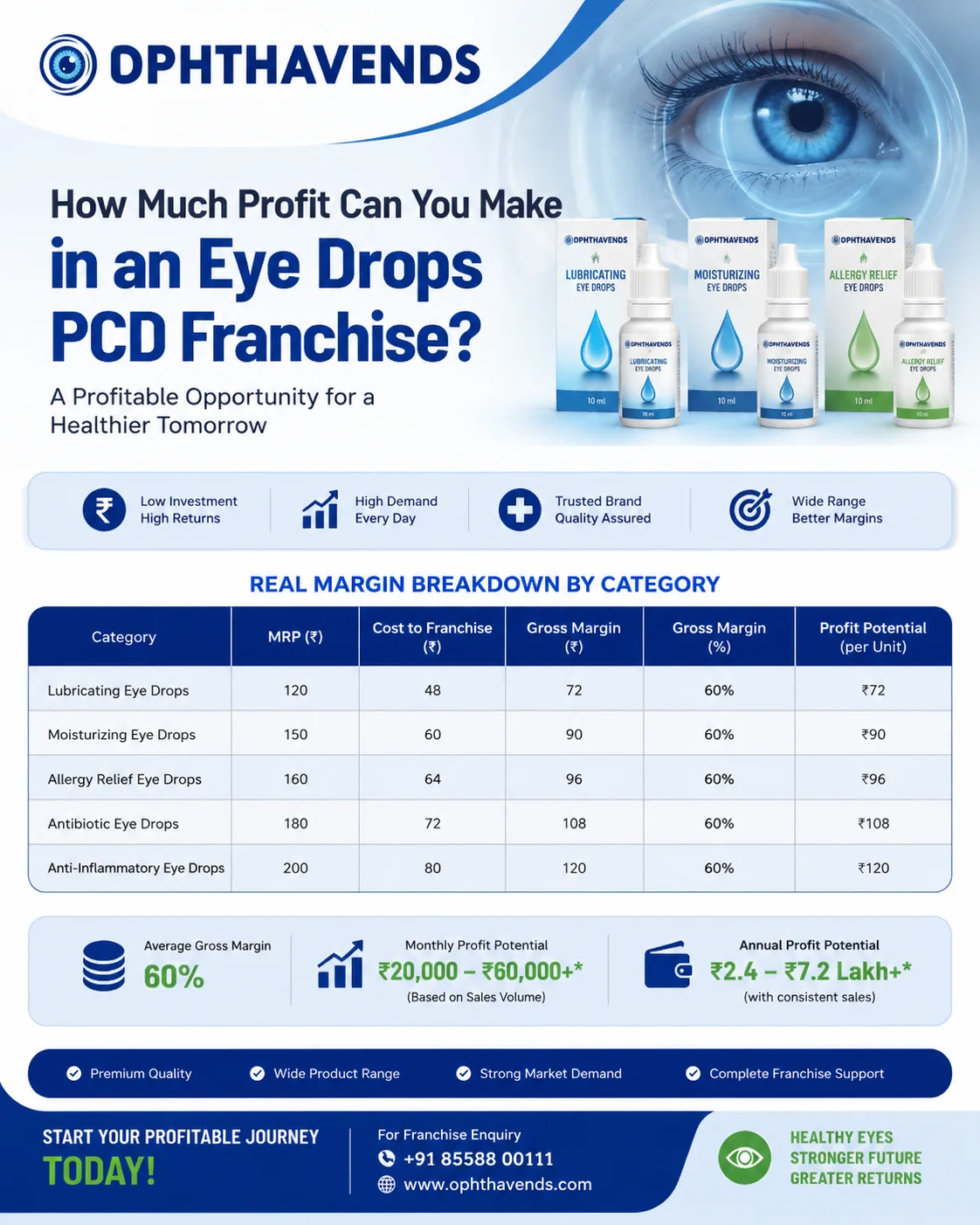
- High profit margins — typically between 30% to 40% in the ophthalmic segment
- Clear and transparent billing with no hidden charges
- Flexible minimum order quantities — especially important for new franchisees
- Credit terms — some companies offer payment flexibility, which helps manage cash flow
Always compare pricing and margins across 3–4 ophthalmic companies before making a final decision. Do not choose solely based on the lowest price — a company offering rock-bottom prices may compromise on quality or support.
7. Confirm On-Time Delivery and Supply Chain Reliability
In the pharmaceutical distribution business, supply chain reliability is as important as product quality. Stockouts frustrate doctors and pharmacies, and they quickly shift to other brands. Before choosing an ophthalmic PCD partner, evaluate their logistics capabilities:
- Do they have a dedicated dispatch and delivery team?
- What is their average order fulfillment time?
- Do they have warehousing locations in multiple states?
- How do they handle urgent or emergency orders?
A reliable partner ensures you always have the right products in stock, keeping your clients satisfied and your revenue consistent.
8. Understand the Legal Agreement Thoroughly
Before signing any PCD franchise agreement, read every clause carefully — or have a legal expert review it. The agreement should clearly define:
- Territory and monopoly rights
- Minimum order requirements
- Product pricing and MRP policy
- Termination and exit clauses
- Dispute resolution process
- Renewal terms
Never enter a PCD partnership based on verbal promises. Every commitment — product range, monopoly, pricing, support — must be in black and white. A legitimate and professional ophthalmic pharma company will always be willing to provide a clean, transparent agreement.
9. Evaluate After-Sales Support and Partner Communication
The relationship with your ophthalmic PCD company does not end at the agreement stage — it is an ongoing business partnership. Strong after-sales support reflects how much the company values its franchise partners.
Look for:
- Dedicated relationship manager assigned to your account
- Quick response time to product queries or complaints
- Regular training sessions on new products and market trends
- Field support when entering new areas or launching new products
A company that communicates openly and supports you proactively is a partner worth investing in.
Summary: Quick Checklist Before Choosing Your Ophthalmic PCD Partner
Conclusion
Choosing the right ophthalmic pharma company for a PCD franchise is not just a business decision — it is the foundation of your entire eye care distribution career. The Indian ophthalmic market offers massive growth potential, but only those who partner with the right manufacturer will be able to truly capitalize on it.
Focus on quality certifications, product diversity, genuine monopoly rights, marketing support, and transparent financial terms. A well-chosen ophthalmic PCD partner like Ophthavends — a WHO-GMP certified ophthalmic pharmaceutical company in India — provides all of these elements, giving you the best possible platform to build a successful, long-term eye care health solutions business.
Take your time, do your research, compare your options, and choose a partner that aligns with both your business goals and your commitment to delivering genuine eye care health solutions to patients across India.
Frequently Asked Questions (FAQs)
Q1. What is the minimum investment required to start an ophthalmic PCD pharma franchise in India?
The minimum investment to start an ophthalmic PCD franchise in India typically ranges from ₹30,000 to ₹1,50,000, depending on the territory size and the product range you choose. This is significantly lower than starting a full pharmaceutical manufacturing business, making it one of the most accessible entry points into the pharma industry. The investment generally covers the initial product stock, promotional materials, and registration formalities.
Q2. Is a drug license mandatory to start an ophthalmic PCD franchise?
Yes, a valid wholesale drug license is legally mandatory for anyone who wants to store, distribute, or sell pharmaceutical products in India — including ophthalmic eye drops. Along with a drug license, you will also need a GST registration number. Some states may require additional local permits. Always ensure your legal documentation is in order before launching your franchise business to avoid penalties or operational disruptions.
Q3. How do monopoly rights work in an ophthalmic PCD franchise, and why are they important?
Monopoly rights in a PCD franchise mean that the ophthalmic company grants you exclusive distribution rights within a specific geographic territory. No other franchise partner from the same company can operate or sell in your area. This protection is crucial because it eliminates internal competition, gives you a defined market to build relationships in, and ensures that all your marketing and doctor-development efforts translate directly into sales for your business. Always insist on having monopoly rights clearly documented in your franchise agreement.
Q4. What certifications should a reliable ophthalmic pharma company have before I partner with them?
A trustworthy ophthalmic pharma company should hold at minimum a WHO-GMP certification, confirming that their manufacturing plant meets global quality standards. ISO certification is an added assurance of quality management systems. All products must be DCGI (Drug Controller General of India) approved for legal sale in the country. GLP (Good Laboratory Practices) certification further validates that the company conducts proper testing before releasing products to market. These certifications collectively ensure that the eye care products you distribute are safe, effective, and legally compliant.
This guest post is written by a pharma industry professional with expertise in ophthalmic pharmaceutical distribution and eye care health solutions. For more information about ophthalmic PCD franchise opportunities and WHO-GMP certified eye care products, visit Ophthavends — a trusted ophthalmic pharmaceutical company in India.