Sign up with Google
 Sign in with Zoho

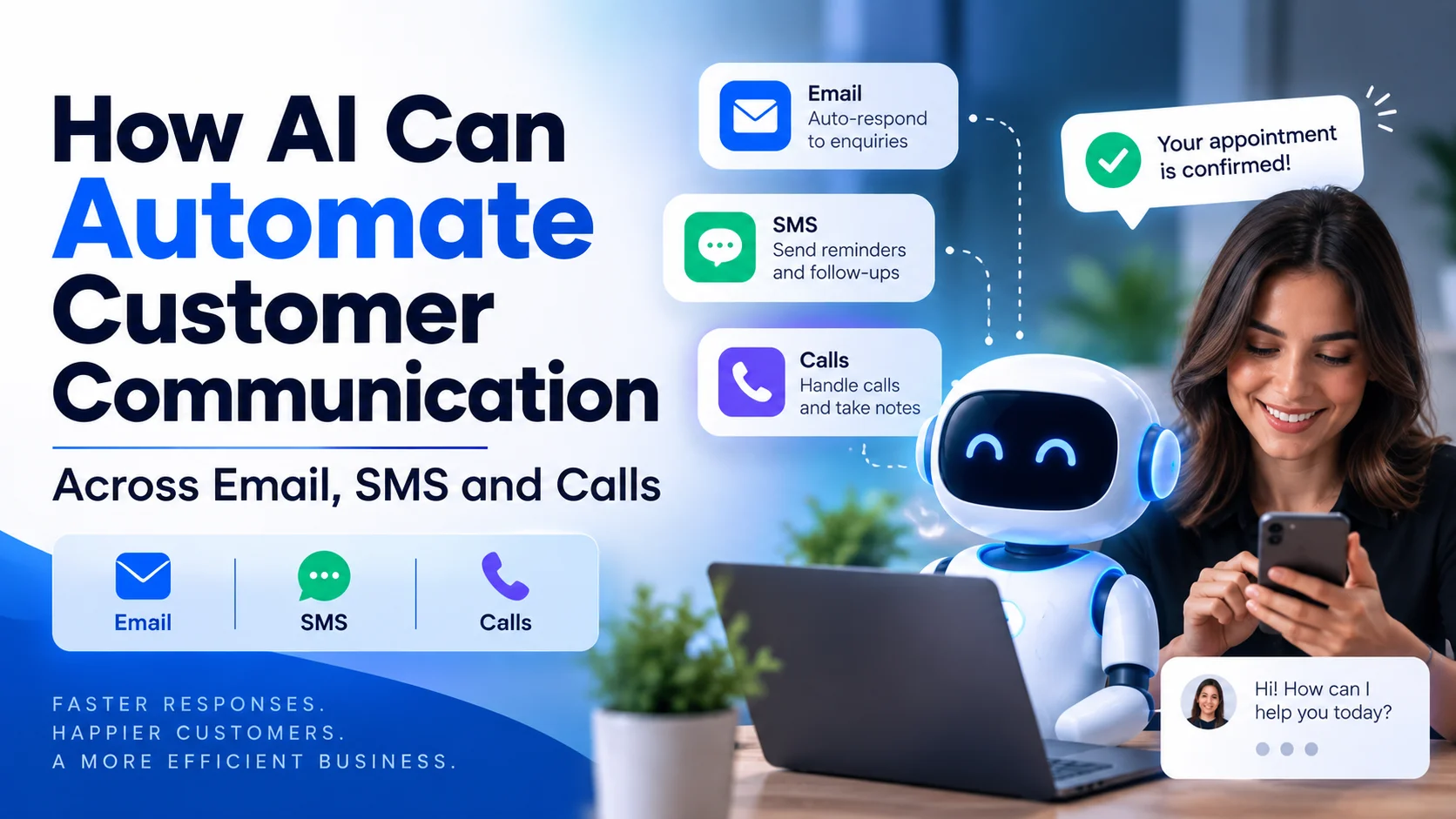
Customer communication is an important part of almost every business. Customers may contact a company through email, SMS or phone calls, and businesses need to respond quickly while keeping track of every interaction.
As communication volume grows, managing every message manually can become difficult. Employees may spend hours responding to similar questions, following up with leads, confirming appointments and recording conversations.
AI can help businesses automate many of these repetitive communication activities while allowing employees to handle conversations that require human judgement.
What Is AI Customer Communication?
AI customer communication uses artificial intelligence to help businesses manage interactions with customers across different communication channels.
Depending on the workflow, AI can help understand incoming messages, generate responses, send follow-ups, summarise calls and update customer records.
Instead of treating email, SMS and phone calls as completely separate activities, businesses can connect them into one communication process.
Why Businesses Are Automating Customer Communication
Customer communication often includes many repetitive tasks. A team member may need to answer the same questions, send appointment reminders, follow up with enquiries and manually record conversations.
These tasks may not be difficult, but they can take significant time when repeated throughout the day.
Automation can help businesses:
- Respond to routine enquiries faster
- Reduce repetitive communication tasks
- Keep customer records updated
- Send consistent follow-ups
- Connect different communication channels
- Give employees more time for important conversations
AI for Email Communication
Email is still an important communication channel for many businesses. AI can assist with both incoming and outgoing email activity.
For example, an AI system can help identify the purpose of an incoming message and determine what should happen next.
A simple process could be:
Email Received → Information Analysed → Response Prepared → CRM Updated → Follow-Up Created
Routine emails can be handled through automation, while more complex requests can be passed to a member of the team.
AI for SMS Communication
SMS can be useful for quick customer communication, reminders and follow-ups.
Businesses can use automation to send messages based on specific events. For example, when an appointment is booked, the customer can receive a confirmation message. A reminder can then be sent before the appointment.
SMS workflows can also be used for sales follow-ups, service updates and other routine customer communications.
AI Call Assistants for Business Calls
Phone conversations can contain important information that employees normally need to record manually.
An AI call assistant can help with activities such as call transcription, note creation, task assignment and capturing relevant information from a conversation.
This can reduce the amount of administrative work that happens after a call.
For example:
- A customer call takes place
- The conversation is transcribed
- Important information is identified
- Notes are created
- Tasks are assigned
- Customer records are updated
Connecting Email, SMS and Calls
One of the biggest opportunities with AI communication is connecting multiple channels.
A customer might initially contact a business through email, receive an SMS confirmation and then speak with a salesperson by phone.
If these interactions are stored separately, employees may have to search through different systems to understand the customer history.
With customer communication software, businesses can bring different communication activities together and connect them with customer records and workflows.
How AI Communication Connects With CRM
Customer communication becomes more useful when it is connected with CRM information.
A communication workflow can update customer records after an email, SMS conversation or phone call.
This can help sales and customer service teams understand:
- Previous customer interactions
- Current sales stage
- Upcoming appointments
- Outstanding follow-ups
- Recent customer requests
The result is a more connected customer journey instead of isolated communication activities.
AI Communication and Business Automation in Australia
Businesses researching business automation Australia can consider customer communication as one area where automation may reduce repetitive work.
Australian businesses across professional services, agencies, real estate, healthcare, construction and other industries may have different communication requirements.
The best approach is to identify repetitive communication processes and automate them according to the business's actual requirements.
When Should a Human Take Over?
AI should not handle every customer interaction automatically.
Businesses should define situations where an employee needs to take over. Complex complaints, sensitive requests, negotiations and specialist questions may require direct human involvement.
A useful model is to let AI handle routine activities while giving employees control over important or complicated conversations.
How to Start Automating Customer Communication
Businesses can start with one communication process rather than attempting to automate every channel at once.
Good starting points include:
- Appointment confirmations
- Customer reminders
- Lead follow-ups
- Common email responses
- Call notes and summaries
- CRM activity logging
Once the first workflow is working reliably, additional communication processes can be connected.
The Future of Customer Communication
AI is changing customer communication from a collection of individual messages into connected business workflows.
Email, SMS and calls can work together with CRM systems, scheduling and automation so that information moves between different stages of the customer journey.
The goal is not to remove human communication. It is to reduce repetitive work and give employees better information when human interaction is needed.
Frequently Asked Questions
Can AI automate customer emails?
Yes. AI can assist with routine email responses, follow-ups, information classification and other repetitive communication tasks.
Can AI handle SMS follow-ups?
Yes. Automated SMS workflows can send confirmations, reminders and follow-ups based on customer activity or predefined business events.
What does an AI call assistant do?
An AI call assistant can help with tasks such as transcription, call summaries, note creation, task assignment and recording relevant information.
Should businesses automate every customer conversation?
No. Routine interactions are good candidates for automation, while complex or sensitive conversations may require human involvement.
Ready to Automate Customer Communication?
AI can help businesses manage repetitive communication across email, SMS and calls while keeping customer information connected.
Start your free OperaStack trial and explore how AI can simplify your customer communication workflows.