Sign up with Google
 Sign in with Zoho

Introduction
Today’s organizations are producing enormous amounts of data every single second. From customer interactions and transactions to system logs and analytics, the volume can quickly become overwhelming.
Traditional centralized data systems often struggle to keep up with this scale and complexity.
That’s where modern approaches like Data Mesh and Data Fabric come in. Both are designed to make data easier to manage, access, and use across an organization—but they take very different paths to get there.
Understanding how they differ can really help businesses decide which approach fits their needs best and how to turn data into a true competitive advantage.
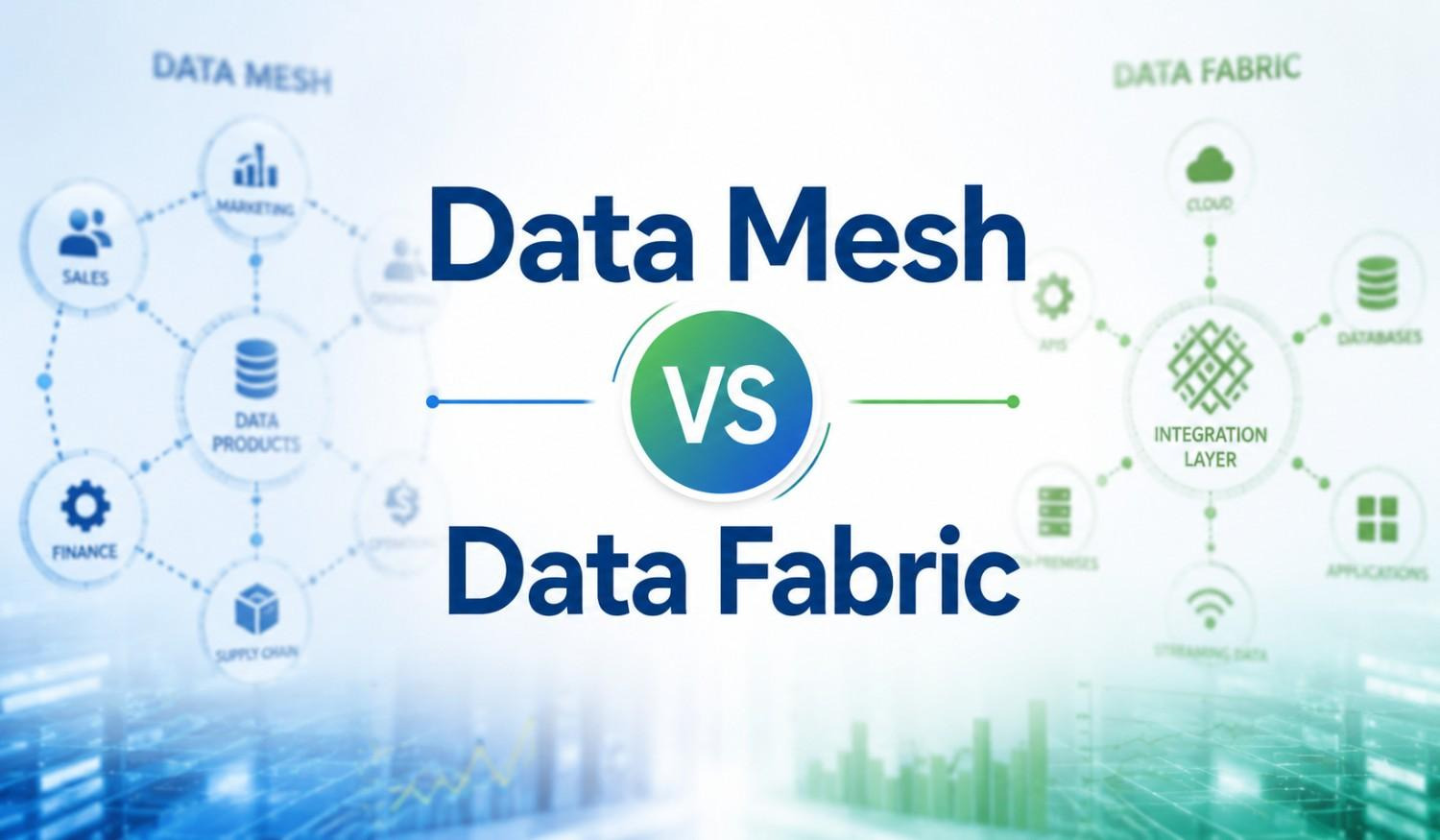
Read: Data Mesh VS Data Fabric: Which Data Approach Fits Best?
What is Data Mesh?
Data Mesh is a modern way of thinking about data where responsibility is pushed closer to the teams who actually work with it.
Instead of relying on one central data team, ownership is distributed across different business domains like marketing, sales, finance, or operations.
The idea is simple: the people who understand the data best should also manage it.
Here are its core ideas:
- Domain ownership: Each team is responsible for the data they generate and use, including its quality and accuracy.
- Data as a product: Data is treated like something valuable that needs proper design, documentation, and ongoing maintenance.
- Self-serve infrastructure: Teams get tools and platforms that allow them to work with data independently without waiting on others.
- Shared governance: While teams are independent, they still follow common rules to ensure consistency and compliance.
By spreading responsibility across teams, Data Mesh helps reduce bottlenecks and allows large organizations to scale their data operations more smoothly.
For example, in an online retail company, the marketing team might manage customer acquisition data, while the logistics team handles delivery and inventory data.
Each team owns its piece of the puzzle and improves it continuously.
What is Data Fabric?
Data Fabric takes a very different approach. Instead of distributing responsibility, it focuses on connecting everything together through a unified system.
Think of it as a smart layer that sits on top of all your data sources—no matter where they are stored—and makes them work together seamlessly.
Its main ideas include:
- Central integration layer: All data sources are connected so users can access information in one place.
- Automation and AI: Smart technologies help manage data, track its origin, and organize it efficiently.
- Real-time access: Data is available almost instantly for reporting and decision-making.
- Central governance: Security and compliance rules are applied consistently across all systems.
Data Fabric is especially useful when organizations have data spread across many platforms and need a single, reliable view of everything.
For instance, a global bank might connect customer profiles, transactions, risk systems, and compliance records into one unified system, making it easier to monitor and analyze everything in real time.
Key Differences Between Data Mesh and Data Fabric
Architecture: How They Are Structured
Data Mesh spreads data responsibility across different teams. Each department manages its own data, which helps avoid overloading a single central team and allows faster growth.
For example, in an eCommerce business, the marketing team might handle user behavior data, while the warehouse team manages stock levels. Each operates independently but contributes to the overall system.
Data Fabric, however, connects all data into one unified structure. Instead of separating responsibilities, it focuses on bringing everything together so users can easily access and analyze it from a single point.
A good example is a logistics company that combines delivery tracking, warehouse systems, and customer orders into one real-time dashboard.
Ownership: Who Manages the Data
In Data Mesh, ownership lies with the domain teams themselves. The people who generate the data are also responsible for maintaining it, which often leads to better accuracy and accountability.
For example, in a hospital, the patient care team manages medical records while the finance team handles billing data. Each team knows its data inside and out.
In Data Fabric, ownership is centralized. A dedicated IT or data platform team manages integration, storage, and access across the organization, ensuring everything works together smoothly.
Focus: Growth vs. Connectivity
Data Mesh is all about flexibility and scalability. It empowers teams to move faster without waiting for approvals or support from a central data team.
For example, a global retail brand can let regional teams manage their own customer and sales data, helping them react quickly to local trends and demand.
Data Fabric focuses more on connectivity and accessibility. It ensures that no matter where data is stored, users can access it easily and use it for decision-making.
A transportation company, for example, might connect GPS tracking, shipment systems, and customer platforms to get a live view of operations.
Governance: Flexible vs. Central Control
Data Mesh uses a shared governance model. There are common rules, but each team applies them in their own way based on their needs. This gives flexibility without losing control.
Data Fabric uses centralized governance, where rules for security, compliance, and data quality are applied consistently across all systems.
For example, a financial institution can ensure that all data automatically follows strict regulatory standards, reducing risk and manual effort.
Use Cases: Where Each Works Best
Data Mesh works best in large organizations where different teams operate independently and need control over their own data.
Think of a large marketplace platform where sellers, buyers, payments, and delivery teams all manage different types of data.
Data Fabric is ideal for organizations that need a single, unified view of data from many systems, especially in cloud or hybrid environments.
For example, a healthcare network can combine hospital records, lab results, and telemedicine data into one system for better patient care.
Real-World Perspective
In reality, many companies don’t choose just one approach. Instead, they blend both.
They might use Data Fabric to connect all their systems while still allowing individual teams to manage their own data using Data Mesh principles.
This hybrid model often gives the best of both worlds—flexibility for teams and strong integration across the organization.
Choosing Between Data Mesh and Data Fabric
The right choice depends on what an organization needs most:
Go with Data Mesh if:
- You have multiple independent teams managing their own data
- You want faster scaling without central bottlenecks
- Teams are capable of owning and maintaining their own data products
Go with Data Fabric if:
- You need unified access to data across many systems
- You want automation and real-time insights
- Centralized governance and compliance are important
Benefits of Each Approach
Data Mesh benefits:
- Faster innovation and decision-making
- Less dependency on central teams
- Better ownership and accountability
Data Fabric benefits:
- Easy access to all data in one place
- Strong automation and efficiency
- Consistent security and governance
How BigDataCentric Makes Data Mesh and Data Fabric Work for You?
Adopting modern data architectures like Data Mesh and Data Fabric can be challenging without the right expertise. That’s where BigDataCentric steps in. They help organizations design and implement data systems that are both scalable and easy to manage, ensuring your data works for you—not the other way around.
With experience in data engineering, analytics, and modern architecture strategies, BigDataCentric helps teams:
- Build decentralized Data Mesh solutions that give domain teams control over their data.
- Implement robust Data Fabric systems that unify and integrate data across platforms.
- Enhance data accessibility and governance while keeping systems secure and compliant.
- Enable real-time insights by combining multiple data sources efficiently.
Conclusion
Both Data Mesh and Data Fabric offer powerful ways to modernize how organizations handle data.
Data Mesh focuses on distributing ownership and empowering teams, while Data Fabric focuses on connecting everything into one seamless system.
There’s no universal winner—the best choice depends on how an organization is structured and what it needs from its data.
In many cases, combining both approaches creates the most balanced and effective solution.
At the end of the day, the goal is the same: making data easier to access, trust, and use so businesses can make smarter decisions and grow faster.