Sign up with Google
 Sign in with Zoho

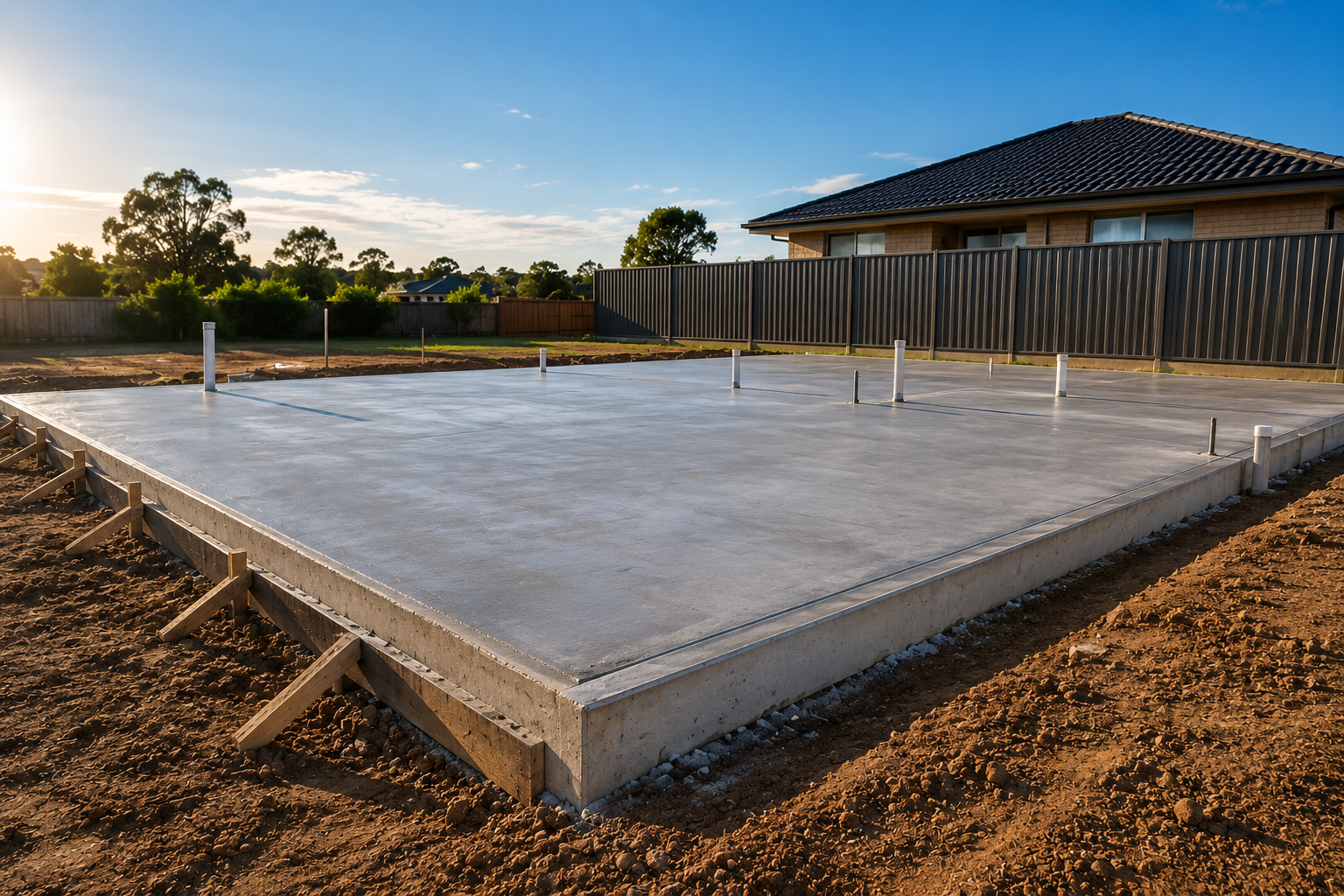
Planning a new build always starts with the big decisions. Floor plans, finishes, colours, and budgets usually get most of the attention. However, before any of that matters, you need a foundation that can support the structure for years to come.
That's where concrete slabs come in.
The right foundation affects everything from structural stability and drainage to long-term maintenance costs. It also plays a major role in how well a building handles soil movement, weather conditions, and daily wear.
Many property owners don't think much about foundations until it's time to build. Then the questions start. Which slab type is best? Why are some options more expensive than others? Does soil type really matter? And if you're having a driveway or foundation installed, what should you actually check before the contractor starts pouring?
This guide answers those questions and explains the most common slab types used across Australia so you can make an informed decision before construction begins.
Why Foundation Selection Matters
A foundation does far more than create a flat surface.
It distributes the weight of the structure above it, helps manage ground movement, and provides long-term support for everything built on top. A well-designed foundation can prevent many common issues, including uneven floors, cracking, and drainage problems.
Every site presents different conditions. Some properties sit on stable ground. Others contain reactive clay that expands and contracts throughout the year. Because of that, builders don't use the same solution for every project.
The best choice depends on several factors, including soil conditions, building size, intended use, and budget.
Types of Concrete Slabs: Which Option Is Right for Your Project?
Several concrete slabs designs are commonly used in residential and commercial construction. Each serves a different purpose and performs best under specific conditions.
Ground-Bearing Slab
This is one of the most common foundation systems used for homes, garages, patios, and small commercial buildings.
Builders pour the concrete directly onto a prepared base and reinforce it with steel mesh or reinforcing bars. The result is a strong and reliable foundation that works well on stable ground.
Why homeowners choose it
- Cost-effective
- Straightforward construction process
- Suitable for many residential projects
- Long service life when installed correctly
Ground-bearing foundations remain popular because they provide dependable performance without adding unnecessary complexity to the build.
Raft Slab
A raft slab spreads the weight of a structure across a larger area. Instead of concentrating loads in specific locations, it distributes them more evenly throughout the foundation.
This approach works particularly well on sites with reactive soil conditions.
Advantages
- Excellent load distribution
- Improved performance on clay soils
- Greater resistance to ground movement
- Commonly used in residential construction
Many Australian builders recommend raft foundations for sites where soil movement is a concern.
Waffle Pod System
Waffle pod foundations have become increasingly common in modern housing developments.
The design uses lightweight polystyrene pods beneath the slab, creating a grid of reinforced concrete beams. This construction method reduces concrete usage while maintaining structural strength.
Benefits
- Faster installation
- Reduced material usage
- Strong structural performance
- Popular for residential developments
Many homeowners choose waffle pod systems because they offer an effective balance between strength and construction efficiency.
Suspended Slab
Some building sites require a completely different approach.
Rather than resting directly on the ground, suspended slabs rely on beams, columns, walls, or piles for support.
You'll often find them in multi-level buildings, basement projects, and properties built on sloping land.
Advantages
- Suitable for difficult terrain
- Ideal for elevated structures
- Less dependent on ground conditions
- Can support large spans
Suspended foundations allow construction on sites that would otherwise be difficult to develop.
Post-Tensioned Slab
Post-tensioned systems use high-strength steel cables embedded within the concrete.
Once the concrete gains strength, contractors tension the cables. This process increases structural capacity and helps control cracking.
Benefits
- High strength
- Improved durability
- Effective for larger structures
- Common in residential and commercial projects
As building designs become more sophisticated, post-tensioned foundations continue to gain popularity across Australia.
How Soil Conditions Influence Slab Design
One question homeowners often ask is why neighbouring properties sometimes have completely different foundation systems.
The answer usually comes down to what's happening below the surface.
Before construction begins, engineers often conduct soil testing to determine how the ground will behave over time. The results help guide foundation design and reinforcement requirements.
Reactive Clay
Reactive clay expands when moisture levels increase and contracts during dry periods.
Because of this movement, builders often select foundation systems designed to accommodate changing ground conditions.
Sandy Soil
Sandy ground generally offers good drainage and stability. Even so, proper preparation remains essential before construction begins.
Filled Sites
Land that has been filled or previously developed may require additional engineering assessment. Ground consistency becomes especially important when supporting a new structure.
What Should You Check Before a Concrete Pour?
This is one of the most common questions property owners ask before starting a project.
If you're investing in a new driveway, shed foundation, or house slab, it's worth understanding what happens before the concrete arrives.
First, inspect the site preparation.
The area should be cleared, excavated where necessary, and properly compacted. Good preparation creates a stable base and helps support long-term performance.
Next, check the reinforcement.
Steel mesh should sit within the slab rather than directly on the ground. Contractors typically use chairs or spacers to keep reinforcement positioned correctly during the pour.
You should also look at drainage.
Water needs a clear path away from structures. Poor drainage can create problems long after construction finishes.
Finally, confirm the dimensions match the project plans.
Thickness requirements vary depending on how the foundation will be used.
A driveway designed for family vehicles requires different specifications than a foundation supporting heavy machinery.
How Much Does a Slab Cost?
Cost is another topic that generates plenty of discussion among homeowners.
The reality is that no single price applies to every project.
Several factors influence the final cost, including:
- Project size
- Site access
- Excavation requirements
- Soil conditions
- Reinforcement requirements
- Engineering specifications
- Local labour rates
For example, a small shed base will typically cost far less than a foundation designed for a large home or commercial building.
That's why comparing quotes requires more than simply looking at the bottom-line figure. Understanding what's included in each proposal gives a much clearer picture of overall value.
Why Do Driveways Have Separate Sections?
Many people notice rectangular sections in driveways and wonder why they exist.
Those lines aren't there by accident.
They're called control joints, and they serve an important purpose.
Concrete naturally expands and contracts as temperatures change throughout the year. Control joints help manage that movement and encourage cracking to occur in predetermined locations rather than randomly across the surface.
Without them, driveways would often develop unpredictable cracks that affect both appearance and performance.
In short, those sections help protect the surface over time.
Choosing the Right Foundation for Long-Term Performance
Selecting the right foundation starts with understanding your site conditions and project goals.
A small residential shed may require a completely different solution than a new home or commercial facility. Soil conditions, drainage requirements, structural loads, and future plans all influence the best choice.
That's why experienced contractors spend time evaluating the site before recommending a foundation system. The goal isn't simply to build something that works today. It's to create a stable base that continues performing years from now.
Which Slab Type Is Best for Your Property?
Choosing the right concrete slabs system can make a significant difference to the performance and longevity of your project. Whether you're building a home, installing a driveway, constructing a shed, or developing a commercial property, understanding the available slab options helps you make a more informed decision.
By considering site conditions, drainage, intended use, and structural requirements, you can select a foundation that provides lasting support and helps protect your investment well into the future.