Sign up with Google
 Sign in with Zoho
When the Pool Stops Being an Asset
There was probably a time when that in-ground pool felt like the best decision you ever made for your backyard. Summer parties, weekend afternoons, the kids growing up with a place to splash around — pools carry a lot of good memories. But circumstances change. Maintenance costs climb. The kids move out. The novelty fades. And suddenly that pool starts feeling less like a luxury and more like a liability.
If you're at that point, you're not alone. A growing number of Long Island homeowners are choosing to remove their in-ground pools entirely, and for good reason. Between rising chemical costs, increasing water bills, liability insurance premiums, and the sheer time commitment of keeping a pool in working condition, the math doesn't always add up anymore. Add in the fact that not every buyer wants a pool when you go to sell, and the case for removal gets even stronger.
But this isn't a DIY weekend project. Pool excavation and fill on Long Island is a significant undertaking that involves heavy equipment, structural demolition, proper backfill materials, and in most cases, local permits. Understanding what the process actually involves — and what separates a quality job from a problem waiting to happen — is essential before you sign any contract.
Two Types of Pool Removal: Know the Difference
Before anything else, it helps to know that there are two fundamentally different approaches to pool removal, and the one you choose will have long-term implications for how the land can be used.
The first is called a partial removal, sometimes referred to as pool abandonment. In this approach, the top portion of the pool shell is demolished and holes are punched into the bottom to allow for drainage. The remaining structure is then filled with gravel and soil. It's faster and cheaper, but it comes with a catch — most municipalities require disclosure of a partial removal when you sell the property, and the filled area typically can't support heavy structures like additions or garages due to the remaining shell underground.
The second approach is full pool excavation and removal, where the entire shell is dug out, removed from the property, and the resulting hole is backfilled and compacted properly. This takes more time and costs more, but it leaves you with clean, usable land that has no asterisks attached to it.
On Long Island specifically, full removal is often the smarter long-term play — especially if you have any plans to eventually sell, build an addition, or simply want clean land without any future disclosure complications.
What Pool Excavation & Fill on Long Island Actually Looks Like
The process of pool excavation and fill on Long Island starts well before the excavator shows up. A licensed contractor will first need to disconnect and cap all existing utility lines connected to the pool — electrical for the pump and lighting, gas if you have a heated pool, and plumbing lines. These disconnections need to be done properly and documented, because improper capping is both a safety hazard and a code violation.
Once utilities are handled, permits need to be pulled. Long Island towns vary in their specific requirements, but virtually all of them require permits for pool demolition. Nassau and Suffolk County municipalities take this seriously, and skipping the permit process can result in fines, mandatory re-excavation, or complications when you eventually sell the property. A qualified contractor will handle this for you, but it's worth confirming before work begins.
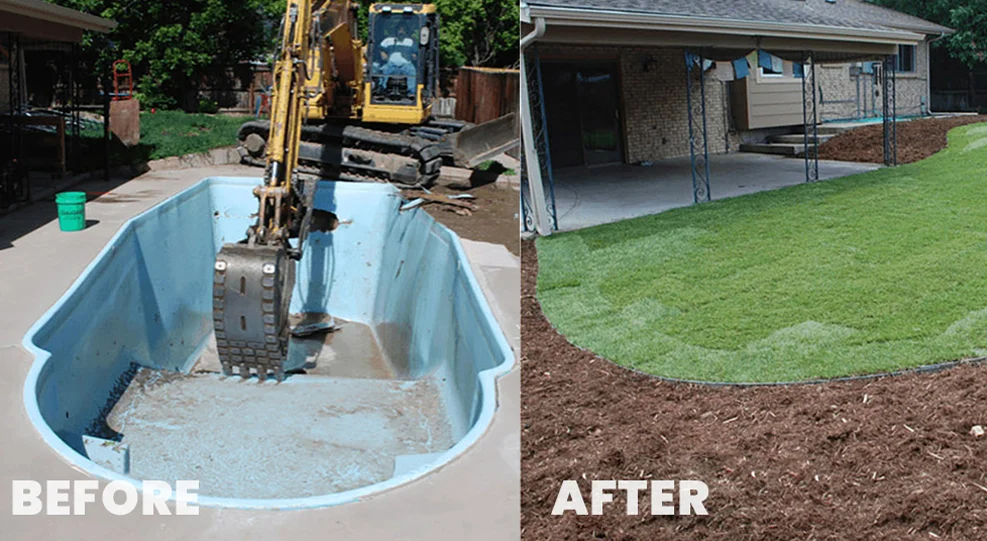
The actual demolition phase involves breaking up the pool shell — typically concrete or fiberglass — with hydraulic equipment. Concrete pools are broken apart and hauled off-site. Fiberglass shells are often extracted in larger pieces. Either way, the debris doesn't stay on your property.
Once the shell is out, the backfill process begins. This is where quality really matters. The hole left behind needs to be filled in lifts — meaning layers of material are added and compacted progressively, rather than dumping everything in at once. Improper compaction leads to settling over time, which causes sinkholes, uneven ground, and structural problems if you ever build on that area later. Good contractors use a combination of clean fill, gravel, and topsoil depending on the depth and intended use of the land.
Pool Removal on Long Island: Costs, Timelines, and What Affects Both
Pool removal on Long Island pricing varies depending on several factors — pool size, type of removal (partial vs. full), accessibility for equipment, and what condition the existing structure is in. As a general range, partial removals tend to run lower while full excavations cost more, though getting site-specific quotes is the only reliable way to know what you're actually looking at.
Timeline-wise, a straightforward full removal on a standard residential lot typically takes anywhere from a few days to about a week, not counting the permitting process which can add several weeks depending on your municipality. Factor that into your planning, especially if you're working against a selling deadline or trying to get landscaping done before a certain season.
A few things that can affect cost and timeline significantly:
Pool size and depth. Larger pools mean more material to remove and more fill required. Deeper pools take longer to excavate and require more structural demolition.
Accessibility. If your pool is in a backyard with limited equipment access — a narrow gate, overhead lines, or a tight lot — expect higher costs. Moving equipment in and out of a confined space takes more time and sometimes requires specialized machinery.
Condition of the existing structure. Older pools may have cracked shells, deteriorated plumbing, or unexpected materials like rebar that complicate removal. A pre-removal inspection can help flag these issues before they become mid-project surprises.
Landscaping restoration. Most contractors handle the fill and rough grade, but finished landscaping — seeding, sod, or planting — is often a separate scope of work. Clarify what's included before you sign.
Why the Quality of the Backfill Matters Long-Term
This is a point that doesn't get enough attention. A lot of homeowners focus on the demolition side of pool removal and treat the fill as an afterthought. But the quality of the backfill and compaction work is what determines whether your yard stays flat and usable five, ten, twenty years down the road.
Poorly compacted fill settles unevenly. You'll start noticing slight depressions in the yard within a year or two, and in some cases, more significant sinkholes can develop. If you're planning to put a patio, deck, or any structure over the area, improper compaction is a serious problem. And if you go to sell the house, a home inspector will note any visible signs of settling in a former pool area — which becomes a negotiating issue with buyers.
Reputable contractors use compaction testing to verify that the fill meets the necessary standards. Ask about this upfront. If a contractor can't tell you how they handle compaction or doesn't mention it at all, that's a red flag worth paying attention to.
Making the Right Call for Your Property
Deciding to remove a pool is rarely an impulsive choice. Most homeowners think about it for a while before pulling the trigger. But once you've made the decision, the contractor you hire and the approach they take will determine whether you end up with clean, usable land or a headache that follows the property for years.
Get multiple quotes. Ask specific questions about permitting, backfill materials, compaction methods, and what's included in the final grade. Check references and look for contractors with documented experience in Long Island municipalities — local knowledge matters when it comes to permits and site conditions.
Your backyard has more potential than a cracked, unused pool sitting behind a fence. Done right, pool removal gives it back.