Sign up with Google
 Sign in with Zoho

Almost every founder I've watched start a product does the same thing. They sketch out everything the product should eventually be, then try to build a smaller, cheaper version of that whole vision at once. It feels sensible. It's usually the wrong move, and it's why so much early money disappears into software nobody ends up using. The idea behind an mvp software build was never "the cheap version of the full thing." It was the fastest way to find out whether the full thing is even worth building. That's a completely different goal, and missing the difference is where early teams quietly burn their runway.
What an MVP is actually for
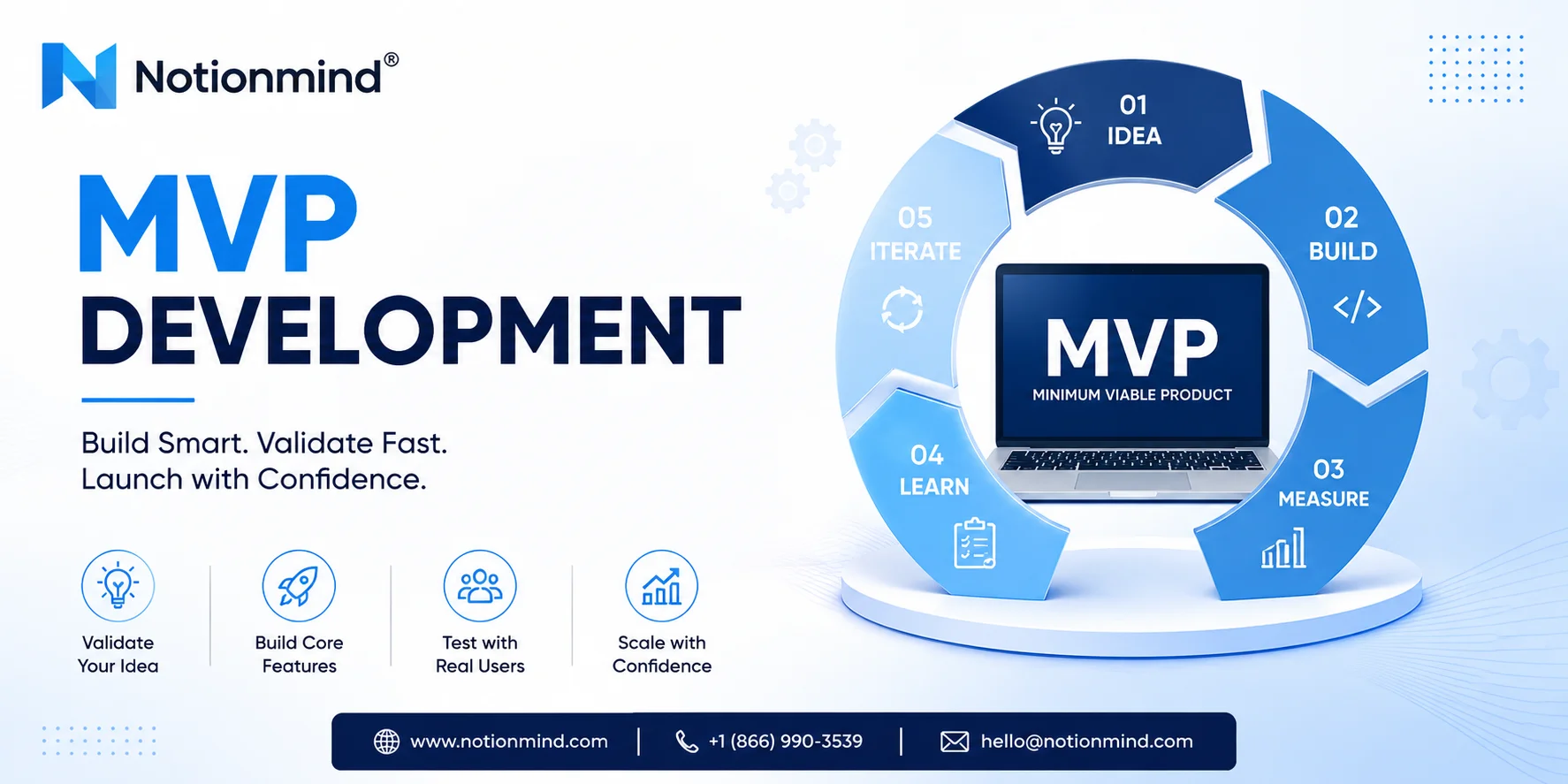
An MVP exists to answer one question as cheaply as possible: does anyone actually want this? Not "can we build it," not "is it polished," just, is there real demand for the core idea. If I had to compress it into one line, it's this: build the smallest thing that proves someone wants it, measure what happens, then decide what to build next based on what you learned rather than what you assumed.
That means stripping the product down to a single loop that proves the point, shipping it, and watching what real people do with it. Everything else waits. If you find yourself adding a second feature because it feels incomplete, pause and ask whether that feature is part of the one thing you're testing. Usually it isn't. The discipline of an MVP isn't building small for the sake of it. It's refusing to spend money validating assumptions reality can test for free.
The trap of building the whole vision
Here's where it goes sideways. A team gets excited, the vision is genuinely compelling, and "let's just build it properly" wins the argument. Months pass. The product gets more complete and more expensive, and the moment of truth, real users, keeps getting pushed back.
Then launch day arrives and the feedback doesn't match the plan. It almost never does. Now you've got a large, finished product built on assumptions that turned out to be half wrong, and changing it means unpicking work you already paid for. The founders who overbuild aren't lazy or careless. They're just answering "how do we build everything" when the real early question was "which one thing proves people care." Those two questions lead to very different, and very differently priced, outcomes.
Build small, but measure everything
The part that gets skipped most often isn't the building. It's the measuring. An MVP that ships but can't tell you what's working is just a small product launched blind.
Before you launch, decide what you actually need to learn and how you'll know. Which feature are people using? Where do they drop off? Which channel brought the ones who stuck around? This is where it helps to think about your data early, because the whole point of a lean first build is to learn fast, and you can't learn from numbers you never captured. Teams that treat reporting as something to "add later" usually end up guessing about the exact decisions the MVP was supposed to settle. Good enterprise data analytics services exist for the scaled up version of this same instinct: turn scattered activity into a clear picture you can actually act on. At MVP stage you don't need anything that heavy, but the mindset is identical from day one.
When it's time to go beyond the MVP
An MVP is a starting point, not a destination, and knowing when to graduate from it matters as much as starting lean. The signal is simple: once you have real evidence that people want the thing and use it, the job shifts from proving demand to serving it well.
That's the moment to invest in the architecture, the features, and the polish you deliberately skipped. Not before. Building for scale too early wastes money on demand you haven't confirmed. Clinging to a bare MVP too long frustrates the users you've already won. The skill is reading which problem you actually have right now, an unproven idea or a proven one straining under its own success, and matching the effort to that answer honestly.
The honest version of the advice
If I had to compress it into one line, it's this: build the smallest thing that proves someone wants it, measure what happens, then decide what to build next based on what you learned rather than what you assumed.
That sounds obvious written down. It's genuinely hard to do, because it means resisting the urge to build the impressive, complete version you can already picture. But the founders who get this right spend far less finding out whether their idea works, and they reach the version worth scaling with most of their runway still intact. The ones who get it backward build something beautiful first and discover, expensively, whether anyone wanted it second.