Sign up with Google
 Sign in with Zoho

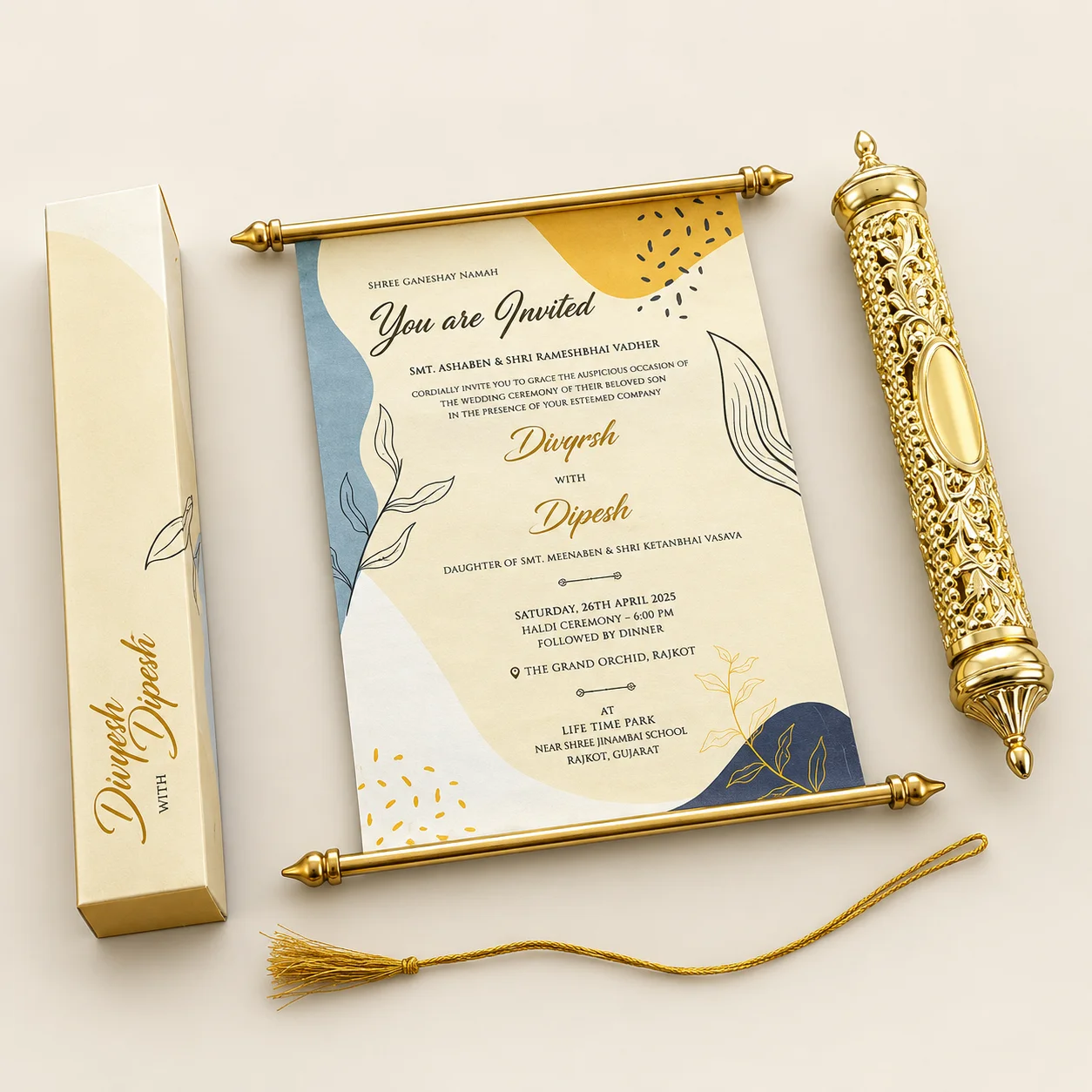
A wedding planner in Rajkot got a call three weeks before a client's card printing date: the family jyotish had shifted the muhurat by a day, and the venue confirmation followed a different date altogether. Two hundred cards were already at the press. The reprint cost more than the original order, and the couple lost the ten days they'd budgeted for hand-delivering invitations to close relatives before the formal mailing went out.
It's a common story in Indian wedding planning, and it points to something families often get backwards: the invitation isn't the first thing you plan. Browsing catalogues early is natural - a family might fall for something like the Royal Scroll Golden Invitation months before the wedding even has a firm date - but it's one of the last things you can safely commit to print, because everything upstream of it, the muhurat, the venue, the guest count, needs to be locked first.
Committing to Paper Too Early
Families frequently start browsing wedding card catalogues the moment engagement conversations begin, months before the actual event details firm up. That's fine for inspiration. It becomes a problem when a family places a bulk order - most invitation vendors in India require a minimum quantity, often around 100 pieces - before the muhurat is confirmed by the family priest, or before the venue and RSVP structure are settled. Reprinting 180 to 230 cards after a date change is both expensive and stressful, and it's one of the most common last-minute crises stationers hear about every wedding season.
What Actually Drives the Timeline
A few factors decide when printing can safely begin, and none of them are about the design itself.
The muhurat confirmation comes from the family jyotish, and many households won't finalize a card until that date is locked - which can push the whole printing window to just 6-8 weeks before the wedding for some families. Production time adds another layer: standard flat printing runs 5-7 business days, but a scroll invitation with a fabric sheet, gold stick bars, and an engraved box needs proofing, material sourcing, and assembly time on top of that, closer to 2-4 weeks. Then there's guest geography - local guests typically get invitations 4-6 weeks out, while out-of-state and NRI guests need 8 or more weeks, which means addressing and shipping logistics have to be planned before the cards even arrive from the printer.
Practical Steps to Avoid the Reprint Panic
Confirm the muhurat and venue in writing before placing any bulk print order, even if that means the design selection happens earlier and the actual order gets placed later.
Order 10-15% more cards than your final guest count. Miscounts, late guest additions, and keepsakes for family members who aren't formally invited but will ask for one are nearly universal.
Ask your stationer for their actual production timeline for the specific format you've picked, not a general estimate. A boxed scroll invitation with metallic accents takes longer to assemble than a flat printed card, and that difference matters when you're counting backward from a mailing date.
Build in a buffer week between "cards arrive" and "cards go out" for addressing, whether that's hand calligraphy or printed labels - this step gets forgotten constantly and eats into the mailing window.
If the wedding is destination or has a large NRI guest list, split your mailing into phases rather than sending everything on one date, so international shipping delays don't collapse against your RSVP deadline.
Where Families Get Tripped Up
The biggest misstep is treating the invitation order date as flexible right up until the wedding gets close, then discovering the vendor's production slots for a premium format are already booked out. Boxed and scroll invitations, in particular, involve more components the scroll, the case, the stick bars, sometimes an insert and vendors can only assemble so many per week.
A second mistake is picking a design based purely on catalogue photos without checking the physical weight, fabric quality, and finish in hand. Ordering a paper sample before committing to 100+ pieces costs very little next to the alternative of receiving a bulk order that looks different from what the photos suggested.
The third is underestimating how much a mid-process change costs. Swapping paper stock, adding a printing area, or changing the box color after the order is confirmed almost always means a delay and an additional charge, not a quick fix.
Choosing a Format That Matches the Occasion
Scroll invitations are having a genuine moment in Indian weddings right now, and it's not hard to see why a card that unrolls, rather than simply opens, sets a tone of occasion before a guest reads a single word. They tend to suit grand celebrations and destination weddings especially well, where the invitation itself is part of building anticipation for a multi-day event.
Within that category, the format still matters. A basic scroll on cardstock reads differently from one on fabric, presented in an engraved box. For a wedding leaning into royal or heritage themes havelis, palace venues, traditional processions a fabric scroll held by gold stick bars inside an engraved gold case fits that register in a way a simpler design won't. It's worth thinking about which of your ceremonies the scroll represents; many families reserve the more elaborate box scroll for the main wedding card and use a simpler design for smaller functions like the sangeet or haldi, partly to manage cost across a large invitation list.
Whatever format you land on, request a physical sample before committing to the full quantity. Photos don't convey weight, fabric texture, or how the gold accents catch light, and those details are exactly what a scroll invitation is meant to deliver.
Getting the Sequence Right
None of this is really about invitation design it's about sequencing. Confirm the muhurat, lock the venue, get a real guest count, then choose a format and printer whose production timeline actually fits your mailing window. Families who do it in that order rarely end up reprinting anything. Families who fall in love with a design first and work backward from there are the ones calling their stationer in a panic three weeks out.
Frequently Asked Questions
How far in advance should I order wedding invitations in India?
For a standard local wedding, order once your muhurat and venue are confirmed, generally 10-14 weeks before your mailing date. For scroll or boxed formats, add extra time for assembly.
Can I place a bulk order before the muhurat is finalized?
It's risky. Reprinting a large batch after a date change is expensive, so most experienced planners recommend waiting for written confirmation from the family priest first.
What's the minimum order quantity for premium scroll invitations?
Most vendors set a minimum around 100 pieces for customized scroll and boxed formats, since each card involves multiple hand-assembled components.
Do scroll invitations cost more than flat printed cards?
Generally yes the fabric sheet, stick bars, case, and assembly add cost and production time compared to a single printed card, but many families reserve them for the main ceremony invite and use simpler cards for smaller functions.
Should I order a sample before the full print run?
Definitely, especially for fabric or boxed formats. A sample shows the actual weight, finish, and color in hand, which catalogue photos can't fully capture.

 (1) (3).webp)