Sign up with Google
 Sign in with Zoho

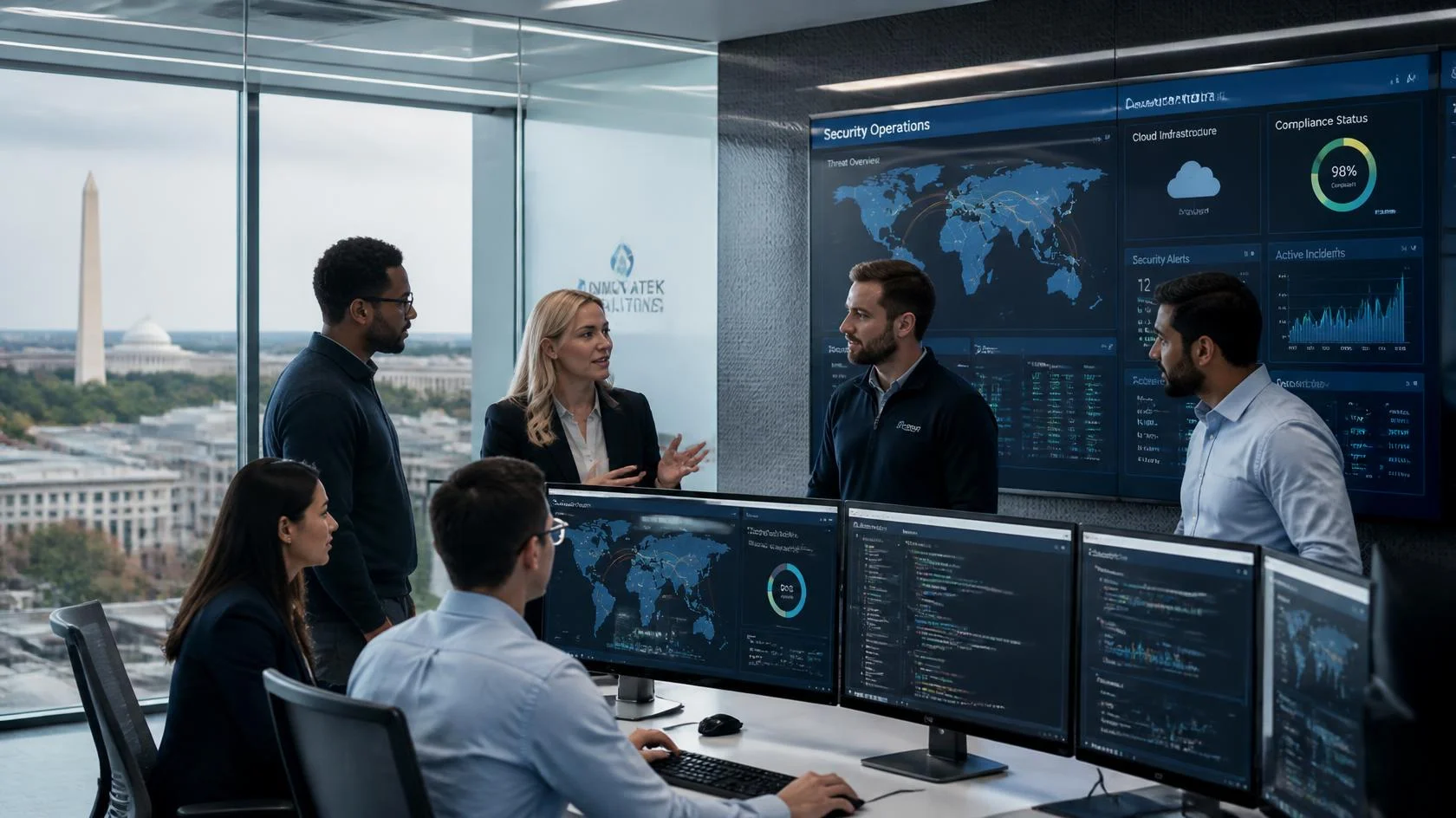
Technology now influences almost every business decision, from customer communications and financial operations to data storage and employee access. As dependence on digital systems increases, organizations need more than cybersecurity tools; they need clear rules, accountability, and repeatable processes. Governance & Compliance provides that structure while helping businesses manage technology responsibly and reduce avoidable risk.
For organizations in Washington, DC, strong governance can also support trust with customers, vendors, government entities, and business partners. A well-managed compliance program demonstrates that security and responsible technology practices are embedded into everyday operations rather than addressed only when an audit or incident occurs.
What Governance & Compliance Really Means
Governance & Compliance is the combination of oversight practices, policies, controls, and processes that guide how an organization manages technology and meets relevant requirements. Governance determines how responsibilities and decisions are structured, while compliance helps ensure that established obligations and standards are consistently followed.
These functions should work together rather than operate as separate administrative tasks. When governance is connected to daily technology management, businesses can better identify risks, monitor controls, document responsibilities, and respond to changing requirements.
A strong framework can include:
- Risk management, security policies, access governance, vendor oversight, and internal controls
- Compliance monitoring, employee awareness, documentation, audits, and corrective action
Why Governance Matters for Washington DC Businesses
Organizations operating in Washington, DC can encounter a wide range of business and technology risks. Companies serving government clients, handling sensitive customer information, or working with regulated industries may face additional expectations concerning security, privacy, documentation, and operational controls.
Without appropriate governance, small weaknesses can become larger problems. An employee may retain unnecessary system access, an important policy may remain outdated, or a vendor may introduce risk without receiving adequate oversight.
Governance creates accountability around these areas. It helps leadership understand which controls exist, who owns them, how they are monitored, and what needs to be improved.
How IT Governance and Compliance Services Washington DC Can Help
Building a mature compliance program requires time, expertise, and consistent oversight. IT Governance and Compliance Services Washington DC can help organizations evaluate existing practices and create a practical improvement plan based on their operational environment.
The process often starts with an assessment. Technology professionals can review policies, systems, user permissions, security procedures, vendor relationships, documentation, and existing controls to identify weaknesses and prioritize remediation.
The most effective recommendations are not necessarily the most complicated. A good provider focuses on controls that address genuine business risks while remaining realistic for employees to follow and maintain.
Turning Compliance Requirements Into Daily Processes
Compliance becomes more effective when it is incorporated into normal workflows. Organizations can establish clear procedures for access reviews, policy updates, incident management, vendor assessments, employee training, and security monitoring.
Documentation also plays an important role. Having a policy is different from demonstrating that the policy is implemented and reviewed, which means organizations should maintain appropriate records and evidence of important compliance activities.
Regular reviews are equally important because business environments constantly change. New software, cloud platforms, employees, vendors, and customer requirements can introduce risks that were not considered during an earlier assessment.
Governance & Compliance Strengthens Cybersecurity
Cybersecurity and governance are closely connected. Security tools can protect systems against threats, but governance provides the policies, responsibilities, and oversight necessary to ensure those tools are used effectively.
A governance framework can define expectations for identity management, data protection, vulnerability management, incident response, employee security awareness, and third-party risk. These practices help create consistency across departments and reduce dependence on informal decision-making.
Strong governance also gives executives better visibility into technology risk. Instead of receiving isolated technical information, leadership can understand which risks matter most, how controls are performing, and where resources should be directed.
Choosing the Right Compliance Technology Partner
Not every organization needs the same governance strategy. A growing business may need help establishing foundational policies, while a more mature organization may require control optimization, risk assessments, compliance monitoring, or ongoing advisory support.
When evaluating a provider, businesses should consider its ability to understand their objectives, explain technical issues clearly, document recommendations, and support continuous improvement. The right partner should make compliance more manageable rather than adding unnecessary complexity.
Xala Technology Services can help Washington, DC organizations develop practical approaches to technology governance and compliance. By connecting security, operational needs, and accountability, businesses can create stronger processes that support both current requirements and future growth.
Build a More Resilient Business With Governance
Governance & Compliance should be considered an ongoing business discipline rather than a one-time compliance exercise. Consistent oversight can improve accountability, reduce technology risk, strengthen security practices, and provide greater confidence to stakeholders.
For organizations seeking IT Governance and Compliance Services Washington DC, a structured technology partnership can make complex requirements easier to manage. With the right strategy, compliance becomes more than an obligation—it becomes a foundation for secure operations, informed decision-making, and sustainable business growth.