Sign up with Google
 Sign in with Zoho
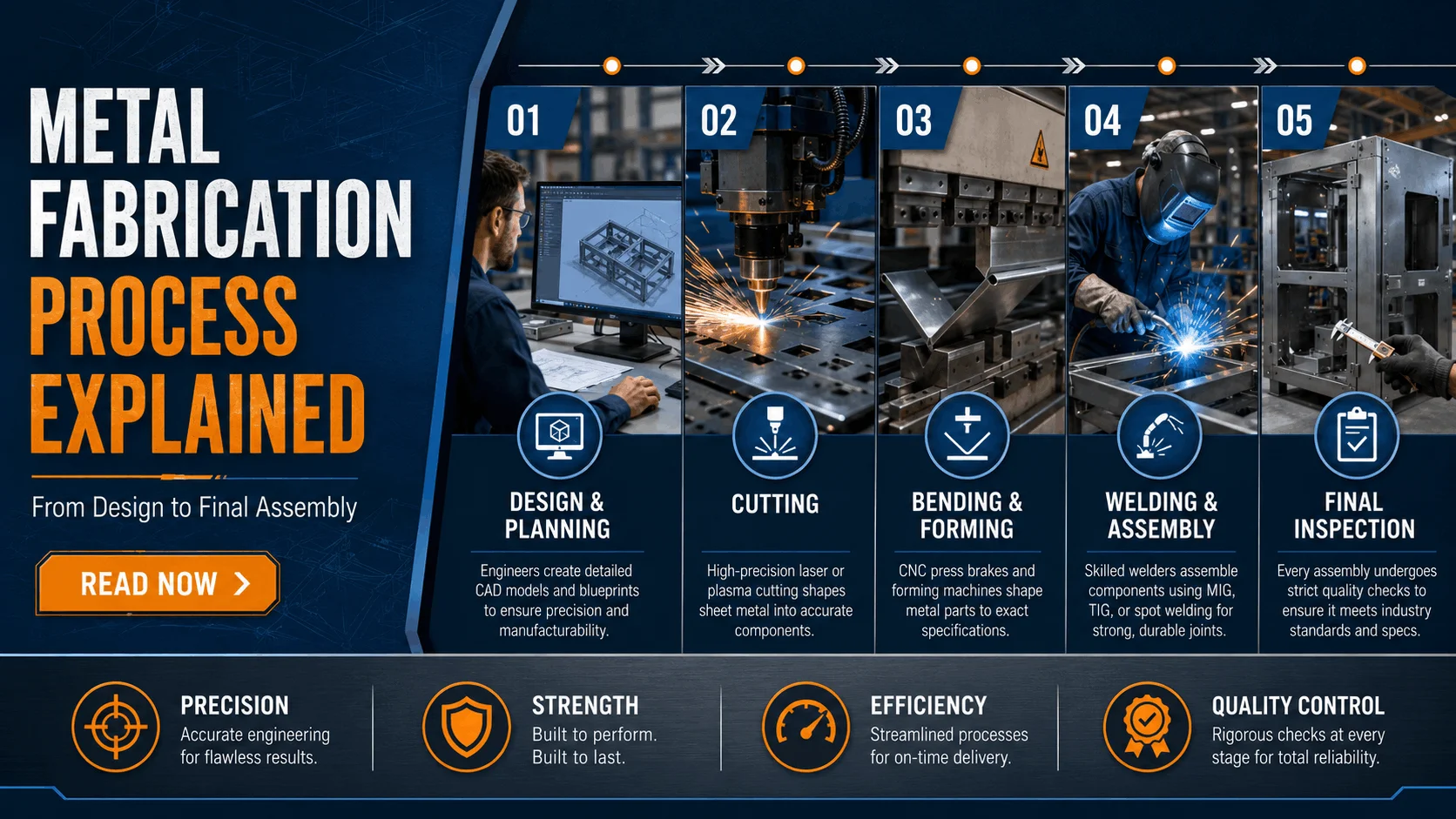
Many people think metal fabrication is just cutting and welding metal. The truth is much bigger than that. It is a complete process that starts with design and planning and ends with final assembly, finishing, inspection, and installation.
This step-by-step approach is what turns raw steel into strong, reliable products. Industries such as manufacturing, construction, chemical plants, power plants, oil & gas, infrastructure, and heavy engineering all depend on proper metal fabrication work to keep their operations running safely.
In this guide, we'll walk you through the full metal fabrication process, one stage at a time, so you know exactly what goes into the products you buy or build.
What Is the Metal Fabrication Process?
The metal fabrication process is the step-by-step method of converting raw metal materials into finished products. These raw materials include steel plates, sheets, pipes, bars, and structural sections.
Through a series of stages, a metal fabricator transforms these materials into finished metal components, structures, tanks, vessels, frames, platforms, and industrial equipment. Each stage builds on the one before it.
In short, it's a controlled journey from a simple drawing to a usable, durable product. To understand the basic meaning, types, and applications of metal fabrication, you can refer to this detailed guide.
Now, let's break down the ten core steps.
Design and Engineering
Every fabrication job starts with a drawing, design requirement, or client specification. This is where the whole project takes shape on paper before any metal is touched.
The design stage usually covers:
- CAD drawings that show the exact shape and layout
- Dimensions and tolerance requirements
- Load requirements the product must handle
- Material grade needed for the job
- Welding details and joint information
- The project purpose and end use
Good design reduces errors, rework, wastage, and delays. A small mistake here can become a costly problem later, so this step deserves real attention.
Material Selection
Choosing the right material is one of the most important decisions in any fabrication process. The wrong choice can lead to weak performance, corrosion, leakage, or early failure.
Fabricators select materials based on strength, corrosion resistance, temperature, pressure, industry use, budget, and the expected life of the product.
Common materials include:
- Mild steel – affordable and easy to work with
- Stainless steel – great for hygiene and corrosion resistance
- Carbon steel – strong and widely used
- Structural steel – ideal for frames and supports
- Alloy steel – built for demanding conditions
- Aluminium – lightweight and rust-resistant
Matching the material to the job protects both performance and budget.
Cutting the Metal
Once the material is ready, raw metal is cut into the required sizes and shapes. Accuracy here matters because every next step depends on it.
Common cutting methods include:
- Plasma cutting for thick metals
- Laser cutting for clean, precise edges
- Gas cutting for heavy sections
- Shearing for straight cuts on sheets
- Sawing for bars and tubes
- CNC cutting for repeatable, automated accuracy
A clean, accurate cut keeps the rest of the build on track.
Bending and Forming
After cutting, metal sheets, plates, and sections are bent or formed into their required shapes. This is how flat material becomes a functional component.
Common methods include:
- Press brake bending for sheets and plates
- Plate rolling for curved surfaces
- Pipe bending for piping systems
- Forming machines for custom shapes
This step produces parts like tanks, ducts, curved plates, cones, frames, and structural sections that fit a specific design.
Welding and Joining
Welding is one of the most important steps in metal fabrication. It joins separate metal components into a single, strong structure.
The most common welding methods are:
- MIG welding – fast and versatile
- TIG welding – clean and precise
- Arc welding – strong and reliable
- SAW welding – ideal for thick, long joints
- Spot welding – used where needed for sheet joints
Welding quality directly affects the strength, safety, and durability of the final product. Skilled welders make a big difference here.
Machining and Drilling
Some fabricated parts need extra detail to fit and function correctly. This includes holes, slots, threads, flanges, and accurate surfaces.
Machining operations often include:
- Drilling holes for bolts and fittings
- Grinding for smooth surfaces
- Milling for flat, accurate faces
- Turning for round components
- Tapping for threaded holes
- Boring for precise inner diameters
Machining improves accuracy and helps components fit properly during assembly or installation.
Assembly and Fit-Up
Now all the cut, bent, welded, and machined parts come together to form the final product. This is where the design truly takes shape.
Examples of assembled products include:
- Machine frames
- Tanks and pressure vessels
- Platforms and support structures
- Industrial equipment parts
Skilled fitters and fabricators check alignment, dimensions, and drawing accuracy at this stage. Careful fit-up prevents problems later at the site.
Surface Finishing
Surface finishing protects the metal and improves its appearance. It also extends the life of the product in tough conditions.
Common finishing methods include:
- Grinding and polishing for smooth surfaces
- Shot blasting and sand blasting for clean preparation
- Painting and powder coating for protection
- Galvanizing for rust resistance
- Passivation for stainless steel
Finishing protects metal from rust, corrosion, chemicals, and outdoor conditions, helping products last for years.
Quality Inspection
Before any product leaves the workshop, it goes through quality inspection. This step catches issues early and improves safety.
A thorough inspection may include:
- Dimensional checking against drawings
- Visual inspection of the build
- Weld inspection for joint quality
- Pressure testing and leak testing where required
- Surface finish checking
- NDT testing (non-destructive testing) where needed
Good inspection reduces site problems and gives buyers confidence in the final product.
Final Dispatch and Installation
After passing inspection, fabricated products are packed, transported, and installed at the client site if required. Heavy fabrication often needs proper lifting, handling, alignment, bolting, welding, and commissioning support.
This final stage brings the whole project to life on the ground. Experienced companies like National Engineers & Steel Fabricators support industries with custom fabrication, steel fabrication, pressure vessels, tanks, ducts, and industrial equipment fabrication.
Why a Proper Metal Fabrication Process Matters
Following the right fabrication process isn't just about doing things in order. It delivers real, measurable benefits.
A proper process gives you:
- Better strength and accurate dimensions
- Longer product life and lower maintenance
- Better safety and smooth installation
- Reduced project delays
- Stronger performance in tough industrial use
When each step is done correctly, you get fabricated metal products that perform reliably for years.
Industries That Use Metal Fabrication
Metal fabrication services support a wide range of sectors. You'll find fabrication work behind the scenes in:
- Chemical plants and power plants
- Oil & gas operations
- Construction and infrastructure
- Manufacturing and heavy engineering
- Food processing and pharmaceuticals
- Textile industry units
Each industry relies on a trusted metal fabrication manufacturer to deliver safe, durable, and precise components.
Conclusion
The metal fabrication process is a complete journey from design to final assembly. It moves through planning, material selection, cutting, bending, welding, machining, finishing, and inspection before reaching the site.
A reliable metal fabrication company follows each of these steps with care to deliver strong and long-lasting products. If you're planning a project, understanding this process helps you ask better questions and choose the right partner with confidence.
Frequently Asked Questions
What is the metal fabrication process?It's the step-by-step method of turning raw metal into finished products. It covers design, cutting, forming, welding, finishing, inspection, and installation.
What are the main steps in metal fabrication?The key steps are design, material selection, cutting, bending, welding, machining, assembly, finishing, inspection, and dispatch. Each one builds toward the final product.
Why is material selection important in metal fabrication?The right material ensures strength, durability, and corrosion resistance. A poor choice can cause leaks, weakness, or early failure.
Is welding the same as metal fabrication?No. Welding is just one step within fabrication. Metal fabrication is the full process from design all the way to final assembly.
Which industries need metal fabrication services?Industries like chemical plants, power plants, oil & gas, construction, manufacturing, and pharmaceuticals all rely on fabrication for safe, reliable equipment.