Sign up with Google
 Sign in with Zoho
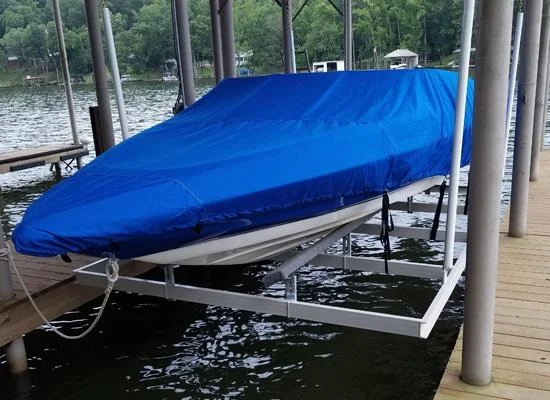
If your boat stays in the water instead of on a trailer, a mooring cover isn’t optional, but it’s the one thing standing between your boat and months of sun, rain, and whatever blows in off the water. But not every mooring cover for boat actually protects the way it should. Get the size wrong, pick the wrong fabric, or skip a proper hem system, and you’ll be replacing that cover a lot sooner than you’d like.
Here’s what actually matters when choosing one: how to size it correctly, what fabric holds up in wet conditions, and how to keep it secured.
What Makes a Mooring Cover Different From a Regular Boat Cover
Not all boat covers are built for the same job. A mooring cover is specifically designed for boats that stay in the water, tied up at a dock or moored offshore, rather than boats that get trailered home after every trip.
Because of that, it has to do more than block rain during storage. It’s dealing with constant humidity, splashing, and sustained exposure day after day, not just the occasional shower. A proper mooring cover extends down to, or just below, the rub rail on all sides, sealing the whole boat rather than covering it loosely on top.
How to Size a Mooring Cover for Boat Correctly
Sizing is where most people go wrong, and it’s usually an easy fix once you know what to measure.
- Measure boat length from bow to stern. Don’t include any tower, add-on, or accessory; this should be hull length only.
- Measure beam width at the widest point of the boat, which is often near the middle, not the bow or stern.
- Match both numbers to a size range, not just length. A lot of people size by length alone and end up with a cover that’s too tight or too loose around the beam, since beam width can vary a fair amount between boats of similar length.
Check whether the cover accounts for accessories like bow rails, running lights, or a raised console. These add bulk that are bare-bones size chart might not reflect.
Boat Type and Fit: Why Hull Shape Matters
Two boats can be the exact same length and still fit a cover differently, because hull shape changes how the fabric drapes.
V-hull fishing boats, runabouts, and bass boats all have different deck contours; some have a higher bow, some have a flatter profile, some have more freeboard. A cover cut generically for “17 feet” without accounting for hull type can bag in some spots and pull tight in others, even when the length and beam are technically correct.
That's why better mooring boat covers are sized in tighter tiers, roughly every two feet, rather than broad ranges like "15 to 20 feet." The tighter the size bracket, the less guesswork the fabric has to make up for.
What Fabric Should a Mooring Cover Be Made Of?
Fabric is where the difference between a cover that lasts two seasons and one that lasts eight really shows up.
300D marine-grade polyester is one fabric weight commonly used in mooring boat covers, offering a denser weave than lighter alternatives. Beyond the base fabric, a water-repellent coating adds another layer of protection without sealing the material completely, which matters more than people expect.
That’s because breathability is just as important as waterproofing. A fabric that’s fully sealed keeps water out, but it also traps moisture underneath. That trapped humidity is exactly what mildew needs to take hold. A cover that repels water on the outside while still letting some airflow through underneath does a much better job long-term than one that's simply "waterproof" on paper.
UV resistance matters too, especially for boats that sit uncovered by shade for months. Look for fabric with UV inhibitors woven into the material itself, not just a surface treatment that wears off after a season of direct sun.
How to Keep a Mooring Cover Secure in Wind and Water
A cover that fits well still needs to actually stay in place once it’s on the boat.
A sewn-in elastic hem (sometimes called shock cord) does most of the work here; it keeps the cover snug against the boat without needing to be re-tightened every time the wind picks up. From there, loops sewn around the hem give you options for extra security: weights, suction cup tie-downs, or rope, depending on how exposed your mooring spot is.
Seam construction matters more than it gets credit for. Double-stitched seams with rot-resistant thread hold up far better under the repeated tension of wind and wave motion than a single-stitched seam, which tends to be the first thing to fail on cheaper covers.
A cover that's just draped over the boat with no hem system at all will almost always shift, sag, or blow loose eventually; it's not a matter of if, just when.
Signs You're Buying a Low-Quality Mooring Cover for Boat
A few red flags tend to show up together on lower-quality covers:
- Vague fabric descriptions, like "waterproof polyester" with no denier rating (like 300D) or weave detail
- Single-stitched seams instead of double-stitched
- No warranty, or one under a year; a short warranty is often a sign the manufacturer doesn't expect the cover to last much longer than that
- Sizing based on length only, with no beam width guidance at all
None of these disqualify a cover outright, but seeing more than one together is usually a sign to keep looking.
Conclusion
A mooring cover only does its job if the sizing, fabric, and hem system are all right; not just one of the three. Measure length and beam width together, choose a breathable marine-grade fabric with real UV resistance, and make sure the hem has a proper elastic and loop system to keep it secured. Get those right, and a mooring cover can protect your boat through years of sitting in the water, not just one rough season.





.webp)