Sign up with Google
 Sign in with Zoho

An older adult lifts a bag of groceries, coughs hard, or steps down off a curb slightly wrong. Sharp back pain follows. Everyone assumes a pulled muscle, and the plan becomes rest and over-the-counter medication.
Sometimes that assumption is correct. Sometimes it is a vertebral compression fracture that will go unrecognized for weeks or months. These fractures rank among the more commonly missed causes of new back pain in older adults, and the delay carries consequences worth understanding.
What a Vertebral Compression Fracture Is
A compression fracture occurs when a vertebra, one of the stacked bones forming the spinal column, collapses under a load it can no longer support. In a healthy spine, that requires considerable force. In a spine affected by osteoporosis, where bones lose density and become weak and brittle, it can happen with remarkably little: a cough, a sneeze, a modest lift, a step taken harder than expected.
Osteoporosis develops without symptoms. Many people learn they have it only when a fracture reveals it, which is why a fracture from a minor force signals underlying bone health issues.
Why These Fractures Get Overlooked
Several factors contribute. Patients and providers often attribute the pain to arthritis or to a muscle strain, since these are common in the same age group. Some compression fractures produce surprisingly little acute pain and turn up incidentally later. The associated changes, including height loss and gradual forward curvature of the upper back, develop slowly enough that people notice them in retrospect.
There is also a tendency to treat back pain in older adults as an expected part of aging. Sudden back pain following minimal exertion is not routine, and it warrants assessment.
Signs That Warrant Prompt Evaluation
● Sudden, localized mid or low back pain following minor exertion or no clear injury
● Pain noticeably worse when standing or walking, relieved by lying flat
● New loss of height, or clothing fitting differently through the torso
● Increasing forward curvature of the upper back
● New back pain in anyone with known osteoporosis, long-term use of corticosteroids, meaning anti-inflammatory medications that can reduce bone density over time, or a prior fragility fracture, meaning a broken bone from a fall at standing height or less
Numbness, weakness in the legs, or changes in bowel or bladder function require urgent medical attention rather than a scheduled appointment.
An untreated compression fracture can set off a sequence. Pain limits movement, movement restriction accelerates deconditioning and further bone loss, and reduced strength and balance raise fall risk. Vertebral collapse can also alter spinal alignment, shifting load onto adjacent segments and changing posture in ways that create persistent discomfort and affect breathing capacity and balance.
Clinicians also recognize a prior vertebral fracture as a well-established risk factor for sustaining another, which is why identifying the first one matters well beyond treating the immediate pain.
Evaluation from an interventional pain management specialist begins with history and physical examination, with close attention to the pattern of pain and how it responds to position. Appropriate imaging identifies a fracture, determines whether it is recent or older, and assesses vertebral height and alignment. Where osteoporosis is suspected, bone density testing and referral for medical management of bone health form part of the picture, because treating the fracture without addressing the underlying cause leaves the risk in place.
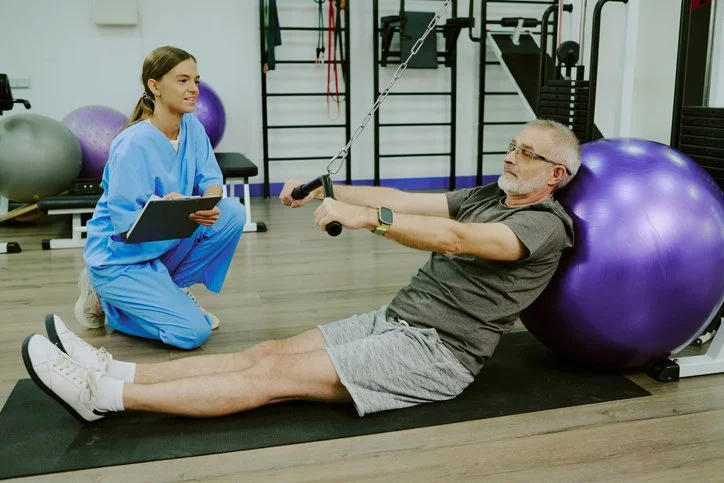
Many compression fractures respond to conservative management, including pain control, bracing where appropriate, activity guidance, and a progressive rehabilitation program. When pain persists despite that approach, a physician may consider kyphoplasty, a minimally invasive procedure that uses a small balloon to restore vertebral height before stabilizing the bone with cement.
General measures help protect the spine over time. Weight-bearing and resistance activity appropriate to your capacity, balance work to reduce fall risk, home modifications addressing loose rugs and poor lighting, a medication review with your physician covering anything that affects balance, and provider-directed assessment of bone health and nutrition all contribute.
Performance Sports and Spine is a trusted destination for spine care across Marina del Rey, Tarzana, Valencia, and Santa Barbara. Raj Desai, MD, interventional pain managementspecialist,provides reliable, thorough evaluation of compression fractures and osteoporosis-related back pain, combining accurate diagnosis with a rehabilitation-focused plan, because early recognition is what protects long-term mobility and independence.