Sign up with Google
 Sign in with Zoho

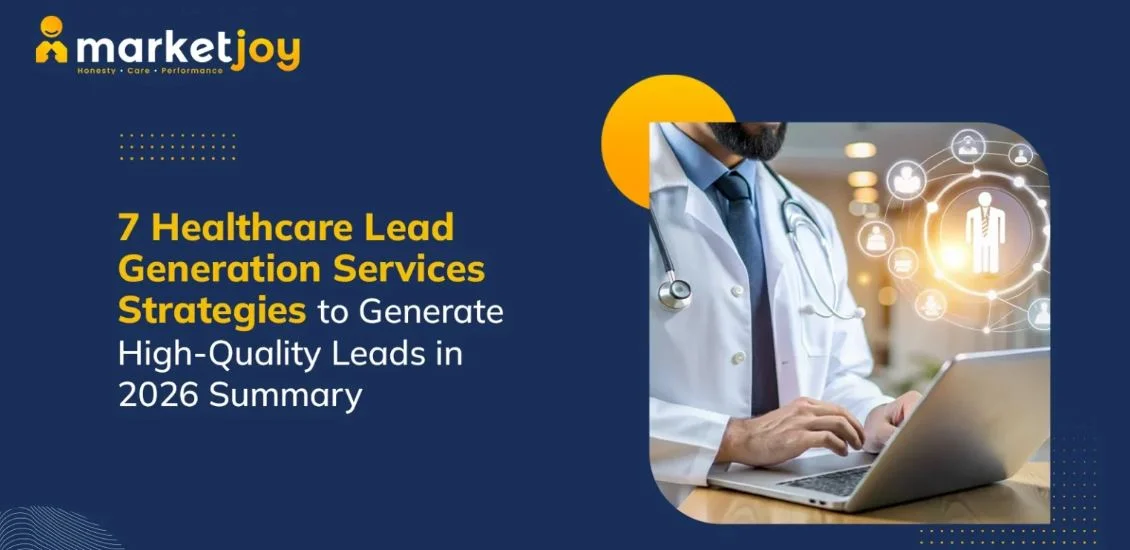
Healthcare is one of the hardest industries to generate qualified leads in. Long buying cycles, multiple decision-makers, strict compliance rules, and heavy competition mean a generic marketing playbook rarely works. That’s why healthcare lead generation services built specifically around these realities have become essential for healthcare technology firms, MedTech companies, healthcare SaaS providers, and medical device manufacturers.This guide walks through seven proven strategies healthcare organizations are using in 2026 to build a predictable, sales-ready pipeline — backed by current industry data.
Why Healthcare Lead Gen Is Different
- Healthcare sales cycles average around 125 days, and in regulated healthcare technology segments can stretch to 150–240 days once compliance and security review are added (The Lead Generation Company, 2026; ORM, 2026).
- The average B2B buying committee now includes roughly 6.8 stakeholders, up from 5.4 a few years ago — and healthcare deals typically sit at the higher end (Focus Digital, 2026).
- 94% of B2B buying groups pick their preferred vendor before the first sales conversation even happens (6sense Buyer Experience Report, 2025).
- Organizations with mature Account-Based Marketing programs see 5–9x ROI and roughly 200% larger deal sizes than non-ABM efforts (RevenueMemo, 2026).
With that context, here are the seven strategies worth building into any 2026 healthcare lead gen program.
1. Start With a Clear Ideal Customer Profile (ICP)
Healthcare purchasing decisions almost never come down to one person. A single deal might touch hospital administrators, procurement managers, clinical directors, healthcare IT leaders, compliance officers, and practice managers — each with a different priority, from cost and ROI to clinical outcomes to ease of implementation.A solid ICP should map out:
- Healthcare segment (hospitals, clinics, MedTech, labs, healthcare SaaS)
- Organization size and geography
- Budget capacity and regulatory requirements
- Technology maturity and buying behavior
Skipping this step is one of the most common reasons healthcare campaigns underdeliver — without a defined ICP, even well-executed outreach ends up targeting the wrong accounts.
2. Build Verified, Targeted Prospect Lists
Generic B2B databases go stale fast, and outdated healthcare contacts waste both budget and outreach effort. Strong prospect list building relies on verified healthcare email data, role-based segmentation, HIPAA-conscious sourcing, and accurate decision-maker mapping — prioritizing quality over sheer contact volume.
3. Run Account-Based Marketing (ABM) for Enterprise Accounts
For hospital networks, multi-location health systems, and enterprise healthcare IT buyers, ABM consistently outperforms broad-based campaigns. It works by identifying high-value target accounts, mapping the full buying committee, and running personalized, coordinated messaging across email and LinkedIn to every relevant stakeholder — rather than hoping one contact champions the deal internally. Healthcare and life sciences is currently one of the fastest-growing ABM segments, expanding at an estimated 15% CAGR (RevenueMemo, 2026).
4. Use Buyer Intent Data to Time Outreach
Healthcare buyers do extensive research long before ever speaking to sales. Buyer intent data surfaces which hospitals are researching new technologies, which clinics are comparing software, and which procurement teams are actively evaluating vendors — letting outreach happen while interest is highest instead of through cold, untimed contact. This shift matters: buyers typically complete most of their research before a vendor conversation even starts.
5. Publish Educational Content That Builds Trust
Healthcare buyers need more proof before committing than buyers in most other industries. Regulatory compliance guides, clinical outcomes case studies, implementation walkthroughs, and healthcare IT white papers help establish credibility, support sales conversations, and improve SEO and AI-search visibility at the same time.
6. Personalize LinkedIn and Email Outreach
Healthcare decision-makers get flooded with generic emails every week, so personalization is what actually breaks through — messaging tailored to a prospect’s role, priorities, and challenges, paired with compliance-conscious language and a clear value proposition. LinkedIn remains one of the strongest channels for reaching hospital administrators and healthcare IT leaders directly, and combining it with personalized email creates the multiple touchpoints healthcare buyers now expect before engaging (eight or more, according to Accretive Edge, 2026).
7. Prioritize Sales Qualified Leads (SQLs) Over Volume
Raw lead counts don’t build pipeline — sales-readiness does. The strongest healthcare programs qualify leads against budget, purchasing authority, current business need, and product fit before ever handing them to sales, so reps spend their time on conversations that are actually likely to close.
Common Mistakes to Avoid
Even experienced healthcare marketing teams tend to repeat the same errors:
- Targeting too broad an audience instead of a defined ICP
- Relying on outdated or unverified contact databases
- Overlooking compliance requirements in messaging
- Depending solely on inbound marketing
- Poor alignment between sales and marketing on what counts as “qualified”
- Sending generic, unpersonalized outreach
- Ignoring buyer intent signals entirely
How MarketJoy Supports This Process
MarketJoy builds healthcare lead generation services specifically for healthcare technology companies, MedTech organizations, healthcare SaaS providers, and medical device manufacturers. Their programs typically include custom prospect list building, multi-layer decision-maker verification, buyer intent and account intelligence, ABM execution, multi-channel outbound campaigns, SQL qualification, and ongoing campaign reporting — built around the specific complexity of healthcare purchasing rather than a generic outbound template.