Sign up with Google
 Sign in with Zoho

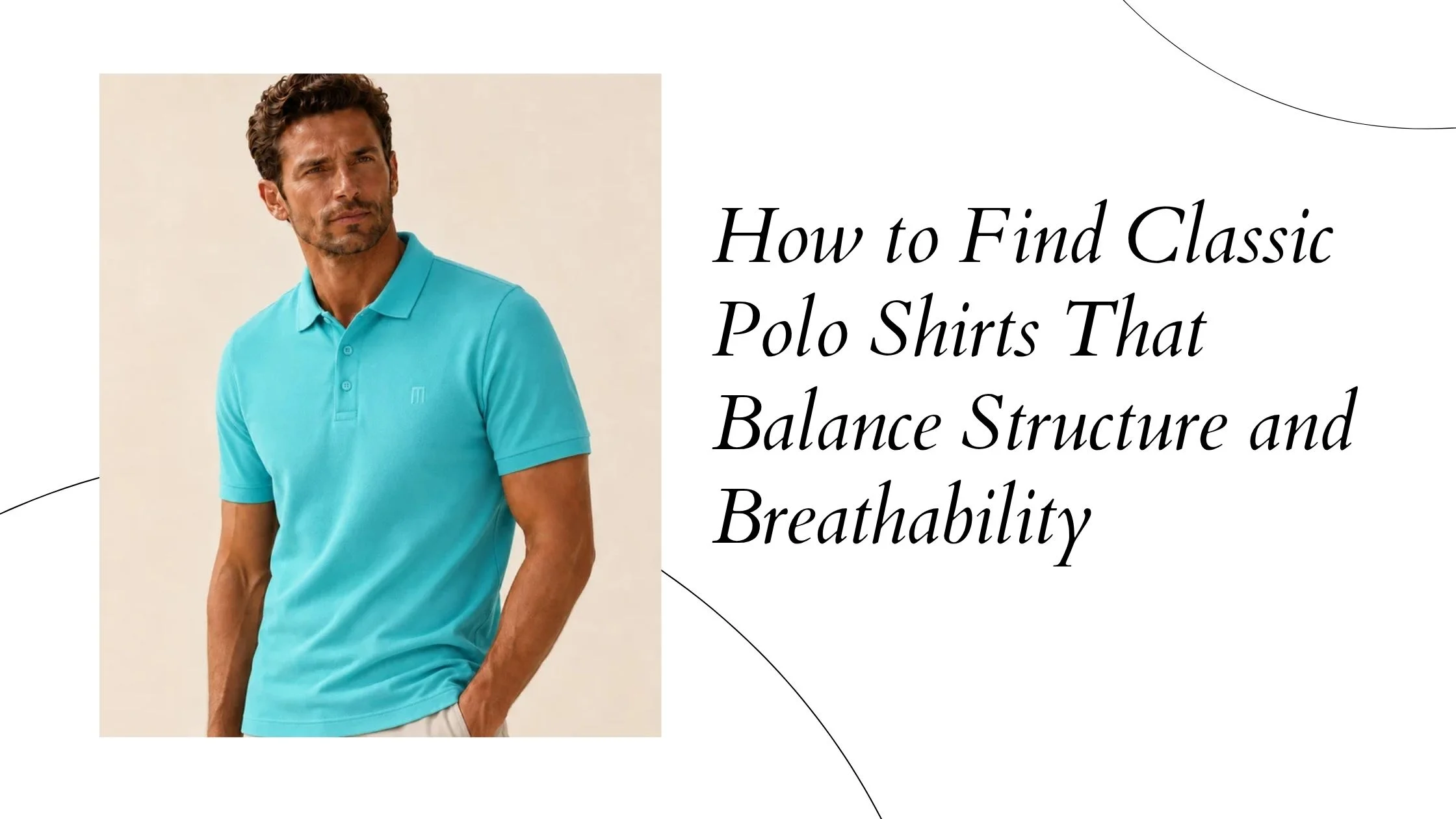
A balanced polo uses open-knit cotton, a firm collar, and a medium-weight fabric. The knit lets air through. The collar and weight hold the shape. Together, they keep you cool and tidy.
Classic polo shirts are short-sleeve knit tops with a buttoned placket and a fold-over collar. They work in casual and smart casual settings. The hard part is finding one that doesn’t trade comfort for structure.
What Are the Four Pillars of a Balanced Polo?
Four design choices decide whether a polo breathes and keeps its shape. These are the knit, the weight, the collar, and the yarn.
- Pique knit. A raised waffle texture lifts the fabric off the skin so air can move.
- 200 to 220 GSM. GSM means grammes per square metre. It measures fabric weight. This range gives the body without trapping heat.
- Collar construction. An inner layer or dense ribbing stops the edges from curling up.
- Combed cotton yarn. Combing removes short, rough fibres. The yarn feels smooth and resists pilling.
The next sections cover each one.
Why Does Pique Knit Keep You Cooler?
Pique creates tiny channels between the fabric and your skin. Air moves through those gaps, and sweat dries faster.
Flat jersey sits against the body. Pique doesn’t. The raised pattern touches the skin in fewer spots, so heat escapes more easily. That’s why pique became the standard polo fabric.
How Does Cotton Compare With Polyester Blends?
Polyester blends can feel slick and hold odour. Combed cotton feels smoother and stays fresher between washes. Blends do dry quicker, so they suit sport better than daily wear.
What GSM Should a Balanced Polo Have?
A range of 200 to 220 GSM works best. It gives the fabric enough body to hang straight without trapping heat.
Most buyers assume a thinner polo is a cooler one. That’s not always true. Weight affects drape as much as temperature.
What Happens Below 180 GSM?
Thin fabric clings. It follows every curve and can show through in bright light. It also loses its shape faster after washing.
What Happens Above 250 GSM?
Heavy knits hold warmth. They look sturdy but feel stuffy once the weather heats up. They suit cooler months better.
How Do You Check a Polo’s Quality Before Buying?
A hands-on check covers fabric, collar, fit, and stitching. You can run most of it at home after delivery, before you remove the tags.
- Hold the fabric up to light. The knit should look tight and even, with no thin patches.
- Flex the collar and placket. The collar should spring back. The placket should lie flat on the chest.
- Check the shoulder seam. It should sit on the shoulder bone. Sleeves should end in the middle of the bicep.
- Look at the hem and armholes. Stitching should run straight with no loose threads.
A good polo feels as light as a tee. It looks as sharp as a casual dress shirt.
How Do You Care for a Polo So It Keeps Its Shape?
Wash polos in cold water, inside out. Reshape the collar while it’s damp, then air-dry the shirt on a wide hanger.
Heat does the most damage. Hot water and high dryer settings shrink cotton and warp collars. A wide hanger keeps the shoulders from stretching. Good care protects the shirt. Smart buying protects the budget.
Is Buying Polos in a Pack Worth It?
Yes, a polo shirt value pack is worth it when every shirt passes the same checks. The cost per wear drops with each polo you add. A pack also gives you a rotation, so no single shirt wears out first.
Watch the fabric, though. A low pack price means little if the knit is thin or the collar goes limp after three washes. Check the GSM and collar details before you look at the discount.
Where Can You Find a Polo That Meets These Standards?
Check the product page for GSM, fabric type, collar build, and return policy. Brands that list these details usually stand behind the shirt.
Uniqlo, True Classic, and Momifa all sell plain cotton polos in this space, each with a different fit and price. Compare them against the checklist above. Order from two of them, run the checks yourself, and keep the one that holds its shape best.
FAQs
What fabric keeps a polo breathable?
Cotton pique keeps a polo breathable. Its waffle texture lifts the fabric off the skin, so air moves through and sweat dries faster.
Is cotton or polyester better for hot weather?
Cotton usually feels cooler for daily wear. Polyester dries faster, which helps during sport, but it can hold odour.
What GSM works best for everyday polos?
Aim for 200 to 220 GSM. That range gives clean drape and enough body without trapping heat on warm days.
Why does a polo collar curl, and how do you stop it?
Collars curl when the fabric has no inner support. Look for an interlined or densely ribbed collar, and reshape it while damp after washing.
How should a polo fit through the shoulders and sleeves?
Shoulder seams should sit on the shoulder bone. Sleeves should end in the middle of the bicep without squeezing or flapping.