Sign up with Google
 Sign in with Zoho
You probably expect the same things to happen at your eye exam every time: reading letters on a chart, checking your prescription, and maybe getting a quick look into your eyes with a bright light. But eye care has come a long way since then, and doctors can now see a lot more than they could before.
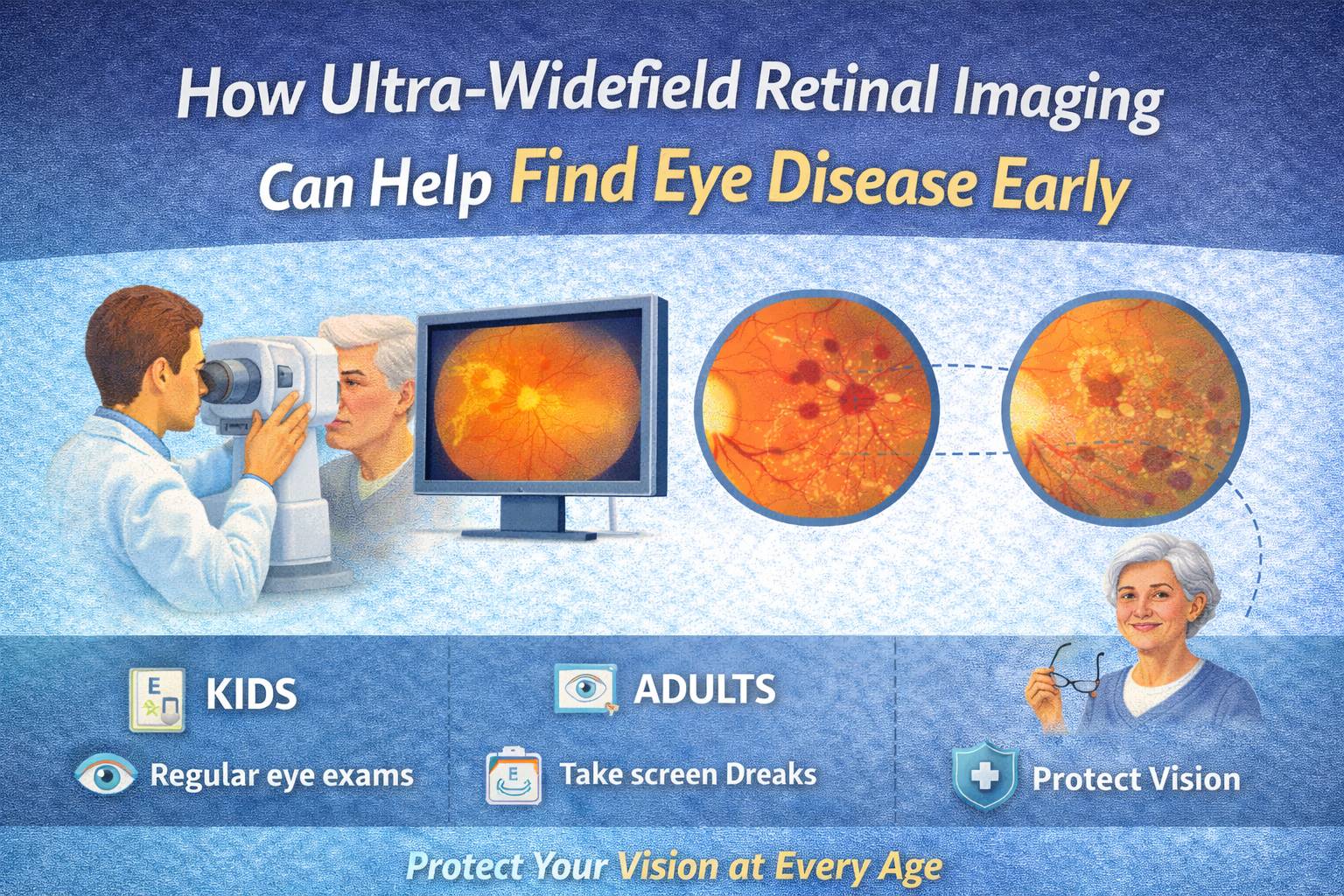
Ultra-Widefield Retinal Imaging is one of the most important new things in eye care. This new imaging technology lets eye doctors see the retina, the light-sensitive tissue at the back of your eye, in great detail. It also helps them find problems much earlier than regular exams. In case you are looking for the best optometrist coral spring and eye care in coral spring – choose Modern Optical.
Don't worry if you've never heard of it before. Let's talk about how it works and why it's becoming such an important way to protect your eyesight.
What is imaging of the ultra-widefield retina?
Ultra-widefield retinal imaging is a special scan that takes a high-resolution picture of the retina. Ultra-widefield imaging can take pictures of up to 200 degrees of the retina in one picture, unlike regular retinal photos, which only show a small part of the eye.
That means your eye doctor can see almost 80% of the retina at once, even parts that are hard to see during a normal eye exam.
The process is quick and easy. You only have to look into a machine for a few seconds for it to take a clear picture of the inside of your eye. No pain, no complicated preparation—just a quick picture that gives you important information about the health of your eyes.
Finding Eye Diseases Sooner
One of the best things about ultra-widefield imaging is that it can find eye diseases before symptoms show up.
A lot of eye problems happen without any warning. When changes in vision become clear, the disease may already be in an advanced stage. With this imaging technology, eye doctors can often see small changes in the retina much sooner.
Finding things early can help find things like:
- Retinopathy in people with diabetes
- Tears or detachments in the retina
- Degeneration of the macula
- Damage caused by glaucoma
- Tumors or problems with the retina
When doctors find these problems early, they can start treatment sooner, which can make a big difference in the outcome and protect vision in the long term.
A Better Idea of How Healthy Your Eyes Are
Ultra-widefield imaging is like a wide-angle picture of the inside of your eye. Your eye doctor can see a lot more than just a small part of your eye.
This wider view helps them see changes in parts of the retina that are hard to see during a regular exam. These detailed images make it easy to see small problems that might otherwise go unnoticed.
Keeping track of changes over time
One of the best things about ultra-widefield retinal imaging is that it lets you see how things change over time.
Your eye doctor can compare scans from past visits and keep an eye on even the smallest changes in your retina because the images are stored digitally.
This is especially helpful for people who are more likely to get eye problems, like people with diabetes, high blood pressure, or a family history of eye disease.
Doctors can act quickly if they notice something changing in the retina over time.
Conclusion
To keep our eyes safe, we need to do more than just see if we can read letters on a chart. Eyes are very complicated. Ultra-widefield retinal imaging and other new tools are making it easier and faster for eye doctors to find eye diseases.
Taking detailed panoramic pictures of the retina with this technology helps find hidden problems, keep track of changes over time, and give patients a better idea of how healthy their eyes are.