Sign up with Google
 Sign in with Zoho

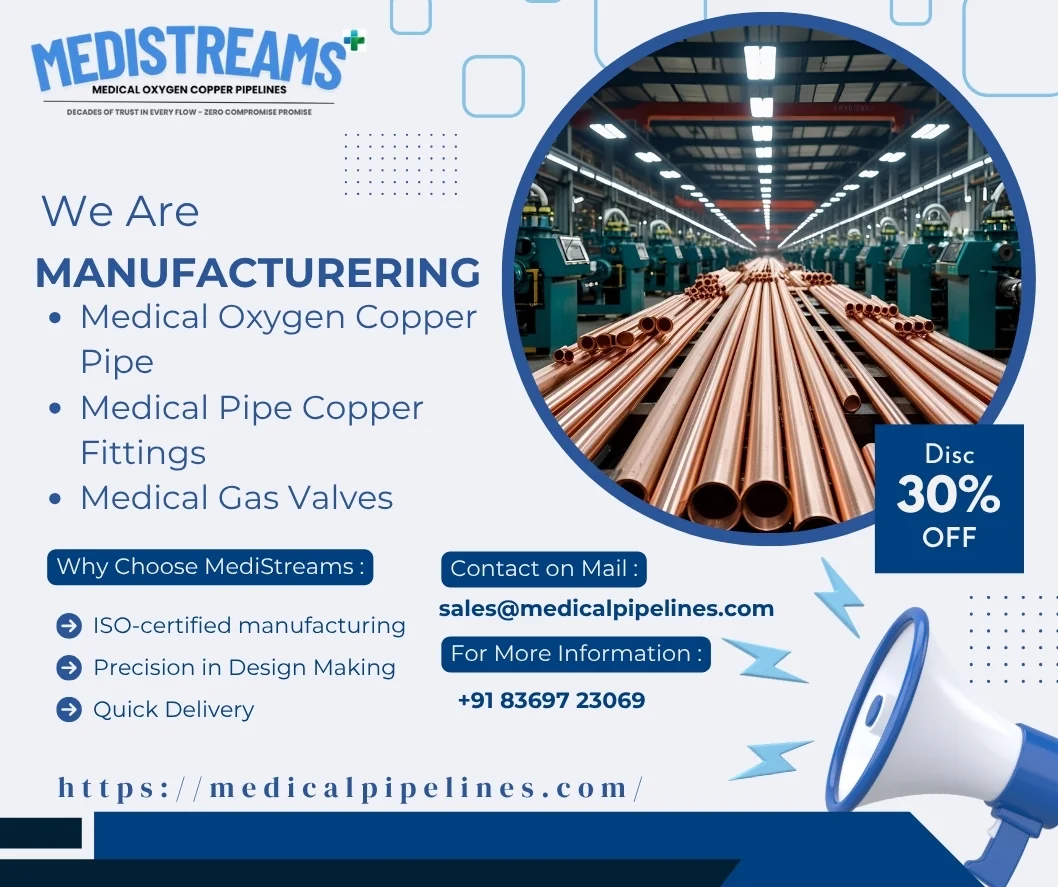
EN 1057 Copper Water Pipes and Gas Tubes: A reliable solution for plumbing and gas applications.
Introduction
Copper is a material that has been used for generations in plumbing and fluid transportation systems due to its durability, corrosion resistance, thermal conductivity and long life. One of the commonly mentioned standards of copper tubes is the EN 1057, which is an important European standard for copper tubes for water and gas applications.
EN 1057 copper tubes are produced for use in hot water, cold water (sanitary), heating and some gas applications. They offer a practical option for residential, commercial, and industrial applications due to their strength, workability, and corrosion resistance.
What Is EN 1057 ?
EN 1057 is a European Standard entitled “Copper and copper alloys – Seamless, round copper tubes for water and gas in sanitary and heating applications.”
This standard covers seamless round copper tubes for use with water and gas, such as sanitary and heating systems.
EN 1057 includes key features including:
- Dimensional requirements
- Mechanical properties
- Material requirements
- Surface quality
- Testing requirements
- Marking and conformity requirements.
By following a specification in the manufacture of tubes, engineers, contractors and buyers can be confident that the copper tube they are purchasing is appropriate for the project at hand.
So, What is EN 1057 Copper Water Pipes?
EN 1057 copper water pipes are seamless copper pipes used for water distribution and sanitary purposes. Depending on the project design and applicable installation requirements, they can be used for both hot and cold water systems.
The durability of copper, which resists corrosion and is able to stand up to temperature fluctuations, makes it a perfect material for many plumbing applications.
These tubes can be installed in:
- Residential buildings
- Commercial buildings
- Hotels
- Hospitals
- Industrial facilities
- Institutional buildings
- Heating installations
- Water distribution networks
EN 1057 Copper Gas Tubes
Copper tubes made for the specific gas application, with wall thickness, joining technique and installation in accordance with applicable regulations will provide a long-lasting solution for gas distribution installations.
When dealing with gas installations special consideration should be given to safety, testing, joining and local code requirements. Hence it is always necessary to choose and install EN 1057 tubes in accordance with the applicable requirements for the particular gas system and region.
EN 1057 Copper Tubes key features include:
1. Seamless Construction
Seamless round copper tubes are covered by EN 1057. Seamless construction is a seamless tube construction without longitudinal welded seam.
2. Corrosion Resistance
Copper is resistant to corrosion in many typical plumbing applications and helps to ensure durability in a system.
3. Excellent Thermal Conductivity
Copper also conducts heat well and is used to make copper tubing for hot-water and heating systems.
4. Good Mechanical Strength
Copper tubes are also beneficial because they are strong and flexible, enabling them to be installed in different configurations.
5. Easy Joining
Copper tubing shall be joined by appropriate means, including soldering, brazing and other acceptable joining methods, as appropriate for the application.
6. Long Service Life
Copper piping systems, when properly chosen, installed and serviced, will provide long-term service.
Applications of EN 1057 Copper Pipes
EN 1057 copper tubes are commonly referred to in the world of plumbing and heating.
Water Supply Systems
Copper tubes are widely used as potable and non-potable water distribution systems within buildings at applicable water chemistry and regulations.
Hot Water Systems
Their thermal properties make copper tubes suitable for hot-water distribution systems.
Heating Systems
Heating installations that require and can be operated at the same temperature as copper tubes may be used with copper tubing.
Sanitary Installations
Copper tubes are suitable for sanitary plumbing systems in homes, commercial and institutional buildings.
Gas Installations
Gas distribution systems can use suitable copper tubes, if local regulations and project specifications allow.
Development of projects in the commercial and industrial fields.
Copper may be used in the plumbing, heating and utility systems of large construction projects where copper is suitable for the purpose.
EN 1057 Copper Water Pipes and Gas Tubes have the following benefits:
Durability
Copper has proven to be extremely durable under appropriate operating conditions and environment.
Resistance to Temperature
Copper has proven to work well in a wide temperature range, making it suitable for both cold and hot-water systems.
Recyclability
Copper is a material that can be recycled many times. At the end of their life, copper products can be recovered and recycled.
Dimensional Consistency
The production under specification guarantees controlled dimensions and regular characteristics of the tubes.
Versatile Installation
Copper tubes can be bent, cut and joined with the proper tools and technique, providing flexibility in installation.
Low Maintenance
When the copper pipe system is designed and installed correctly, there is not a lot of maintenance that is required on a regular basis.
At present, there is no significant difference between the EN 1057 and the General Copper Tubes.
Not all copper tubes are necessarily water- or gas-worthy. This standard EN 1057 deals with seamless round copper tubes for sanitary and heating water and gas.
It is thus important that the buyer check the following when buying copper tubes:
- Applicable standard
- Copper material designation
- Tube dimensions
- all thickness
- Temper conditions/delivery condition
- Intended application
The corresponding test and certification are required for each.
Applicable local regulations
It is more important to choose a tube based on the actual project requirement and not just on nominal size.
Copper Water Pipes come in various sizes that are commonly used.
There are a variety of outside diameters and wall thickness options for copper tubes. Small diameter tubes are frequently used in residential plumbing, while larger diameter tubes are used in commercial and industrial plumbing applications.
Available product sizes and wall thicknesses vary according to the manufacturer, standard, project specification and application.
The buyer can ask the manufacturer/supplier to provide a dimensional chart and technical documentation for large projects.
How to Select EN 1057 Copper Tubes
When choosing a copper tube, it is important to take into account some technical aspects.
1. Application
Determine if the tube is to be used for water, heating, sanitary or approved gas use.
2. Tube Diameter
Choose the desired outside diameter based on the design flow and system piping needs.
3. Wall Thickness
Wall thickness should be determined with regard to pressure, temperature, installation procedures, and regulations.
4. Material
Ensure the copper grade or material designation that is required for the project is correct.
5. Temper
Whether rigid tubes, bendable tubes or other condition are necessary for the installation, the required temper or delivery condition should be selected.
6. Certification
If compliance documentation is needed for projects, ask the supplier for certificates, test results and conformity documentation.
Installation Considerations
To obtain reliable performance, correct installation is critical.
The installation process could involve the following:
Measurement of the necessary length of tube.
Using a suitable tube cutter to cut the tube.
Clearing the inside and outside burrs.
Clearing the tube and the surfaces of the fitting.
To verify alignment and tube insertion depth.
Fitting together the elements by the accepted procedure.
Checking completed joints.
Conducting the proper tests prior to system commissioning.
Extra safety procedures and testing are necessary for gas systems and are in accord with applicable codes and regulations.
Copper tubes for modern construction - EN 1057
In the modern buildings, the necessary material for plumbing needs to be reliable, durable, and flexible for installation. With these properties, plus exceptional thermal and recyclability, copper remains integral to many building projects.
Seamless round tubes of copper for use in water and gas services have a recognized framework for their manufacture and purchase requirements in the form of EN 1057.
Choosing a standard and tube selection is a crucial step in the design process for architects, MEP consultants, plumbing contractors, and procurement teams to ensure a reliable piping system.
The benefits of using Quality EN 1057 Copper Tubes.
A copper piping system's performance is more than just the material itself. Multiple factors, including tube quality, dimensional accuracy, surface condition, joining practices, installation and system design all impact performance.
A good supplier should be able to supply data on:
- Material specifications
- Tube dimensions
- Manufacturing standards
- Available sizes
- Testing
- Packaging
- Certifications and documentation
- Application suitability
With this information, buyers are able to make informed decisions regarding plumbing and construction projects.