Sign up with Google
 Sign in with Zoho

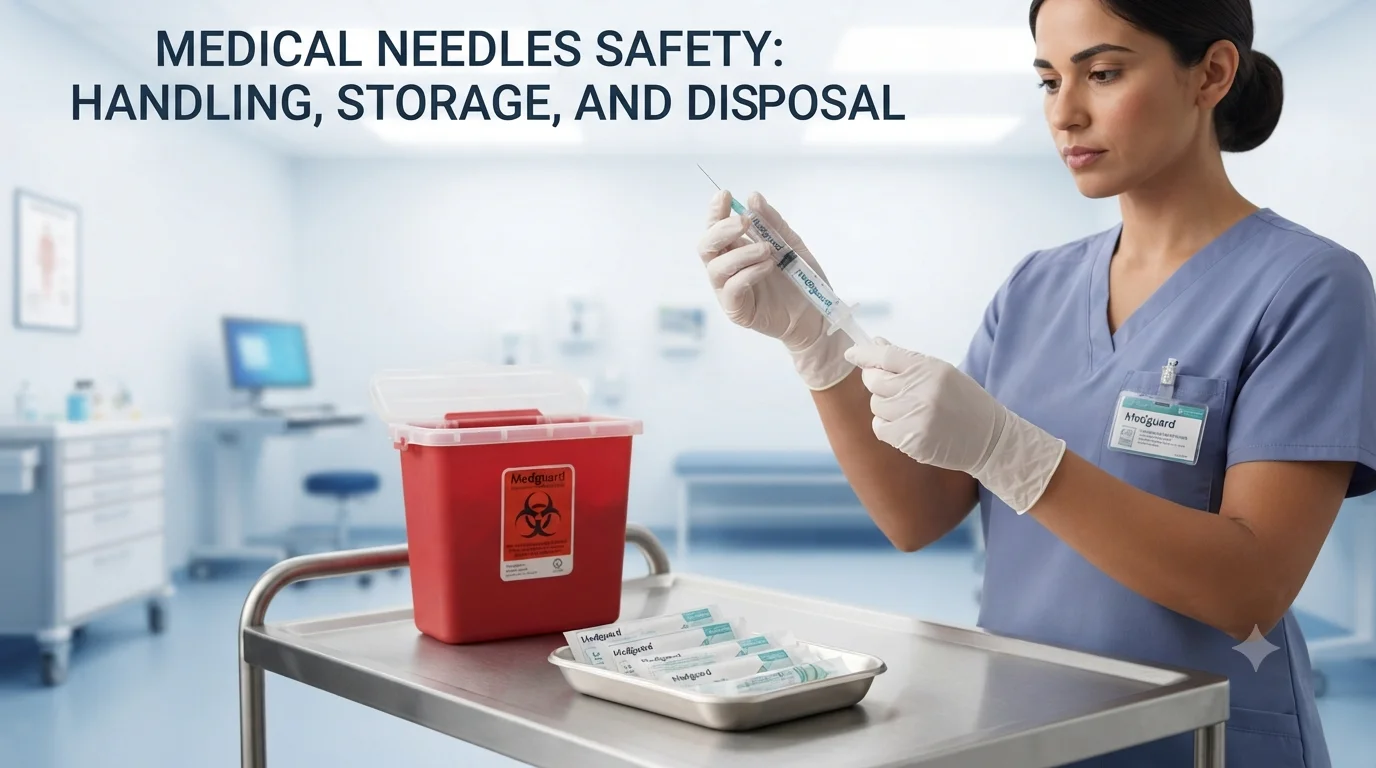
Needles help save lives every day. They give vaccines, medicines, and fluids to people who need them. But a needle can also hurt the person using it if it is handled the wrong way. A small prick can spread serious germs.
This guide explains how to handle, store, and throw away needles safely. The steps are simple, and anyone can learn them.
What Are Medical Needles?
Medical needles are thin, sharp tubes made of steel. They are used to push medicine into the body or to take blood out. You can find them in hospitals, clinics, labs, and many homes.
Needles come in different sizes. A short, thin needle may be used for a shot under the skin. A longer, wider one may be used for a shot in the muscle or for drawing blood. The right size depends on the job.
Why Needle Safety Matters
A needle that has touched blood can carry germs. These germs can pass to another person through a small cut or prick. Some of these germs cause diseases such as hepatitis B, hepatitis C, and HIV.
This injury is called a needlestick injury. It can happen to nurses, doctors, cleaners, waste workers, and even family members at home. Most of these injuries can be stopped with good habits.
Types of Injection Needles
Injection needles are the ones used to give shots. You may see a few kinds.
- Hypodermic needles are the most common. They fit on a syringe.
- Safety needles have a shield or a cover that slides over the tip after use.
- Pen needles are used with insulin pens by people with diabetes.
- Butterfly needles have small plastic wings and are used for blood draws.
Safety needles are very helpful because they lower the chance of a stick after use. Many hospitals now choose them first.
Safe Handling of Medical Needles
Good handling starts before the needle is even used. Follow these steps each time.
Before Use
Wash your hands with soap and water. Check the package. Do not use a needle if the pack is torn, wet, or open. Look at the expiry date as well. An old needle may not be sterile.
Only open the needle pack right when you are ready to use it. Do not open it early and leave it sitting out.
During Use
Stay calm and focus. Keep the needle pointed away from your body and from other people. Do not rush. Most accidents happen when someone is in a hurry or tired.
Make sure the patient is still and comfortable. A child or a scared person may move suddenly. Ask for help if you need it.
After Use
This is the most important part. Do not put the cap back on the needle with two hands. This is called recapping, and it causes many injuries. If you must cover the needle, use the one-hand scoop method. Place the cap on a flat surface, slide the needle into it with one hand, and then press the cap tight.
Never bend, snap, or break a used needle. Never pass a used needle from hand to hand. Put it straight into a sharps container.
Safe Storage of Unused Needles
Unused needles must stay clean and dry. Poor storage can make them unsafe even before use.
Here are the main rules:
- Keep them in their sealed packs until needed.
- Store them in a cool, dry place away from sun and heat.
- Keep them away from water, dust, and dirt.
- Do not store them in a bathroom, where it is damp.
- Keep them out of reach of children and pets.
- Use older stock first, so nothing runs out of date.
At home, a locked box or a high shelf works well. In a clinic, a closed cupboard or drawer is a good choice.
What Is a Sharps Container?
A sharps container is a strong box made for used needles. It is made of thick plastic that a needle cannot poke through. It has a small opening on top where you drop the needle in. The lid locks so nothing falls out.
Most sharps boxes are bright red or yellow. They also carry a clear warning label. This helps everyone know that sharp and dangerous items are inside.
How to Use One Properly
Place the container near where needles are used. This way, you do not have to walk far with a used needle in your hand. Drop the needle in right after use.
Do not push the needle down with your fingers. Do not overfill the box. Stop when it is about three quarters full. Then close the lid fully and lock it.
What If You Do Not Have a Sharps Container at Home?
Sometimes you cannot get a proper sharps box right away. In this case, a thick plastic bottle can work for a short time. A laundry detergent bottle is a good choice. It should be strong, have a screw cap, and not be see-through.
Do not use glass bottles or thin plastic ones. A needle can poke through thin plastic. Label the bottle clearly so no one throws it out by mistake. Also, check your local rules. Some areas do not allow home-made containers.
Safe Disposal of Used Needles
Throwing needles away the wrong way can hurt waste workers and others. Never put loose needles in the regular trash. Never flush them down the toilet. Never throw them on the street or in a park.
Here are the right ways to dispose of them:
- Seal the full sharps container tightly.
- Take it to a hospital, clinic, or pharmacy that accepts it.
- Use a local medical waste collection program if one exists.
- Follow your city or country rules for sharps waste.
In hospitals, a special waste company collects sharps boxes. The waste is then burned in a safe way or treated with steam heat. This kills the germs and destroys the needles.
What to Do After a Needlestick Injury
Even careful people can get stuck by accident. Know what to do so you can act fast.
- Do not panic.
- Wash the area with soap and running water right away.
- Let it bleed a little. Do not squeeze or scrub hard.
- Do not put the wound in your mouth.
- Cover it with a clean bandage.
- Tell your supervisor or a doctor at once.
- Get medical help as soon as you can.
Time matters here. In some cases, medicine can lower the chance of infection if it is started within a few hours. A doctor can test you and guide you.
Tips to Build Good Safety Habits
Safe habits keep everyone protected. Try these simple ideas.
- Always wear gloves when handling needles.
- Never reuse a needle or a syringe, even on the same person.
- Check that your work space is well lit and tidy.
- Learn the safety steps before using any new needle type.
- Teach family members what to do if they find a loose needle.
If you find a needle on the ground, do not touch it with bare hands. Use tongs or thick gloves. Place it in a hard container and call local health or waste services for help.
Final Thoughts
Medical needles are useful tools, but they need respect. Safe handling, proper storage, and correct disposal protect nurses, patients, waste workers, and families. The rules are not hard. Wash your hands, never recap with two hands, use a sharps container, and never reuse a needle.
Small steps done the same way every time can stop most injuries. Stay careful, stay calm, and when you are not sure about something, ask a health worker for help.