Sign up with Google
 Sign in with Zoho

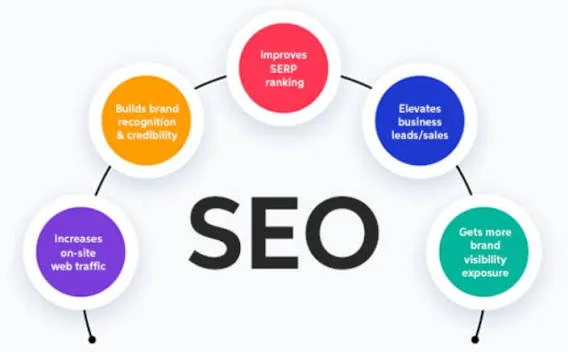
Every year brings SEO predictions, and most of them are noise. But a few shifts happening right now are structural, not cyclical — meaning they'll keep shaping search well past 2026. Here's what's actually worth your team's attention.
Trend 1: Search Is Splitting Into Two Channels
Traditional search and AI-powered answer engines are no longer the same channel with different interfaces — they're becoming genuinely separate discovery paths with different rules. A page can rank on page one of Google and still never get referenced by ChatGPT Search or Perplexity, because those systems evaluate content differently: less on backlink authority, more on clarity and direct answerability.
What this means practically: businesses now need two overlapping strategies instead of one. Classic technical SEO still earns you visibility in traditional search. Clear, well-structured, fact-dense content earns you citations in AI-generated answers.

Trend 2: Zero-Click Searches Keep Rising
A growing share of searches never result in a click at all — the answer is fully satisfied on the results page. This is frustrating for traffic numbers but not necessarily bad for business. Being the cited source in an AI Overview builds brand recognition even without a click, similar to how a billboard builds awareness without a direct conversion.
The businesses adapting well are tracking brand visibility and citation frequency as metrics alongside — not instead of — traditional traffic.
Trend 3: Content Depth Is Beating Content Volume
Publishing three thin blog posts a week is losing ground to publishing one genuinely comprehensive piece. Search systems, and increasingly AI models, favor content that fully resolves a topic over content that requires the reader to piece information together from five different pages.
Trend 4: Trust Signals Are Becoming Machine-Readable
Author credentials, publication dates, citation sources — these used to be soft trust signals humans noticed. Now they're increasingly parsed and weighted by algorithms directly through structured data and schema markup. A well-tagged author bio isn't just good practice anymore; it's a ranking input.
Trend 5: Local and Niche Relevance Outperforms Broad Reach
Broad, high-volume keywords are more competitive and less convertible than ever. A business chasing "digital marketing" nationally competes with thousands of sites. A business targeting seo agency in delhi, by contrast, competes in a smaller, more relevant pool — and converts at a meaningfully higher rate because the intent is more specific.
This same principle explains why phrases like best seo agency in delhi consistently perform well for agencies that rank for them: the searcher has already decided they want a local, vetted option, not a generic explainer.
How to Prepare Your Business
- Run a technical SEO audit before investing further in content
- Restructure key pages so each section answers a specific question directly
- Add schema markup for articles, FAQs, and local business data
- Set up tracking for AI citation visibility, not just keyword rank
- Prioritize fewer, deeper pieces of content over frequent shallow posts
This is roughly the sequence our strategists at MarketingBugs follow for new client onboarding, because skipping the technical audit step tends to undermine everything built on top of it later.
FAQ
What's the biggest SEO mistake businesses make in 2026? Treating AI search visibility as identical to traditional SEO. The two overlap but require distinct structural choices in how content is written.
Should I stop publishing frequently and focus on fewer articles? Generally yes — one comprehensive, well-researched piece tends to outperform several shallow ones, both for ranking and for AI citation.
What is a zero-click search? A search where the user's question is fully answered on the results page itself, without them clicking through to any website.
How do I track AI citation visibility? Manually query AI search tools with your target questions and note whether your brand or content is referenced, alongside monitoring referral traffic from AI platforms where available.
Is schema markup worth the investment? Yes. It helps both traditional search engines and AI systems parse your content accurately, which increasingly affects whether you get cited.
Conclusion
SEO in 2026 isn't a single discipline anymore — it's traditional search optimization and AI-answer optimization running in parallel. Businesses that treat them as one and the same will underperform both. Whether you build this capability internally or work with a seo agency in delhi that already understands the split, the businesses that adapt early are the ones setting the pace for their industry. It's a shift MarketingBugs has been actively building into every client strategy this year.