Sign up with Google
 Sign in with Zoho

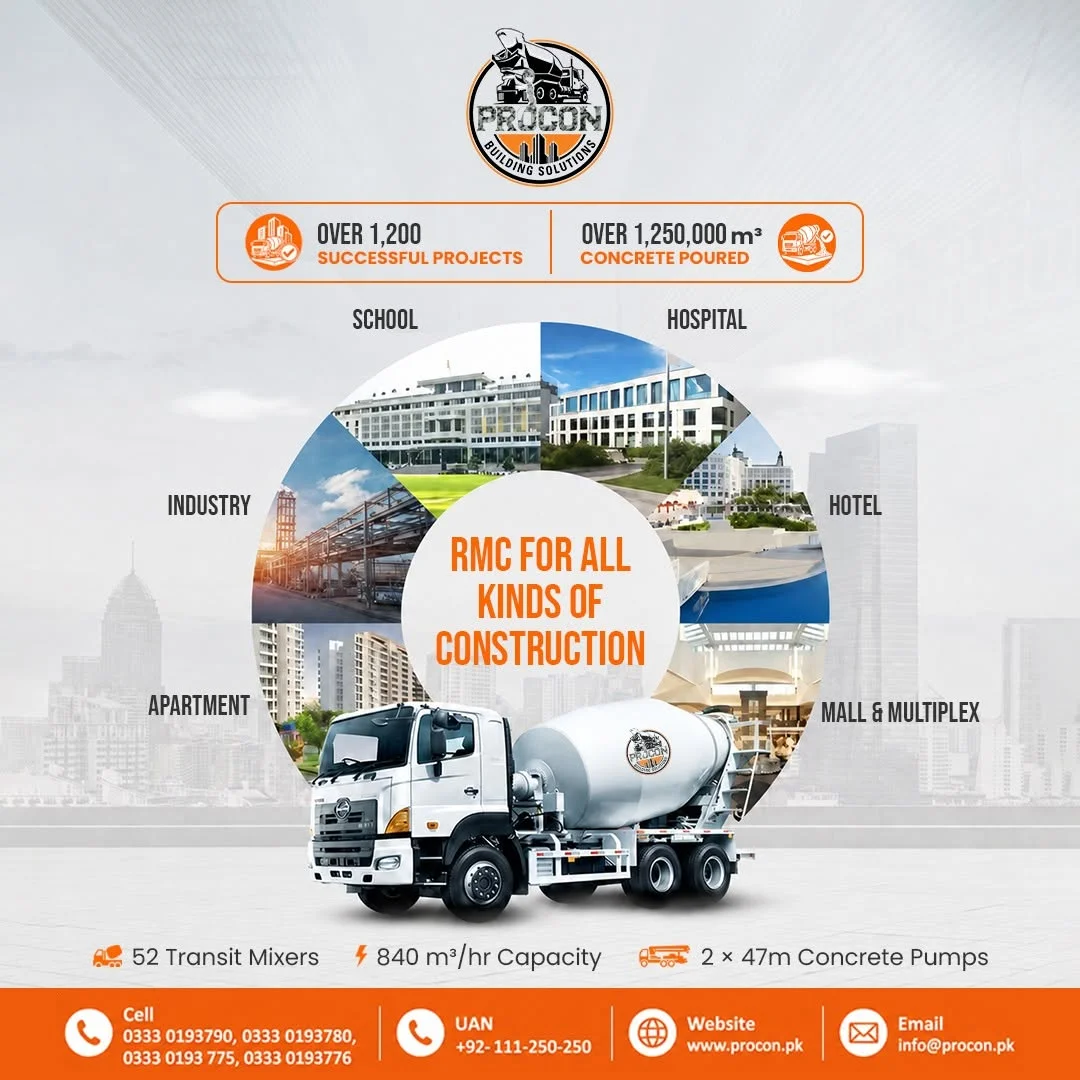
In modern civil engineering and architecture, structural stability depends heavily on selecting the correct concrete specification for each individual building element. Different parts of a structure—from underground foundations to high-rise columns—experience varying degrees of compressive force, environmental exposure, and soil stress. Using a uniform, uncalibrated concrete mix across an entire project introduces major structural risks, including early cracking, excessive deflection, and foundation settlement. Moving away from unpredictable site-mixed concrete in favor of factory-controlled ready mix concrete in Karachi ensures that every structural element receives an engineered mix design tailored to its specific load-bearing and durability requirements.
Heavy Foundation Rafts and Footings
Foundations serve as the primary transfer mechanism for a building's dead and live loads into the ground. Heavy mat foundations, pile caps, and raft slabs require high-density concrete formulations that resist immense vertical loads and aggressive groundwater conditions.
Key foundation mix requirements feature:
- High Compressive Resistance: Foundation designs require high structural density to support multi-story loads without differential settlement.
- Low Permeability and Sulfate Resistance: Underground concrete remains in constant contact with soil moisture and aggressive sulfates, requiring low matrix porosity to block water ingress.
- Temperature Control in Mass Pours: Large concrete volumes generate significant heat during hydration; custom mixes incorporate retarders or pozzolans to prevent thermal stress cracking.
Tailoring foundation mixes to local soil conditions safeguards the entire building frame against foundational failure over time.
Load-Bearing Columns and Shear Walls
Vertical load-bearing elements, such as columns and shear walls, carry heavy vertical loads while resisting lateral forces caused by wind and seismic activity. These structural elements require high compressive strengths and precise workability.
Technical parameters for vertical elements include:
- High-Strength Formulations: Slender structural columns require high-strength concrete to maximize load capacity while minimizing column footprint size.
- High Workability Around Dense Rebar: Tightly spaced steel reinforcement requires highly fluid, self-consolidating formulations that flow without leaving air voids or honeycombing.
- Controlled Setting Speed: Uniform setting times ensure cohesive, monolithic pours that maintain structural integrity across column lifts.
Precision batching ensures vertical columns maintain high structural stiffness under heavy dynamic loads.
Elevated Slabs and Beams
Suspended floor slabs and structural beams experience flexural stress, requiring mix formulations that balance compressive strength with cracking resistance.
Crucial slab performance factors include:
- Controlled Slump and Fluidity: Consistent slump levels allow fast spreading and smooth surface finishing across large floor areas.
- Minimized Shrinkage Cracking: Balanced water-cement ratios and shrinkage-reducing admixtures prevent surface micro-cracks during curing.
- Optimized Formwork Removal Cycles: Utilizing early-strength concrete formulations enables faster formwork stripping, shortening floor-to-floor construction cycles.
Slab formulations engineered for specific flexural demands preserve floor integrity and accelerate overall project schedules.
Exterior Retaining Walls and Boundary Systems
Exterior structures are continuously exposed to severe weather, marine salts, and temperature variations. Formulations for these elements prioritize environmental durability, low water absorption, and corrosion protection for embedded steel reinforcement. Dense, quality-controlled mix designs prevent atmospheric carbonation, keeping exterior surfaces intact and maintenance-free for decades.
Conclusion
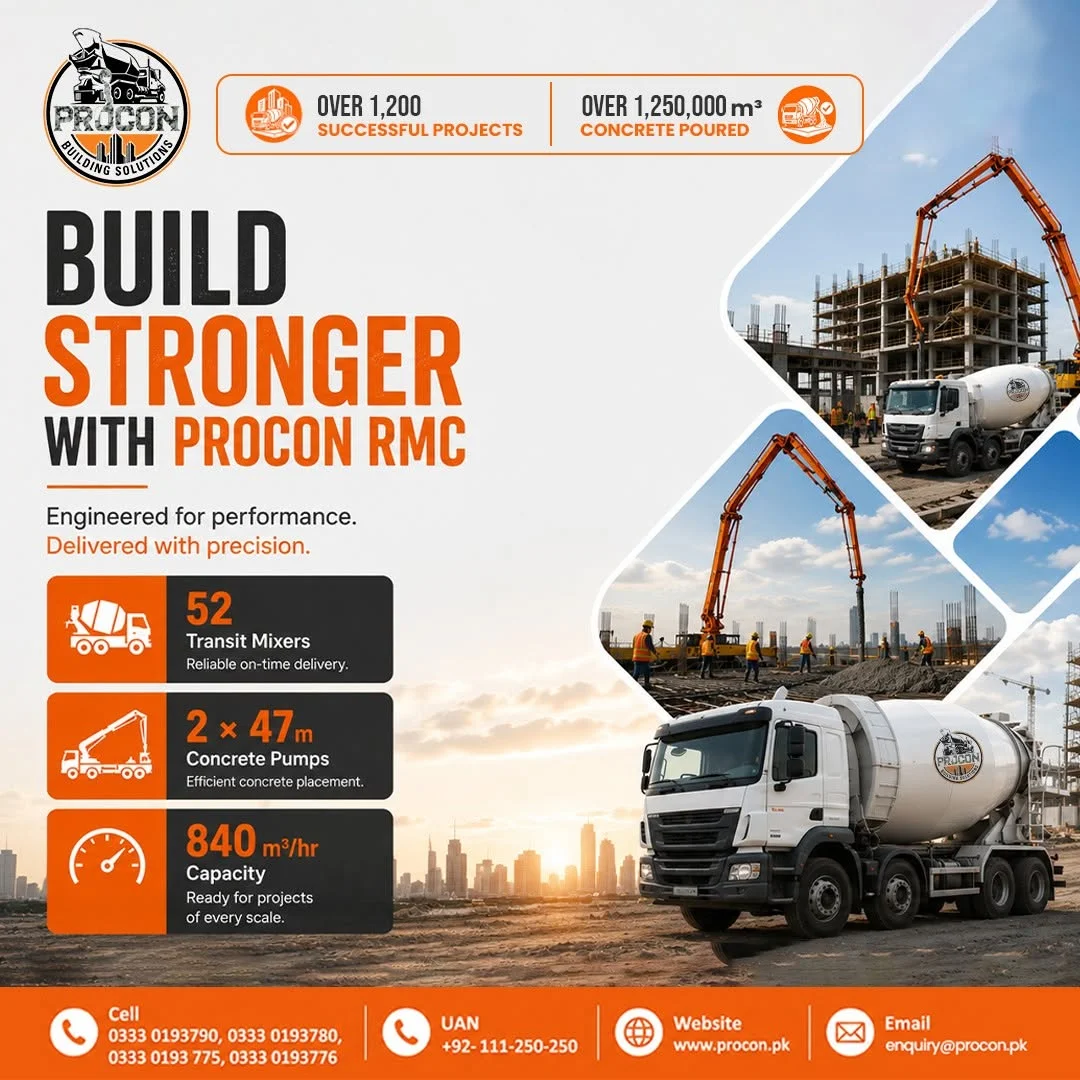
Understanding concrete requirements for different structures is essential for ensuring load-bearing safety, construction efficiency, and long-term asset value. Applying customized mix designs across foundations, columns, slabs, and exterior walls protects structural frames against early wear and material fatigue. Sourcing engineered, factory-certified concrete from a trusted supplier of ready mix concrete in Karachi gives civil contractors, structural engineers, and property developers the precise batch accuracy, mix flexibility, and reliable delivery needed to build safe, durable, and high-performance infrastructure.
Survey No. 423, Ibrahim Hydri, behind Bol head quarter, Korangi creek road, Karachi-74900
+92 21 111 250 250









.webp)