Sign up with Google
 Sign in with Zoho

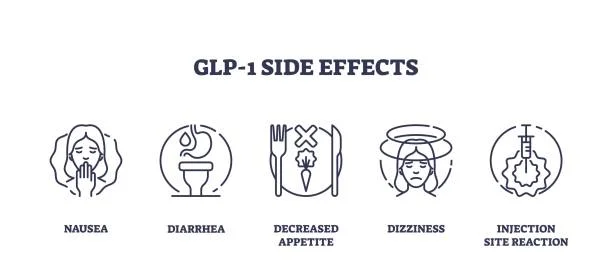
Millions of people are now on GLP-1 medications like Ozempic, Wegovy, Mounjaro, and Zepbound — and the questions have shifted. Early on, most people wanted to know about nausea and injection-day queasiness. Now the bigger question is what happens after two years. Three years. Longer.
Fair question, and one worth answering honestly rather than with the usual recycled warning list. Here's where the data actually stands right now, and where it's still catching up.
How Much Long-Term Data Actually Exists
This matters more than most articles admit. Semaglutide has the longest track record among the higher-dose weight-loss GLP-1s — the SELECT cardiovascular trial followed patients for roughly four years. Tirzepatide's controlled trial data runs closer to two years. As a drug class, GLP-1 receptor agonists go back about two decades, starting with exenatide in 2005. But widespread use at the higher doses prescribed specifically for weight loss? That's only happened for four or five years.
Real-world data from the millions of people who've used these drugs since Ozempic's 2017 approval fills in some gaps, and it's genuinely useful. But it's not the same rigor as a randomized trial, and it's worth remembering that distinction when reading any long-term safety claim — including this one.
The Concerns with the Most Evidence Behind Them
Gastrointestinal Effects That Don't Always Fade
Nausea, vomiting, diarrhea, constipation, bloating — these show up early for almost everyone and typically ease as the body adjusts. For a meaningful subset of long-term users, though, digestive changes persist well past the adjustment period, particularly slower gastric emptying. It's usually manageable, but it doesn't always disappear the way people expect it to.
Muscle Loss
This one gets less attention than it deserves. A portion of the weight lost on GLP-1 medications comes from lean muscle mass, not just fat — a pattern seen with essentially any effective weight-loss method, not something unique to these drugs. Still, it's a real reason doctors increasingly recommend resistance training and adequate protein intake alongside treatment, rather than treating the medication as the whole strategy.
Bone Density Changes
Related to the muscle loss question, some studies have flagged changes in bone remodeling during extended use. The research here is still developing, and conclusions haven't fully settled — but it's a legitimate reason for anyone on long-term treatment to keep bone health on the radar with their provider.
Gallbladder and Pancreatic Issues
Gallstones and pancreatitis are established, if uncommon, risks — more strongly linked to rapid weight loss itself than to the drugs acting on some separate mechanism. Anyone losing weight quickly, by any method, carries a version of this risk.
What's Changed Recently — and What Got Cleared Up
A few things shifted meaningfully over the past year, and articles written before early 2026 may already be out of date on them.
The suicidal-ideation warning that circulated widely a couple of years ago has not been held under scrutiny. Regulatory reviewers asked drugmakers to remove that warning from GLP-1 labels after further review found no supporting evidence of a causal link.
Large multinational cohort studies tracking patients for two to four years also found no meaningfully increased thyroid cancer risk compared to other medications — reassuring, though the boxed warning about thyroid C-cell tumors remains on labels out of caution, largely based on animal studies rather than confirmed human data.
One newer flag worth knowing about: regulators in Europe added NAION, a rare eye condition affecting blood flow to the optic nerve, as a "very rare" side effect specific to semaglutide. It's uncommon, but it's the kind of detail that shows why long-term monitoring still matters even for a drug class already in wide use.
The Side Effect Nobody Talks About: What Happens After Stopping
Here's a piece of long-term data that deserves more attention than it usually gets. Stopping these medications tends to bring the weight back — often quickly. Research following patients after they discontinued semaglutide found many had regained roughly two-thirds of their lost weight within a year. People who lost less than 15% of their body weight tended to regain most of it; those who lost more held onto meaningfully more, but rarely all of it.
That's less a side effect in the classic sense and more a structural reality: these medications work by managing a chronic condition, not curing it. Stopping treatment without a plan for maintaining results is arguably the biggest long-term risk of all, and it's rarely mentioned in the same breath as thyroid warnings or nausea.
What This Means for Anyone Considering Long-Term Use
None of this is a reason to avoid GLP-1 medications outright — for many people, the benefits substantially outweigh the risks, and ongoing research keeps refining exactly who benefits most and how to manage the tradeoffs. It is a reason to treat these drugs as long-term medical commitments rather than quick fixes, with real monitoring behind them: periodic bloodwork, attention to muscle and bone health, and an honest conversation about what happens if or when treatment stops.
If long-term GLP-1 use is on the table, the most useful next step isn't more searching — it's a conversation with a provider who can review personal health history, current labs, and realistic goals, and build a plan that accounts for what happens years down the line, not just the first few months.