Sign up with Google
 Sign in with Zoho

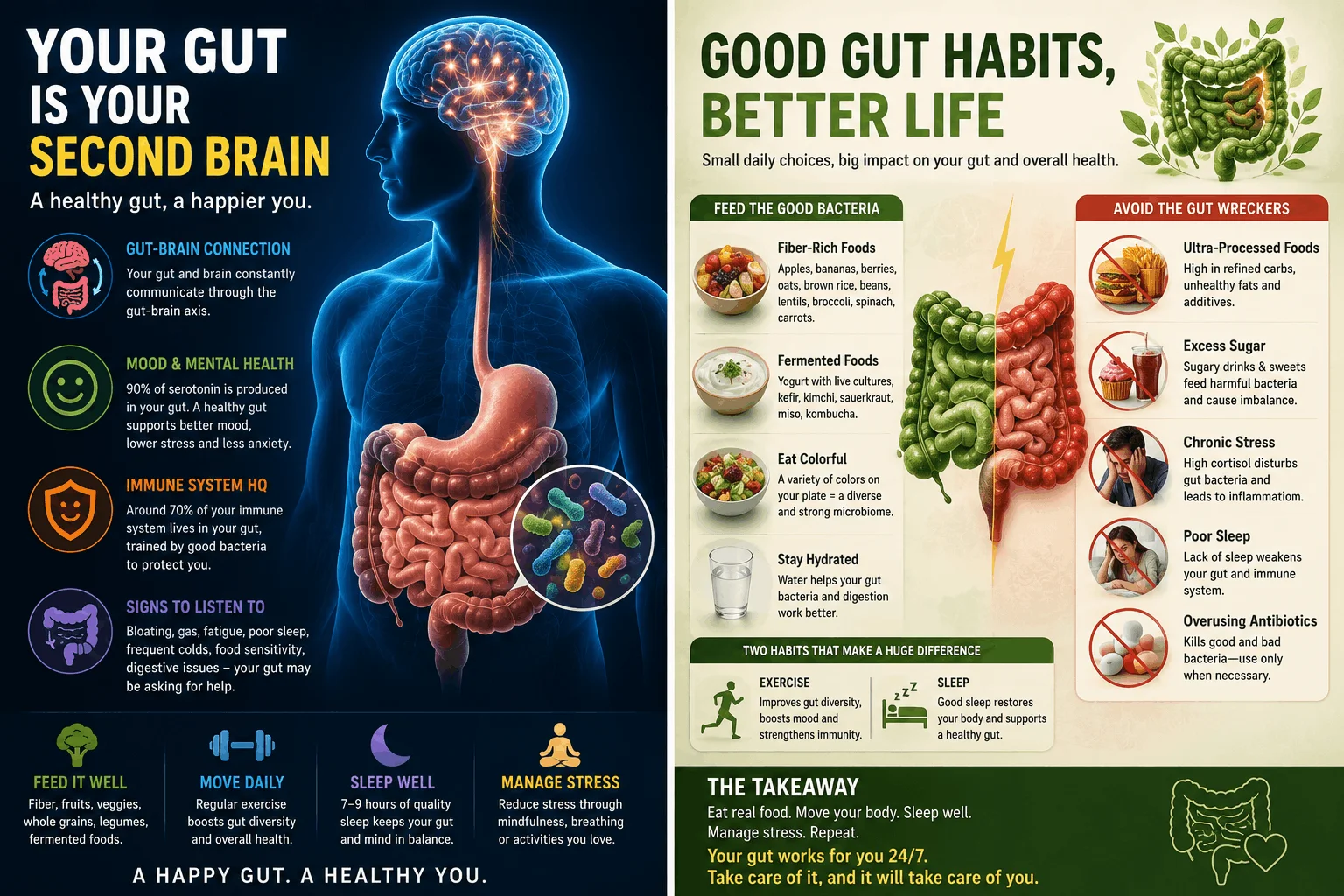
You’ve probably blamed your bad mood on a bad night’s sleep, a stressful boss, or Mercury doing whatever Mercury does. You’ve likely never blamed this on the several trillion bacteria currently throwing a party in your intestines. And seriously? You have to
This is what they don’t teach you in school: your gut is not just a tube to process food. There seems to be a second, quieter nervous system down there, and it has thoughts on your mood, your immune system, and whether you catch every cold that walks by you this winter.
There is an entire ecosystem that lives inside you
Your digestive tract is home to trillions of bacteria, fungi, and other microorganisms that spend their entire lives there, completely unknown to you. That’s your gut microbiome, scientists call it. And though the word “bacteria” does things to your brain, most of these tenants are your allies. They digest food your own body can’t, make vitamins you’d have to get from a pill bottle, and generally keep the peace.
More like a city, think of it rather than an infection. If the good guys outnumber the bad guys, the whole operation goes smoothly. Let the balance shift; let things go wrong, and not just in your stomach.
Why Your Gut Is Basically a Second Brain
Ever felt your stomach turn with nerves before a big exam? Lost your appetite after a hellish week at work? Did you ever feel your stomach knot up before a hard conversation? That’s not a fluke — that’s your gut and your brain texting each other actively.
This is what scientists call the gut-brain axis, and it works through your vagus nerve, your hormones, and your immune system all at the same time. Your gut even has a network of hundreds of millions of nerve cells—not enough to write poetry, but enough to run digestion pretty much on its own, while quietly reporting back to headquarters (your actual brain) the whole time.
The mood connection nobody saw coming
And here’s the detail that usually makes people stop mid-scroll: your gut — not your brain — produces close to 90% of your body’s serotonin, the chemical most associated with feeling good. It doesn’t explode in your brain with happiness, but it’s a pretty big clue as to how intertwined these two systems are.
But turn it around and stress does the same dirty work backwards. Stress over a long period of time causes an increase in cortisol, and cortisol throws off the balance of bacteria in your gut—which is probably why your stomach becomes a battleground during the worst weeks of your life, not just the scary ones.
The headquarters of your immune system is… your gut, as well
This is the stat that really deserves more attention: About 70% of your immune system is located in or near your digestive tract. Essentially your gut bacteria are training your immune cells on the job—telling them what to attack and, just as importantly, what to leave be.
Once the good bacteria are outnumbered, the bad ones quickly take over. That imbalance has a name — dysbiosis — and it’s associated with a lot more than just an upset stomach.
Your gut is trying to message you first.
In general, your gut will start sending you warning signals before things get bad: persistent bloating, gas that needs its own zip code, random bathroom trips, food that you suddenly can’t tolerate, fatigue without any explanation, restless sleep, or getting every bug that comes around the office. None of that means disaster by default—but it’s your gut waving a little flag asking for backup.
What really feeds the good bacteria
The good news: your gut responds fast to better habits, and none of it needs a subscription box of supplements.
Fiber is basically dinner for your good bacteria. Apples, bananas, berries, oats, brown rice, beans, lentils, broccoli, spinach, carrots—all of it. Fermented foods such as yogurt with live cultures, kefir, kimchi, sauerkraut, and miso bring in reinforcements right to your door. And simply eating a truly colorful plate — not beige food on beige food — does more for microbiome diversity than most people realize.
What quietly wrecks it
On the flip side: a diet heavy in ultra-processed food, sugary drinks on repeat, chronic stress, bad sleep, smoking, heavy drinking, and popping antibiotics for things that don’t need them. Antibiotics absolutely have their place and save lives—but they don’t discriminate between the bacteria helping you and the ones hurting you, which is exactly why doctors keep telling you not to self-prescribe them.
Two habits people never connect to gut health:
Exercise. It’s not just for your muscles and your heart rate — people who move regularly tend to have more diverse gut bacteria than people who don’t. You don’t need a gym membership; walking, cycling, gardening, or just dancing around your room counts.
Sleep. Bad sleep messes with your gut bacteria, and an unhappy gut makes good sleep harder to get — a genuinely unfair loop. Seven to nine hours, a consistent bedtime, less screen time before you crash, and skipping the heavy 11 p.m. meal all help both sides of that loop at once.
The actual takeaway
You don’t need to overhaul your entire life this weekend. More fruits and vegetables, whole grains over refined ones, enough water, consistent movement, consistent sleep, some kind of stress outlet, and fewer ultra-processed meals — that’s the whole list, and every item on it is boring, doable, and free.
Science is still digging into how far this goes—possible links to obesity, diabetes, allergies, heart disease, and even some neurological conditions are all under investigation. But the one thing that’s already settled is this: the several trillion tiny organisms currently living in your gut aren’t asking for much. Feed them well, move your body, sleep properly, and manage your stress — and they’ll quietly keep working in your favor, whether you ever think about them or not.