Sign up with Google
 Sign in with Zoho


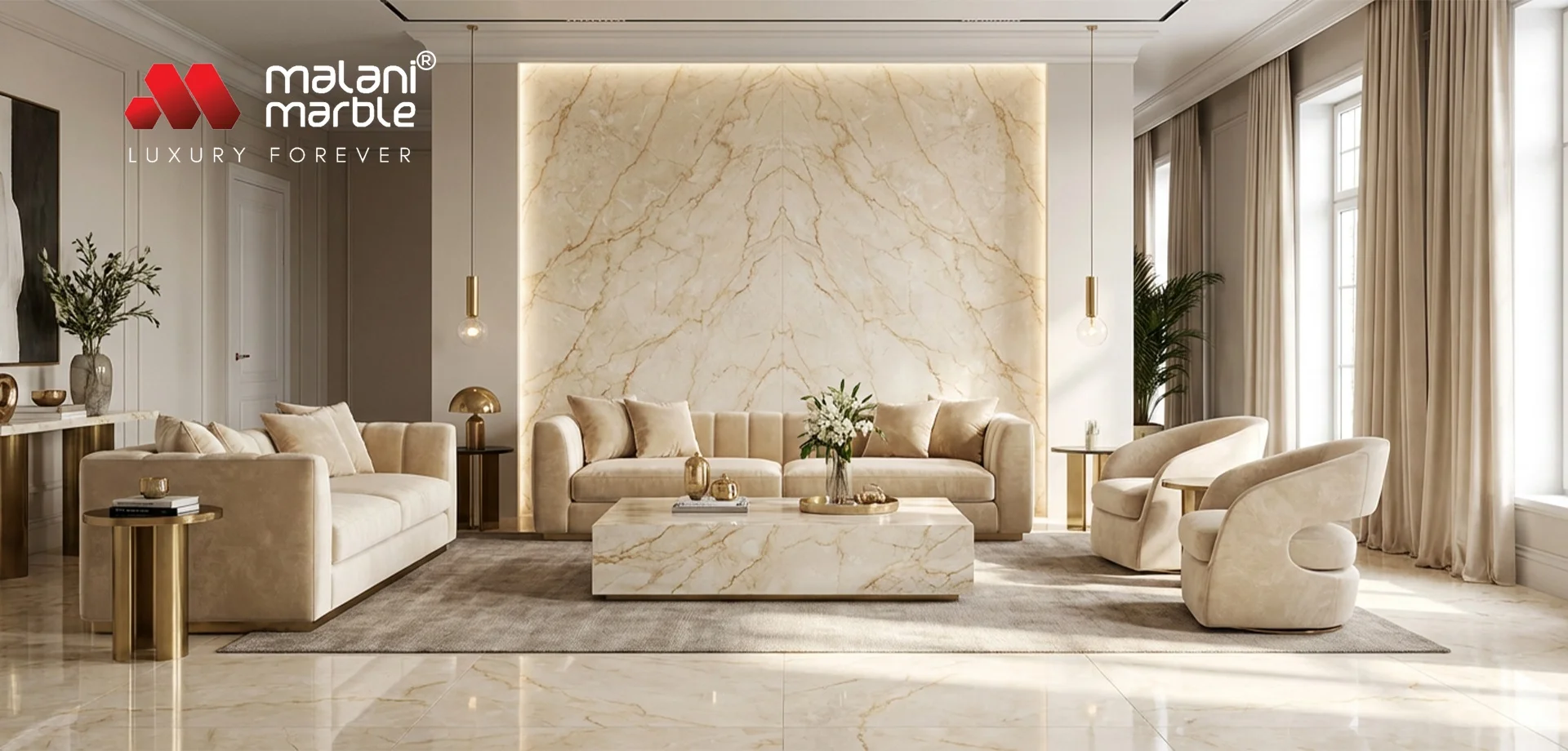
Ask any person who has renovated a house with stone and they will say the thing: the choice feels bigger than you think. Marble is not a paint colour that can be changed in spring. Marble goes into your floors, walls, kitchen and marble stays. That is why Italian marble is still the standard for people who want a space that feels calm, bright and quietly luxurious and why it deserves a research before you spend a rupee.
Why it has held its place
The reputation is not a coincidence. The famous stone comes from the Carrara region of Tuscany, where the crystals in the rocksre fine and tightly packed. That structure allows the surface to receive a polish and gives marble a depth that printed surfaces cannot imitate. In marble glows brightly. In the evening under lights the veining seems to change. Designers use marble for one reason: marble makes a room look thoughtful without becoming busy. Italian marble also photographs truthfully which matters more than people think because a stone that looks good in pictures but does not look good in person can be a mistake.
The varieties you will hear about
Three names dominate conversations. Statuario has a base with grey veins and marble is suitable for people who want a wall or an island to be the first thing guests notice. Calacatta leans warmer with streaks that sometimes have gold. Carrara offers an option with grey veining and a reasonable price.
None of them are simply "the best." A bold slab can overwhelm a room while a soft slab can blend into a hall. The honest question is which slab you will enjoy looking at on an evening, not which slab sounds most impressive.
Italian versus marble
India makes marble of its own especially in Rajasthan and for floor areas it is often the cheaper choice. Imported marble justifies its price in the places people actually look: a kitchen island, a vanity a feature wall, a staircase. Many projects mix the two by using marble for quiet surfaces and one carefully chosen Italian marble slab where the eye lands first. That way you get the drama without paying imported rates for every foot and the budget stays calm while the room still has a highlight.
Questions to ask before you pay
Worries in marble buying come from the seller, not the stone. Ask where the slab was quarried and ask for proof on paper. Ask to see the slab, not a sample chip because veining can vary a lot within one type. Ask how consistency is handled if you need slabs and what the quote includes, because finishing, delivery and installation are often charged separately. Finally ask what happens if something arrives damaged. A good seller answers calmly. Any hesitation is information.
Buying close to home
If you live in or near the capital working with a italian marble supplier in Delhi NCR offers benefits. You can visit, touch the stone and check marble in your light before you approve it. Coordination with fabricators and installers is easier. If something needs adjusting during installation the conversation happens in days than weeks.
Bigger and multi-site projects
Builders, architects and hospitality teams face pressures. They need slabs that match across quantities deliveries that arrive when the site is ready and paperwork that holds up. A dependable Italian marble supplier in India should be able to explain how it handles batch matching, packing and transport. It should be comfortable supporting than one location. Asking for references from projects is perfectly reasonable. A supplier who is proud of its work will usually be glad to share them.
Looking after it
Marble is natural and slightly porous. A. Ph-neutral cleaning work a long way. Wipe spills quickly use coasters. Avoid cleaners. With care Italian marble tends to age and small marks often become part of its character.
Where Malani Marbles fits in
At Malani Marbles the goal is simple. You can see the stone ask questions and understand what you are buying before you decide. Look at a slabs hold a sample up to the light in your home take your time and the right choice usually becomes clear once the rush is over.
Choosing marble is less, about chasing a name and more about matching the stone to the room with a seller you trust. If you do that the beauty of marble mostly takes care of itself.