Sign up with Google
 Sign in with Zoho

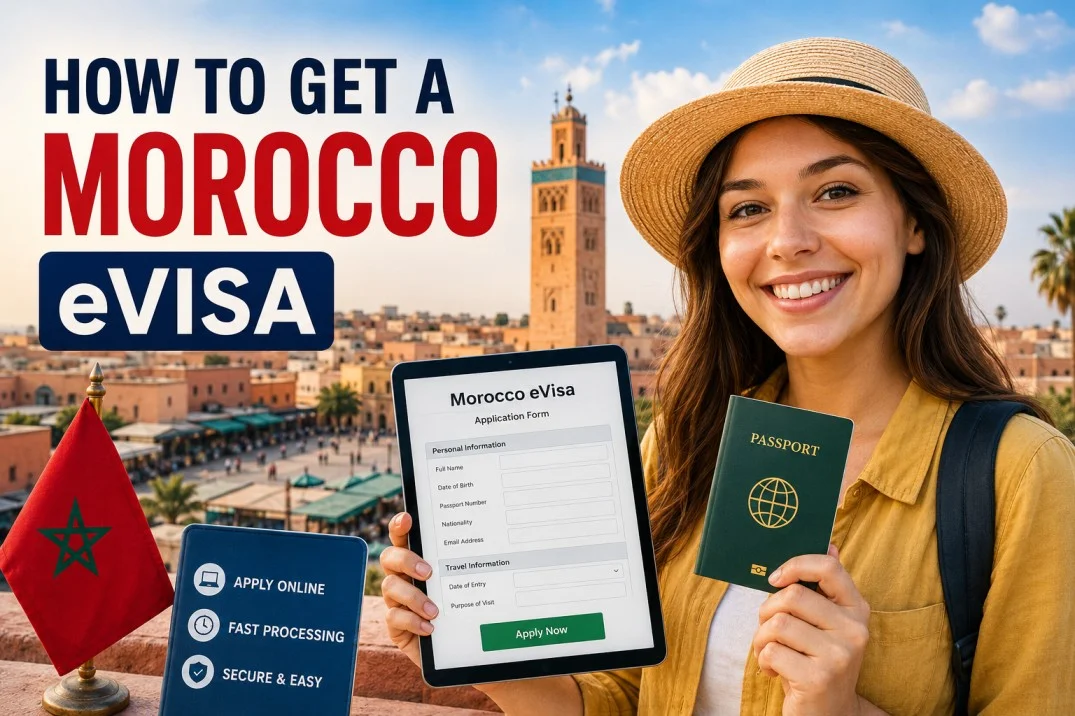
Morocco has a way of pulling travelers back again and again the winding alleys of Fes, the red dunes near Merzouga, the Atlantic breeze in Essaouira. Before any of that becomes real, though, there's a small piece of paperwork to sort out first. For eligible nationalities, how to get a Morocco eVisa is a fully online process, built for shorter visits and handled from start to finish without a single trip to an office. Here's a breakdown of what the process actually looks like, step by step.
Start by Checking Who Can Apply
Not every passport holder can use the online route. The eVisa is issued only to travelers whose nationality appears on the approved list, so this is genuinely the first thing to confirm — not an afterthought. Applying without checking eligibility first just wastes time. Anyone unsure where they stand should look at the official eligible countries list before filling in a single form field, since the rest of the process assumes eligibility has already been established.
Get the Paperwork Together Before You Begin
Once eligibility is confirmed, the next stage is gathering documents. The requirements are fairly lean compared to a traditional embassy visa, but each piece matters:
- A passport that stays valid for at least six months past the planned entry date
- A recent, clear digital photo of the applicant
- For certain nationalities, either a residence permit valid for a minimum of 180 days, or a multiple-entry visa valid for at least 90 days from an eligible country
- For business travel specifically, a letter of invitation or another document explaining the purpose of the trip
Having scanned copies ready in JPG, PNG, or PDF format before starting the form saves a lot of back-and-forth later. Half-finished applications tend to happen because someone realizes mid-form that a document isn't ready yet.
Filling Out the Application Itself
This is the part most people picture when they think about applying: personal details, passport information, and travel dates entered into a form, followed by document uploads. Accuracy here matters more than speed a mistyped passport number or a mismatched date of birth can hold up an otherwise straightforward application. It helps to have the passport open next to the screen while typing, rather than relying on memory.
After the form is complete, payment is the next checkpoint. The fee is paid online by credit or debit card, and the application doesn't move into processing until that payment goes through in full. Skipping or delaying payment simply pauses everything else.
What Happens While You Wait
This is usually the part that tests patience. Standard processing typically takes between three and six working days. For travelers on a tighter schedule, faster options exist:
- Rush processing, generally completed within two to four working days, for an added fee
- Super rush processing, the fastest tier, typically finished within one to two working days, also for an added fee
Whichever tier is chosen, it's worth checking email regularly during this window — including the spam or junk folder, since approval notifications sometimes land there unnoticed. Once approved, the eVisa arrives by email and can either be printed or kept as a digital copy for the trip.
Understanding How Long the eVisa Actually Lasts
Approval isn't the finish line — knowing the terms of the visa matters just as much. The Morocco eVisa remains valid for 180 days from its date of issue, and within that window, it permits a stay of up to 30 days per visit. These two numbers get confused often: the 180 days is the window in which the visa can be used to enter the country, not the length of the stay itself. Travelers who need more time on the ground than the visa allows would need to look into an extension through Moroccan immigration authorities directly, rather than assuming the eVisa can simply be renewed at the border.
After Approval: A Short Checklist
Getting the eVisa in your inbox feels like the hard part is over, and mostly it is, but a few things are worth double-checking before departure:
- Read through the approved eVisa carefully name spelling, passport number, and travel dates should all match the passport exactly, and any discrepancy is worth resolving before flying, not after landing
- Pull together the rest of the travel documents: flight bookings, proof of accommodation, evidence of sufficient funds, and where relevant, a return ticket, invitation letter, residence permit, or additional visa
- Look into any current entry or health-related requirements ahead of the flight, and be prepared to answer routine questions from immigration officers on arrival
None of this takes long, but skipping it is how small, avoidable problems show up at the airport instead of at home, where they're easy to fix.
A Realistic Timeline
For anyone mapping out a trip, it helps to think of the eVisa process in three phases rather than one big task. First comes eligibility and document prep, which can be done well in advance and costs nothing but time. Second is the actual application and payment, usually a single sitting if the documents are ready. Third is the waiting period, which ranges from a day or two on the fastest tier to about a week on standard processing. Building in a buffer beyond the expected processing window, rather than applying at the last possible moment, tends to make the whole experience far less stressful.
Common Questions Travelers Ask
Can the eVisa be used for multiple trips? The details around stay duration and validity are tied to the 180-day and 30-day figures mentioned above; anyone planning multiple entries should review those terms carefully rather than assume standard tourist rules apply automatically.
What if the processing time runs longer than expected? Delays happen occasionally. Checking email thoroughly, including spam folders, resolves most cases where the eVisa was actually issued but simply went unnoticed.
Is a printed copy required, or is digital enough? The approved eVisa can be kept either as a printout or a digital copy, so travelers have flexibility depending on how they prefer to carry travel documents.
Final Thoughts
Applying for a Morocco eVisa isn't complicated, but it rewards a bit of preparation. Confirming eligibility first, gathering documents before starting the form, entering details carefully, and understanding the validity terms afterward all reduce the chance of last-minute surprises. Morocco itself does the rest — the eVisa is just the small administrative step that gets a traveler to the part of the trip that actually matters.