Sign up with Google
 Sign in with Zoho

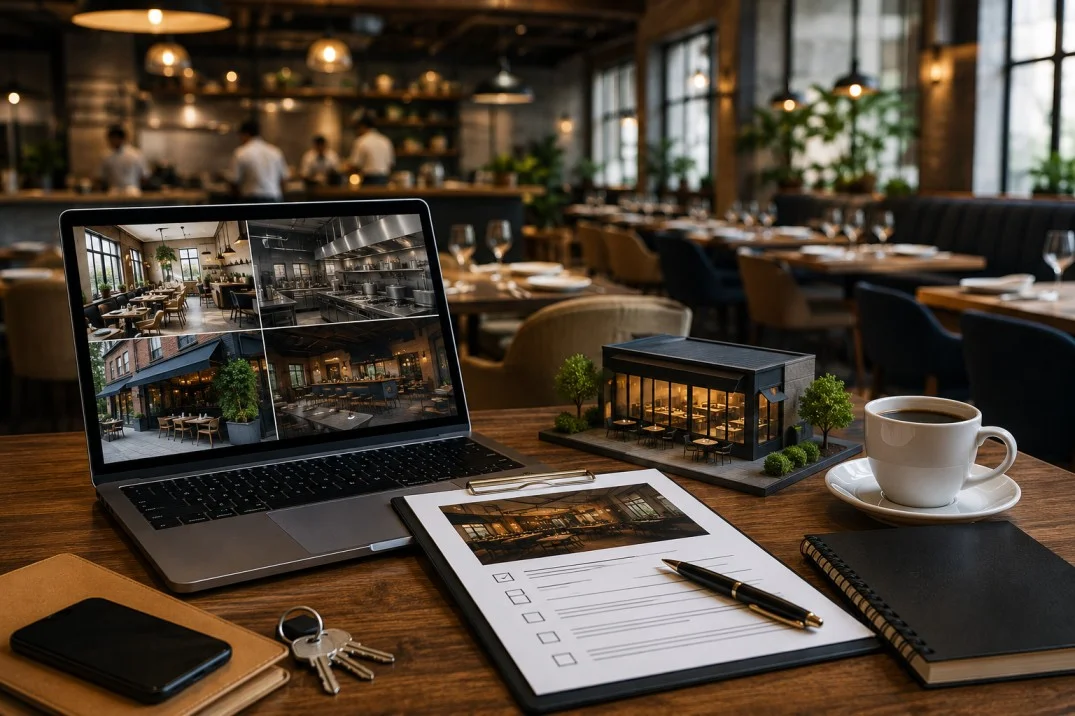
Restaurant brokerage is a specialized business. A restaurant listing is not simply another commercial property or small business opportunity; it can involve equipment, kitchen infrastructure, leases, licenses, concepts, seating capacity, location dynamics, and operational considerations. For brokers, presenting all of that information clearly while reaching relevant prospects is an ongoing challenge.
Most established brokers already use general business-for-sale and commercial property websites. Those channels remain useful, but a hospitality-focused marketplace can provide an additional distribution opportunity tailored to how restaurant and hospitality properties are discovered.
That distinction is increasingly important as buyers research opportunities online before ever speaking with a broker.
Restaurant Listings Need the Right Context
A prospective restaurant buyer may begin with a broad search, but their evaluation process quickly becomes more specific. They may want a specific concept, location, kitchen setup, lease arrangement, or price range.
A general marketplace can place restaurant opportunities alongside businesses from completely different industries. A specialized environment, by contrast, allows hospitality opportunities to sit alongside related inventory.
This is where a commercial restaurant listing marketplace can complement the channels a broker already uses.
Rather than replacing existing platforms, a hospitality-focused marketplace can give restaurant listings another relevant place to be discovered. For brokers, the objective is additional distribution without changing the fundamentals of their existing sales process.
Hospitality Buyers Often Look Beyond the Headline
A restaurant listing needs to communicate more than an asking price.
Buyers may want to know about:
- Location and surrounding area
- Restaurant concept
- Seating capacity
- Kitchen equipment
- Lease terms
- Outdoor dining
- Drive-through capability
- Liquor licensing
- Included assets
- Property size
- Operational setup
These details can help prospects determine whether an opportunity deserves closer consideration.
A focused marketplace makes it easier to organize this information around the needs of hospitality buyers. Instead of presenting a restaurant as just another business category, brokers can highlight the characteristics that make the opportunity relevant to a restaurant operator or investor.
A Specialized Channel Can Complement Existing Distribution
Brokers do not necessarily need to choose between a general marketplace and a hospitality-specific one.
A multi-channel approach can be more practical.
A broker might continue using established business-for-sale websites while also placing eligible inventory in a hospitality-focused marketplace. The same listing can therefore have multiple opportunities to reach prospective buyers.
This is particularly useful for brokers managing a large portfolio.
Someone browsing a restaurant list may discover one opportunity and then explore other listings from the same broker. A well-organized portfolio can turn an individual listing into an entry point for discovering additional inventory.
Portfolio Visibility Matters for Brokers
A broker's value is not limited to one transaction. Their broader inventory, market knowledge, and specialization can also influence how prospective clients perceive their business.
A dedicated broker profile can bring multiple restaurant opportunities together in one place.
Instead of asking prospects to search through individual listings across different sources, a broker profile can provide a central view of available inventory and areas served.
This is particularly valuable for specialists who regularly handle restaurant transactions.
A hospitality marketplace can therefore serve two purposes: presenting individual properties and strengthening the digital presentation of the brokerage itself.
Make Restaurant Inventory Easier to Discover
Organization plays a major role in online search behavior.
Someone looking through a list of restaurants may have a completely different objective from someone searching for a restaurant space to lease. One person may be interested in acquiring an existing operation, while another may be searching for a location where they can launch a new concept.
Separating these opportunities clearly makes the search experience more useful.
For example, restaurant businesses for sale can be presented separately from restaurant lease opportunities. This allows users to move toward the type of opportunity that matches their current objective rather than sorting through unrelated inventory.
Restaurant Sales and Restaurant Rentals Serve Different Needs
Restaurant brokers may work with both business sales and commercial spaces.
Someone searching for the best commercial real estate listings for restaurant rentals may be focused on location, square footage, build-out potential, kitchen infrastructure, parking, and lease terms.
A buyer searching for an operating restaurant, meanwhile, may care more about the existing concept, equipment, established operations, customer base, and transaction structure.
A hospitality-focused marketplace can help distinguish these different types of intent while keeping them within the broader restaurant ecosystem.
That organization can make online discovery less confusing for prospects and more efficient for brokers.
Technology Can Make Listing Promotion Easier
Another benefit of specialized platforms is the opportunity to reduce repetitive marketing work.
Managing multiple listings can require brokers to prepare descriptions, social posts, flyers, QR codes, photographs, and other promotional materials. Recreating these assets manually for every opportunity can consume considerable time.
Technology can help streamline parts of this process.
For example, AI-assisted tools can turn core listing information into draft articles, social captions, or promotional materials. Brokers can then review and refine those assets before publication.
The important point is that automation should support professional judgment rather than replace it. Listing details should remain accurate, and brokers should avoid unsupported claims about revenue, buyer demand, or investment performance.
Hospitality-Specific Distribution Can Strengthen a Broader Strategy
A specialized marketplace should not be viewed as a replacement for every other marketing channel.
Instead, it can become another part of a broader strategy that may include a brokerage website, email marketing, social media, established business marketplaces, direct relationships, and hospitality-specific distribution.
Each channel can serve a different purpose.
The brokerage website can establish the firm's identity. General marketplaces can provide broad exposure. Social media can encourage engagement. A specialized marketplace can place restaurant opportunities within a more focused hospitality environment.
Together, these channels can create a more comprehensive digital presence.
What Brokers Should Look For in a Specialized Marketplace
Not every platform will provide the same value. Brokers should evaluate whether a marketplace offers practical features that support their workflow.
Useful considerations include:
- Hospitality-specific categories
- Professional broker profiles
- Portfolio management
- Straightforward listing management
- Additional distribution opportunities
- Marketing tools
- Bulk import or feed capabilities
- Clear property information
- Easy buyer navigation
- Transparent business practices
The goal should be to find a platform that adds value without creating unnecessary administrative work.
Final Thoughts
Restaurant brokers operate in a market where presentation, visibility, and organization can have a meaningful impact on how opportunities are discovered online. A hospitality-focused marketplace can provide an additional distribution channel while allowing brokers to continue using the platforms and strategies they already rely on.
Listing Ledge takes this specialized approach by providing a hospitality-focused environment for restaurant and related opportunities, along with tools designed to help brokers present and promote their inventory.
Ultimately, the advantage of specialization is not simply putting restaurant listings in another location. It is creating a digital environment where the information, categories, tools, and browsing experience are better aligned with the unique needs of the hospitality industry.