Sign up with Google
 Sign in with Zoho
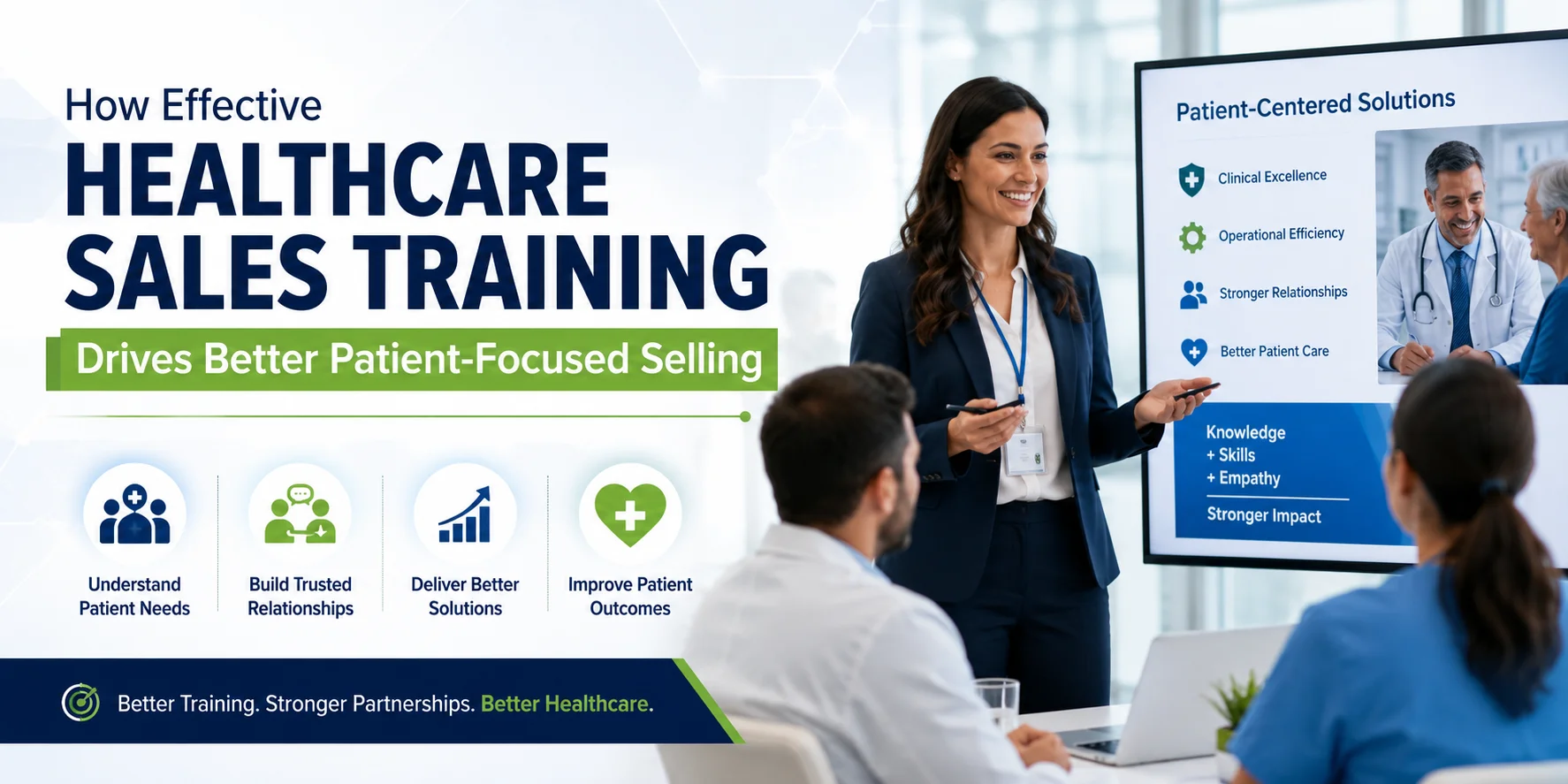
Healthcare sales is no longer about delivering a polished sales pitch or focusing only on product features. Healthcare professionals expect sales representatives to understand their challenges, provide valuable insights, and recommend solutions that genuinely support better patient care. Every conversation should help build confidence rather than simply promote a product.
This shift has made healthcare sales training more important than ever. A well-trained sales representative knows how to communicate with physicians, hospital administrators, nurses, and procurement teams while keeping patient outcomes at the centre of every discussion.
Whether you sell medical devices, pharmaceuticals, healthcare technology, or clinical services, the right training helps you become a trusted partner instead of just another salesperson. In this article, you'll learn how healthcare sales training improves patient-focused selling, the essential skills it develops, and why it delivers long-term value for both sales professionals and healthcare organisations.
What Is Healthcare Sales Training?
Healthcare sales training is a specialised learning programme that prepares healthcare sales representatives to sell responsibly, ethically, and effectively within the healthcare industry. Unlike traditional sales programmes, it combines sales techniques with healthcare knowledge, industry regulations, and patient-centred communication.
A comprehensive training programme typically covers:
- Healthcare industry fundamentals
- Medical terminology and clinical workflows
- Product and solution knowledge
- Consultative selling techniques
- Communication with healthcare professionals
- Compliance and ethical selling
- Relationship-building strategies
- Objection handling and negotiation
The goal is not simply to increase sales but to help representatives deliver meaningful solutions that support healthcare providers and improve patient outcomes.
Why Patient-Focused Selling Matters
Every purchasing decision in healthcare has the potential to affect patient care. Hospitals, clinics, and medical practices invest in products and services that improve efficiency, support clinical staff, and enhance treatment quality.
Patient-focused selling means understanding these priorities before recommending a solution. Instead of leading with product specifications, sales representatives begin by identifying the customer's challenges.
For example, rather than explaining every feature of a medical device, a representative might first ask:
- What challenges does your clinical team face?
- Where do delays occur in patient care?
- What outcomes are you trying to improve?
These conversations help uncover real needs and create opportunities to recommend solutions that genuinely benefit healthcare providers and their patients.
This patient-first mindset is one of the most valuable outcomes of effective healthcare sales training.
How Healthcare Sales Training Improves Selling Performance
Builds Confidence Through Product Knowledge
Healthcare professionals expect accurate and reliable information. Sales representatives who understand both their products and the healthcare environment earn greater credibility.
Training helps representatives learn:
- Clinical applications
- Product benefits
- Scientific evidence
- Industry trends
- Competitive positioning
- Appropriate use cases
When representatives can confidently answer technical questions, healthcare providers are more likely to trust their recommendations.
Encourages Consultative Selling
Today's healthcare buyers prefer advisors rather than traditional salespeople.
Instead of delivering a standard presentation, consultative selling focuses on understanding customer needs before offering solutions.
Through Medical Sales Training, representatives learn how to:
- Ask thoughtful questions
- Listen carefully to customer concerns
- Identify operational challenges
- Recommend solutions based on clinical needs
- Provide ongoing support after implementation
This approach creates stronger customer relationships because conversations become focused on solving problems rather than making a sale.
Improves Communication with Healthcare Professionals
Healthcare organisations involve multiple decision-makers in the buying process. Physicians may evaluate clinical benefits, procurement teams review costs, while administrators focus on operational efficiency.
Effective communication requires adapting the conversation for each audience.
Quality healthcare sales training teaches representatives how to communicate clearly with:
- Physicians
- Nurses
- Hospital executives
- Procurement managers
- Clinical specialists
- Practice managers
Understanding each stakeholder's priorities makes conversations more relevant and productive.
Strengthens Ethical Selling Practices
Healthcare sales require a high level of responsibility. Representatives must provide accurate information while complying with healthcare regulations and industry standards.
Training reinforces the importance of:
- Honest product communication
- Regulatory compliance
- Patient privacy awareness
- Responsible promotional practices
- Evidence-based recommendations
Ethical selling not only protects organisations but also strengthens long-term trust with healthcare professionals.
Essential Skills Every Healthcare Sales Representative Needs
A successful sales professional combines industry knowledge with strong interpersonal skills. Effective Medical Sales Training develops both technical expertise and practical communication abilities.
Active Listening
Understanding customer challenges begins with listening rather than presenting. Representatives who actively listen can recommend solutions that genuinely address clinical and operational needs.
Problem-Solving
Healthcare providers value partners who help solve everyday challenges. Training encourages representatives to identify opportunities where their products or services create measurable improvements.
Relationship Building
Long-term success depends on trust. Regular follow-ups, educational support, and consistent communication help strengthen relationships beyond the initial sale.
Presentation Skills
Healthcare professionals often have limited time. Training helps representatives present complex information clearly, confidently, and concisely while focusing on the most relevant benefits.
Objection Handling
Questions about pricing, clinical evidence, implementation, or competing products are common. Training prepares representatives to respond professionally using facts and customer-focused solutions.
The Business Benefits of Healthcare Sales Training
Organisations that invest in continuous learning often see improvements beyond individual sales performance.
Some of the key benefits include:
- Higher customer satisfaction
- Increased customer retention
- Stronger relationships with healthcare providers
- Improved sales consistency
- Faster onboarding for new representatives
- Greater confidence across the sales team
- Better compliance with industry standards
- Enhanced company reputation
These benefits contribute to sustainable business growth while helping healthcare organisations receive the support they need.
Best Practices for Effective Healthcare Sales Training
Training should be viewed as an ongoing process rather than a one-time event. The healthcare industry continues to evolve, making continuous learning essential.
Successful organisations often include:
Real-World Scenarios
Using practical healthcare examples helps representatives apply their learning in realistic situations.
Role-Playing Exercises
Practice conversations improve confidence before meeting real customers.
Regular Product Updates
Healthcare products, technologies, and regulations change frequently. Ongoing education keeps sales teams informed.
Coaching and Feedback
Managers should regularly review sales conversations and provide constructive guidance for continuous improvement.
Performance Measurement
Tracking customer satisfaction, sales growth, knowledge assessments, and relationship quality helps measure the effectiveness of training programmes.
A Practical Example
Imagine a hospital looking to improve patient monitoring in its intensive care unit.
A traditional salesperson may begin by listing product features and technical specifications.
A representative who has completed healthcare sales training takes a different approach. They first ask about the hospital's current monitoring process, staffing challenges, and patient safety goals. After understanding these needs, they explain how their solution can improve workflow, reduce response times, and support better patient care.
This consultative approach creates a more meaningful conversation and positions the representative as a trusted advisor rather than simply a product seller.
Why Continuous Learning Matters
Healthcare continues to evolve through new technologies, changing regulations, and rising patient expectations. Sales professionals who stop learning may struggle to meet these changing demands.
Continuous education helps representatives:
- Stay updated with industry developments
- Improve communication skills
- Understand emerging healthcare challenges
- Build stronger customer relationships
- Deliver greater value during every interaction
Regular learning ensures sales teams remain knowledgeable, confident, and prepared for future opportunities.
Conclusion
Healthcare sales is about far more than promoting products. Success comes from understanding healthcare providers, identifying their challenges, and recommending solutions that contribute to better patient care.
Investing in healthcare sales training gives sales representatives the knowledge, confidence, and consultative skills needed to build lasting relationships and create meaningful conversations. Combined with comprehensive Medical Sales Training, organisations can develop sales teams that deliver value through expertise, integrity, and a genuine commitment to supporting healthcare professionals.
As the healthcare industry continues to evolve, organisations that prioritise ongoing training will be better equipped to strengthen customer relationships, improve sales performance, and contribute to better outcomes for both providers and patients.