Sign up with Google
 Sign in with Zoho

Australia has some of the world's most suitable conditions for solar energy, but many properties and outdoor applications are located away from reliable mains electricity. Remote homes, rural properties, caravans, motorhomes, boats, camping setups and 4WDs can all benefit from an independent energy solution.
For these applications, an off grid solar system can provide a way to generate, store and use electricity without depending entirely on the electricity grid. However, building a reliable setup involves more than installing solar panels. Battery capacity, inverter selection, energy consumption, system voltage and the way electricity will be used all need to be considered together.
For Australian users, understanding how these components work together can make it easier to select a system suited to the intended application.
What Is an Off-Grid Solar Setup?
An off-grid solar setup is an energy system designed to operate independently from the electricity grid. Solar panels generate electricity during daylight hours, while batteries store energy so it can be used when solar generation is reduced or unavailable.
A typical setup can include:
- Solar panels
- Solar charge controller
- Battery storage
- Inverter
- Battery Management System where applicable
- Cabling and electrical protection
- Appliances and other electrical loads
The size and configuration of the system depend on how much electricity is required and how the stored energy will be used.
For a small camping setup, the requirements may be relatively modest. A remote home, however, can require considerably more storage and generation capacity.
How Off-Grid Solar Power Works
During daylight hours, solar panels convert sunlight into electrical energy. Depending on the system configuration, that energy can be used immediately by connected appliances or directed towards battery storage.
The battery becomes particularly important when solar generation decreases. This may occur during the evening, overnight, during periods of poor weather, or whenever electricity consumption is higher than the available solar generation.
An inverter then converts the stored battery energy into the type of electricity required by compatible household appliances and equipment.
This means that each component has an important role. Solar panels provide generation, batteries provide energy storage, and the inverter makes stored energy usable for suitable electrical loads.
Why Australians Consider Off-Grid Energy
Remote and rural Australia includes many properties where connecting to the electricity grid may not be practical or convenient. An independent energy system can therefore be particularly useful where mains electricity is unavailable.
The same principle applies to mobile applications.
Caravans, motorhomes, boats, camping equipment and 4WDs may need electricity in locations where a traditional power connection is unavailable. A properly configured solar and battery system can provide stored energy for these situations.
However, every application has different requirements. A system designed for a weekend camping trip should not automatically be treated as suitable for a permanent off-grid property.
Understanding Off-Grid Energy Storage
Battery storage is one of the most important parts of an independent solar setup. Solar generation does not occur continuously, so stored energy allows electricity generated during productive solar periods to be used later.
LiFePO4 batteries are commonly considered for applications requiring repeated charging and discharging. The technology offers characteristics such as long cycle life, usable capacity and relatively lightweight construction.
When selecting battery storage, users should consider:
- Daily energy consumption
- Required backup duration
- Battery voltage
- Available installation space
- Solar generation
- Expected charging and discharge requirements
- Inverter compatibility
- BMS specifications
Correct sizing is particularly important. Too little storage may result in insufficient energy, while unnecessary capacity can increase the overall cost and physical requirements of the installation.
Choosing the Right Inverter
The inverter is responsible for converting DC electricity from the battery into AC electricity suitable for compatible appliances.
An off grid solar inverter should therefore be selected according to the requirements of the complete energy system rather than simply choosing the highest-rated model available.
Users should consider the continuous power requirements of their appliances as well as potential startup requirements from equipment such as refrigerators, pumps and other loads that may require additional power when switched on.
Compatibility between the inverter, battery, charging equipment and other components is also important.
What Does an Off-Grid Inverter Do?
An off grid inverter forms an important part of an independent power system because it manages the conversion of stored DC energy into usable AC electricity.
The correct model depends on the battery voltage, required output, connected appliances and overall system design.
For a small mobile setup, the inverter requirements may be relatively simple. Larger residential systems can require more sophisticated equipment capable of supporting substantially higher electrical loads.
Before installation, users should check the technical specifications of all connected components and ensure that the system is designed for the intended application.
Solar Systems for Remote Australian Properties
A correctly designed off grid solar power system can be useful for rural properties, cabins, sheds and remote homes where access to mains electricity is limited or unavailable.
The first step should be understanding the property's electricity consumption.
Lighting, refrigeration, water pumps, communication equipment, cooking appliances, entertainment devices and other electrical loads can all contribute to daily consumption.
Rather than estimating capacity based only on the number of solar panels, users should calculate their expected energy requirements and consider how much electricity needs to be available after sunset.
Mobile Applications: Caravans, 4WDs and Camping
Australia has a strong outdoor lifestyle, and energy storage is increasingly relevant to people travelling away from mains electricity.
Camping equipment may require power for lighting, refrigeration, communications and other portable devices. Caravans and motorhomes can have considerably higher energy requirements depending on the appliances installed.
A properly designed solar and battery setup can provide greater independence while travelling.
The same principle applies to marine applications. Boats can require reliable stored energy for electrical equipment while operating away from shore-based power.
The system should always be designed around the actual equipment being used rather than assuming that one configuration will suit every vehicle or recreational application.
Understanding Solar Kits
For customers who want a more straightforward approach to system planning, pre-configured solutions can simplify component selection.
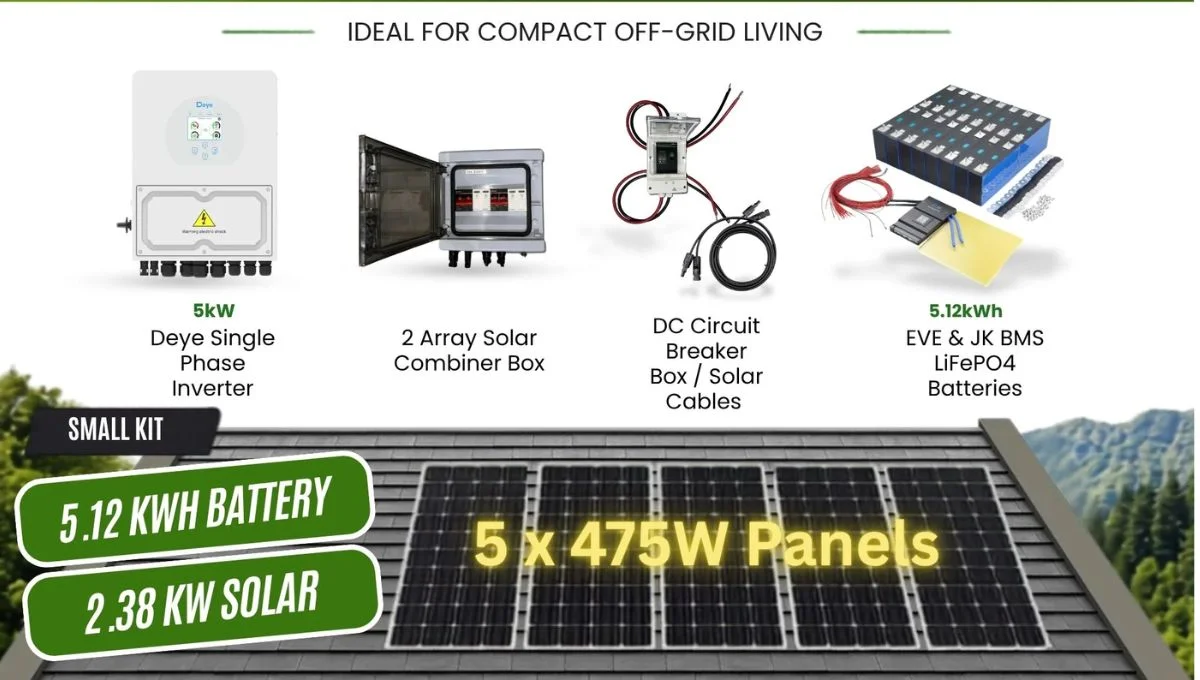
Off grid solar power kits can bring several required components together as part of a planned solution. This can make it easier for users to identify the major components required for their intended setup.
However, a kit should still be checked carefully before purchase. Users need to ensure that the included battery capacity, inverter, charging equipment and other components are appropriate for their actual energy requirements.
When Is an Off-Grid Kit Appropriate?
An off grid solar kit can be useful for people who want a packaged approach rather than sourcing every component independently.
For example, someone developing a small remote power setup may prefer a kit containing compatible components rather than researching each item separately.
The suitability of a kit depends on its specifications. Before purchasing, check the intended application, battery capacity, inverter output, system voltage and compatibility with the equipment you plan to operate.
Comparing Different Kit Configurations
Not every solar kit is designed for the same purpose.
Smaller systems can be suitable for portable applications, while larger configurations may be intended for more demanding energy requirements. Battery capacity and inverter output are two particularly important specifications when comparing options.
Off grid solar kits should therefore be compared based on the complete specifications rather than price alone.
Consider how much electricity you need each day, when that electricity will be consumed, how much solar generation is available, and how much stored energy is required during periods without sunlight.
Building a Complete Off-Grid Power Solution
A reliable system requires more than individual high-quality components. Those components must work together correctly.
For example, selecting a large battery without considering the inverter or charging system can create compatibility problems. Similarly, installing more solar generation without adequate storage may not provide the expected benefit if surplus energy cannot be stored or used.
The complete system should therefore be considered as one design.
This is particularly important for larger off grid power systems, where multiple batteries, inverters and other components may be connected together.
Battery Management and Safety
Modern lithium battery systems can include a Battery Management System, commonly known as a BMS.
A BMS helps monitor and manage battery operation. Depending on the battery design, it can provide protection against conditions such as overcharging, over-discharging, excessive current and temperature-related issues.
Battery selection should always include consideration of the BMS and its compatibility with the intended system.
Users should also follow manufacturer instructions for installation, charging, wiring and operation. Electrical installations should be completed in accordance with applicable Australian requirements and by appropriately qualified professionals where required.
How Much Off-Grid Power Do You Need?
There is no universal system size that will work for every Australian application.
A basic camping setup may require considerably less energy than a permanent rural home. The best way to estimate requirements is to list the appliances and equipment that will be used and determine their approximate power consumption and operating time.
For example, calculate:
Appliance power × operating hours = estimated daily energy consumption
This gives you a starting point for determining the required battery storage and solar generation.
You should also consider periods of reduced solar production and whether additional battery capacity or generation is required for your circumstances.
Maintenance and Long-Term Performance
Although modern solar and battery systems can reduce dependence on mains electricity, they still require appropriate care.
Regularly checking system performance can help identify potential issues. Users should monitor relevant battery and inverter information and follow the manufacturer's maintenance recommendations.
Solar panels should also be kept reasonably clean where environmental conditions cause significant dust or debris accumulation.
For lithium batteries, operating within the manufacturer's specified voltage, temperature and charging limits is important for maintaining expected performance.
Choosing a Reliable Australian Supplier
Selecting the right supplier is another important part of developing an off-grid system.
LiFePO4 Oz provides LiFePO4 battery solutions and components for applications including solar storage, off-grid systems, caravans, motorhomes, marine applications, camping and 4WD use.
The company also offers different battery configurations and individual cells for customers developing custom battery systems. This range allows customers to consider solutions based on the requirements of their specific application.
Frequently Asked Questions
What is an off-grid solar system?
It is a solar energy setup designed to operate independently of the electricity grid. It normally combines solar generation, battery storage and an inverter so electricity can be generated, stored and used when required.
How does an off-grid solar setup work at night?
Solar panels stop generating electricity after sunset, so the system can use energy stored in the battery during the night. The amount of available energy depends on battery capacity and previous solar generation.
Can off-grid solar work for a remote Australian home?
Yes, an appropriately designed system can be used for remote and rural properties. The system needs to be sized around the property's electricity consumption, available solar generation and required storage.
What appliances can an off-grid system run?
The answer depends on the inverter output and battery capacity. Appliances such as lighting, refrigeration, pumps and other electrical equipment can be supported when the system has been correctly designed for their power requirements.
How do I choose the right battery capacity?
Start by calculating daily electricity consumption and determining how much stored energy is required when solar generation is unavailable. Battery voltage, usable capacity, expected usage and system compatibility should also be considered.
Are solar kits suitable for caravans?
Some configurations can be suitable for caravans, but the correct choice depends on the caravan's appliances, energy consumption, battery capacity, available solar generation and electrical system.
Can I build my own off-grid system?
It is possible to build a customised system, but electrical and battery installations require appropriate technical knowledge. Components must be correctly matched, and applicable Australian electrical and safety requirements should be followed.
What is the difference between off-grid and grid-connected solar?
A grid-connected system is connected to the electricity network, while an independent system is designed to operate without relying on the grid. Off-grid setups therefore require sufficient generation and energy storage to meet their intended needs.
Do off-grid systems work during cloudy weather?
Solar generation can still occur during cloudy conditions, although output may be reduced. Battery storage becomes important because it can provide energy when solar production is lower.
What should I check before buying an off-grid system?
Check the system voltage, battery capacity, inverter output, solar generation capacity, BMS, component compatibility, intended application, installation requirements and supplier specifications.
Conclusion
An independent solar setup can be a practical solution for Australians who need electricity away from the mains grid. Whether the application is a remote property, caravan, motorhome, boat, camping setup or 4WD, the key is to design the system around actual energy requirements.
Solar panels, battery storage and the inverter need to work together as one system. By calculating energy consumption, selecting appropriate storage, checking component compatibility and following proper installation practices, users can create an energy solution suited to their particular circumstances.
The most suitable configuration will always depend on the application, available solar generation, required energy storage and equipment being powered. Careful planning before installation can help avoid unnecessary costs and ensure the system is appropriately matched to its intended use.