 Sign up with Google
 Sign in with Zoho

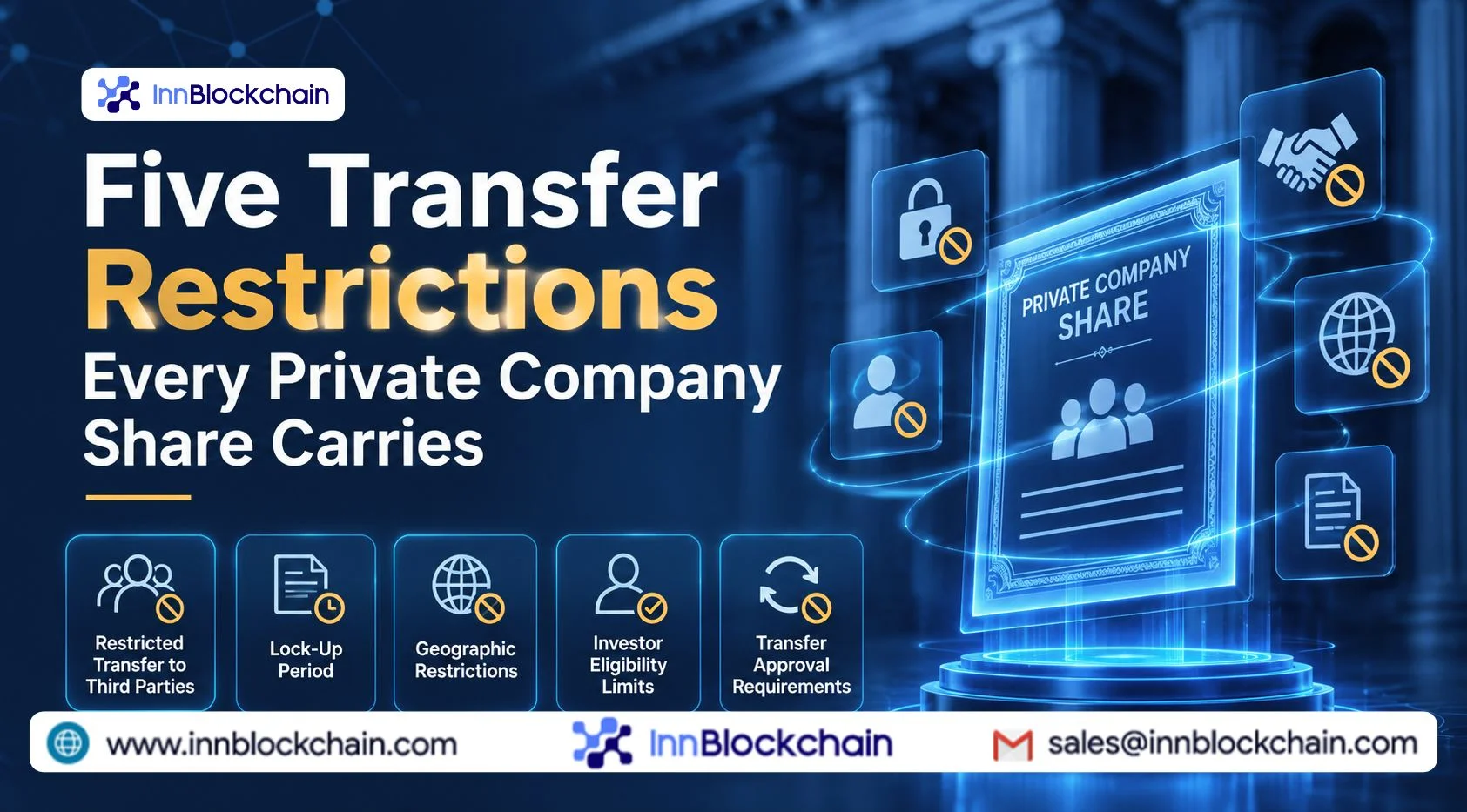
Picture a founder who tokenizes her company's shares. A week later, an early employee sells his tokens to a stranger. The trade takes minutes. The board never hears about it. Well, nothing was hacked. The token did exactly what tokens do, and it moved. But her company's documents say that sale needed approval first.
This is the first lesson in private equity STO development, where a security token offering puts a private company's shares on a blockchain. The token must follow every transfer rule the shares already have. Here are the five that matter most.
Why a Private Share Is Not a Listed Share
A listed share is built to move freely. Anyone can buy it, anytime. A private company share is the opposite. Your articles of association, or your bylaws and shareholders' agreement, restrict who can hold it and when it can be sold. Those limits are deliberate. They protect founders, investors, and the company itself.
A token on a public ledger moves whenever its holder chooses. By default, it is more transferable than the share it represents, and that contradicts your own documents. So each restriction has to be written into the contract, not left on paper.
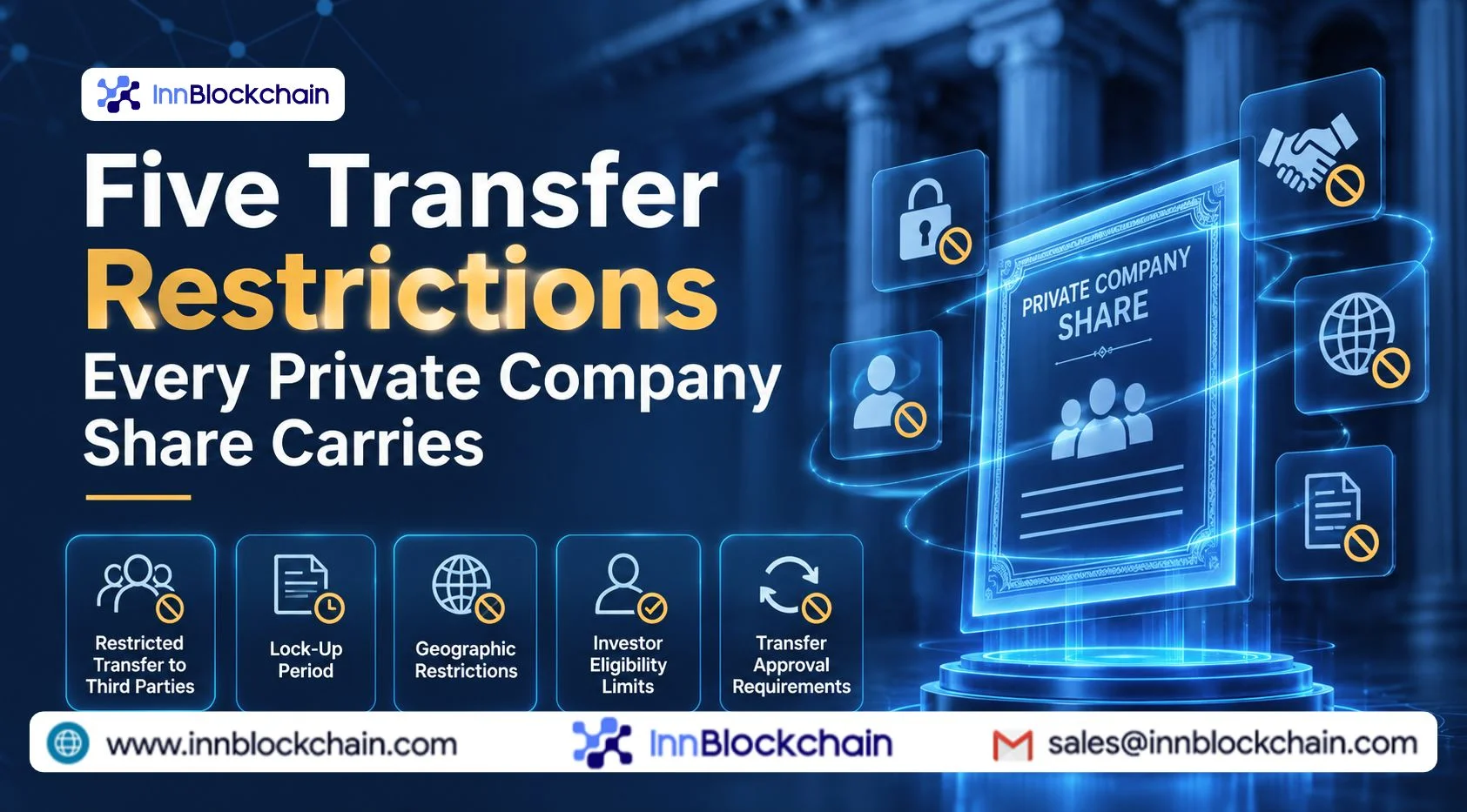
The Five Restrictions
1. Pre-emption rights
Before a share goes to an outsider, existing shareholders get the first chance to buy it. This usually includes a notice period and a pricing method. In practice, it is a timed process: offer, notice, waiting window, then lapse. The transfer cannot settle until it has run its course.
Whether you have these rights depends on where you are incorporated. Some places grant them by law. Others only if your documents do. We build to what your documents say.
2. Board or company consent
Many companies require board approval for a transfer. So the contract needs more than an eligibility check. It must pause, wait for a human decision, and record it. This step is what most separates a company's shares from a property's.
3. Right of first refusal and tag-along
Two protections work together here. With a right of first refusal, when a holder gets an outside offer, named holders can match it first. With a tag-along, when a major holder sells, minority holders can join the sale on the same terms. The contract holds the transfer until each right has been offered and has either run or lapsed.
4. Drag-along
On a qualifying exit, majority holders can require minority holders to sell. A platform that can't carry this out can block your own sale of the company. That is why it is built in from the start.
5. Permitted transfers
Gifts to family, trusts and group companies are usually exempt from the rules above. Those exceptions need coding too, or the contract will block something your articles allow.
One sale can touch several of these at once. So the contract has to hold the transfer until every one has been cleared.
What Goes Wrong When the Token Ignores Them
Return to our founder. If her contract had enforced the board-consent rule, the employee's sale would have stopped at the approval step. It would have waited, the board would have decided, and only then would ownership have moved.
When the rules live only on paper, each breach has to be noticed by someone. A spreadsheet can record that a rule was broken. It cannot stop the transfer. Finding out late can mean disputes, unwinding a transfer, and awkward conversations with the people your documents were meant to protect.
Get the rules into the contract, and they stop depending on someone noticing. Get it wrong, and you have automated the breach.
Before You Build Anything
Start with a simple call by pulling out your articles and shareholders' agreement and list every limit on a transfer. Mark which ones need a person's decision and which can be checked automatically. That list becomes the brief for any build.
Then take it to a team that handles private equity STO development, and ensure that team encoded these exact rules before. The answer will tell you more than any feature list.
And what you should know is that a transfer rule that lives in the contract works every time. One that lives in a folder works only when someone remembers.
https://www.innblockchain.com/solutions/private-equity-tokenization