Sign up with Google
 Sign in with Zoho

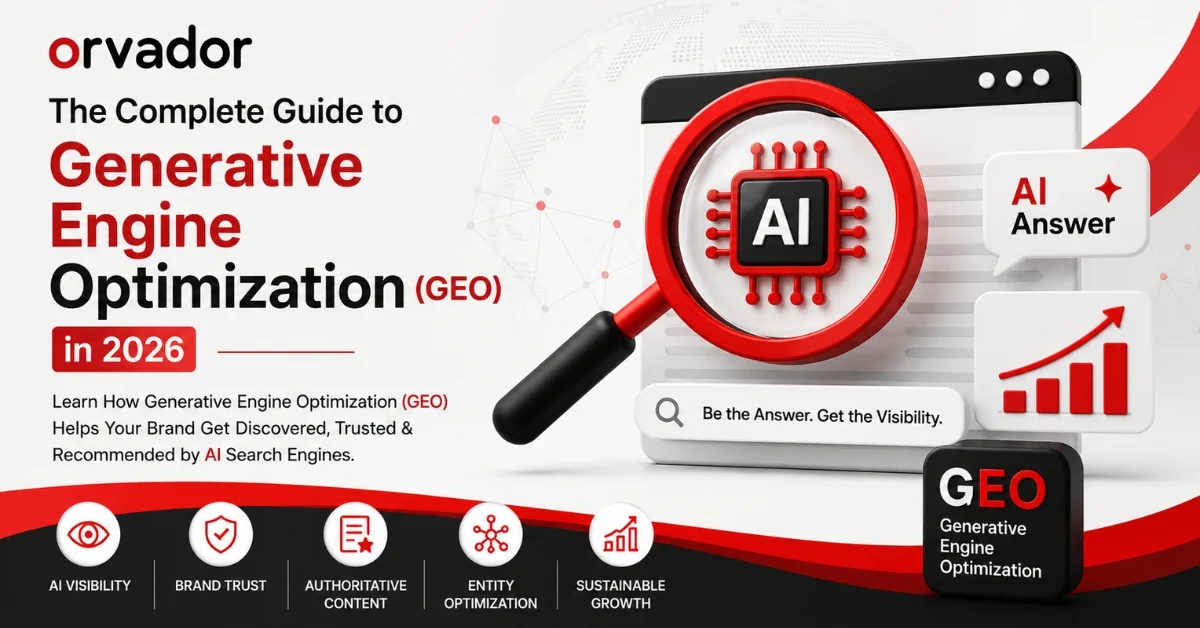
Artificial intelligence has transformed the way people search for information online. Instead of typing a few keywords into a search engine, users now ask detailed questions to AI-powered platforms like ChatGPT, Google Gemini, Claude, Microsoft Copilot, and Perplexity. These platforms generate direct answers instead of simply displaying a list of websites.
This shift has introduced a new digital marketing discipline called Generative Engine Optimization (GEO).
Unlike traditional SEO, which focuses on ranking webpages in search results, GEO helps brands become part of the AI-generated answers users receive. As AI-powered search continues to grow in 2026, businesses that fail to optimize for generative engines risk becoming invisible during critical buying decisions.
This guide explains what GEO is, why it matters, how it differs from SEO, and the best strategies businesses should implement to build long-term AI visibility.
What Is Generative Engine Optimization (GEO)?
Generative Engine Optimization (GEO) is the process of optimizing your website, content, brand authority, and digital presence so that AI systems can confidently understand, trust, reference, and recommend your business within generated responses.
Rather than competing only for traditional search rankings, GEO focuses on becoming a trusted source that AI assistants cite when answering user questions.
Modern AI engines evaluate far more than keywords. They consider:
- Content accuracy
- Topical authority
- Brand credibility
- Entity recognition
- Structured data
- Expert authorship
- Third-party mentions
- Citation quality
- Freshness of information
The goal is simple: make your business the answer—not just another webpage.
Why GEO Matters More Than Ever in 2026
Search behavior has changed dramatically.
Millions of users now ask AI assistants questions like:
- Which CRM software is best?
- What is the best digital marketing agency?
- How do I optimize my website for AI search?
- Which cybersecurity platform should I choose?
Instead of clicking ten different websites, users often receive one comprehensive AI-generated answer containing only a handful of recommended brands.
If your company isn't mentioned, you're missing valuable opportunities before users ever visit Google.
Generative AI has shifted competition from ranking higher to becoming more trustworthy.
GEO vs Traditional SEO
Although GEO and SEO work together, they serve different purposes.
The strongest digital strategies in 2026 combine both SEO and GEO rather than treating them separately. Industry practitioners increasingly position GEO as a complementary layer on top of technical SEO, content quality, and authority building.
How AI Search Engines Decide Which Brands to Recommend
Large Language Models do not simply choose websites with the most keywords.
Instead, they analyze multiple trust signals, including:
High-Quality Content
Helpful, original, experience-driven content performs significantly better than thin, AI-generated articles.
Strong Entity Recognition
Your brand should be consistently identified across your website, business listings, industry publications, and authoritative sources.
Structured Data
Schema markup helps AI systems understand your organization, services, products, FAQs, and expertise.
Expert Authority
Content written or reviewed by knowledgeable professionals builds credibility.
Third-Party Validation
Mentions from trusted publications, research websites, interviews, podcasts, and industry resources strengthen AI confidence.
Consistent Brand Information
Your business details should remain consistent across every digital platform.
The Core Components of an Effective GEO Strategy
1. Build Topical Authority
Rather than publishing random articles, create comprehensive content clusters around your industry.
For example, a company offering Generative Engine Optimization services should cover topics such as:
- AI SEO
- Answer Engine Optimization
- Entity SEO
- AI search visibility
- AI Overviews
- Structured data
- Knowledge Graph optimization
- Semantic SEO
The more complete your expertise appears, the more likely AI systems will recognize your authority.
2. Create Helpful, Human-First Content
Google's latest guidance continues to prioritize people-first content that demonstrates real expertise and satisfies user intent.
Successful GEO content should:
- Answer real questions
- Include practical examples
- Explain complex topics simply
- Use original insights
- Avoid unnecessary keyword stuffing
- Maintain factual accuracy
AI engines reward trustworthy information—not content written solely to manipulate rankings.
3. Strengthen Your Digital Entity
Entity optimization has become one of GEO's biggest ranking factors.
This includes improving:
- Organization schema
- Author profiles
- Business citations
- Knowledge Graph presence
- Industry mentions
- Social proof
- Brand consistency
When AI systems clearly understand who your business is, recommendations become much more likely.
4. Optimize for Conversational Search
People no longer search using short phrases.
Instead of typing:
"best GEO agency"
They ask:
"Which agency can help improve my visibility in ChatGPT and Google AI Overviews?"
Your content should naturally answer conversational questions throughout headings, FAQs, and body copy.
5. Keep Content Fresh
AI systems increasingly value updated information.
Regularly refresh:
- Statistics
- Case studies
- Industry trends
- Product updates
- Service pages
- Guides
Fresh content improves both traditional SEO performance and AI citation opportunities.
Measuring GEO Success
Unlike traditional SEO, GEO success isn't measured only through rankings.
Important GEO metrics include:
- AI brand citations
- AI referral traffic
- Share of voice across AI platforms
- Entity authority growth
- Brand mentions
- AI-generated recommendations
- Knowledge Graph visibility
- Organic traffic quality
- Conversion improvements
Businesses should monitor performance across multiple AI platforms rather than relying on a single search engine.
Common GEO Mistakes to Avoid
Many organizations unknowingly reduce their AI visibility by making avoidable mistakes.
Some of the most common include:
- Publishing low-value AI-generated content
- Ignoring structured data
- Weak internal linking
- Poor topical coverage
- Inconsistent business information
- Outdated articles
- Lack of author expertise
- Over-optimizing for keywords instead of user intent
GEO rewards authority, clarity, and credibility far more than keyword density.
How Businesses Can Prepare for the Future of AI Search
Generative AI continues to evolve rapidly, and businesses that begin optimizing today will have a significant competitive advantage.
A future-ready GEO strategy should include:
- Technical SEO improvements
- Entity optimization
- High-quality educational content
- Digital PR
- Schema implementation
- Knowledge Graph development
- AI-focused content architecture
- Continuous content updates
- Brand authority building
Organizations investing in these areas are more likely to earn long-term visibility across AI-powered search experiences.
How Orvador Supports AI Search Visibility
As AI search becomes a major customer acquisition channel, businesses increasingly require strategies that extend beyond traditional SEO. Orvador has positioned its services around Generative Engine Optimization by focusing on AI readiness audits, entity optimization, structured content, schema implementation, citation building, digital PR, and platform-specific optimization for AI systems such as ChatGPT, Google Gemini, Claude, Perplexity, and Microsoft Copilot. Its approach emphasizes improving both traditional organic visibility and AI-generated recommendations through a unified strategy.
Final Thoughts
Generative Engine Optimization is no longer an emerging concept—it is becoming an essential component of digital marketing in 2026.
As AI assistants increasingly influence purchasing decisions, businesses must optimize not only for search rankings but also for AI understanding, trust, and citations.
Brands that invest in authoritative content, strong entities, structured data, and genuine expertise will be better positioned to earn visibility across both traditional search engines and AI-powered platforms. GEO is not a replacement for SEO; it is the next evolution of search optimization, enabling businesses to remain discoverable in a rapidly changing digital landscape.