Sign up with Google
 Sign in with Zoho
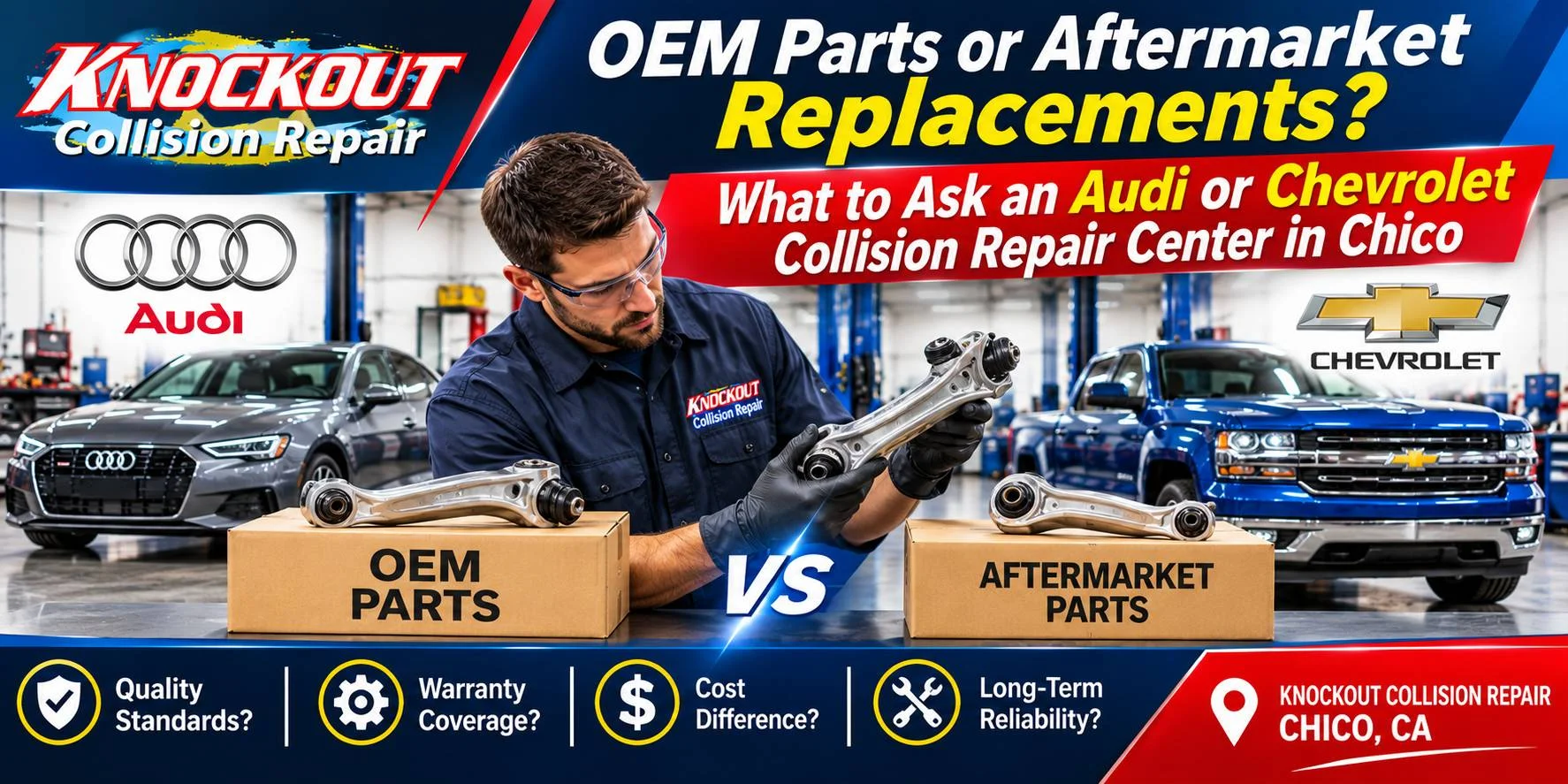
A collision repair estimate may list a replacement bumper or fender without making the parts choice clear. Ask about it before approving the work. The part’s source deserves attention alongside the price, especially when repairs involve safety systems. This covers the differences between OEM and aftermarket parts and the questions Audi and Chevrolet owners in Chico should ask.
What is the difference between OEM and aftermarket parts?
OEM stands for original equipment manufacturer. Genuine replacement parts follow the vehicle manufacturer’s specifications. Aftermarket parts come from other companies.
GM distinguishes its genuine parts from aftermarket replacements that it has not designed, tested, or approved. A part that looks similar does not establish manufacturer approval.
Knockout Collision Repair uses genuine OEM parts for its repairs in Chico. Ask for the specific parts list during the estimate review so the paperwork clearly records the planned replacements.
What should Audi owners ask about structural repairs?
At an Audi collision repair center in Chico, start with the damaged area and the repair method. Ask the estimator to explain which components need replacement and which Audi instructions apply.
Audi does not support aftermarket collision parts for structural repairs. Its position covers components such as frame rails, pillars, and bumper reinforcement bars.
Useful questions include:
Which Audi repair procedure applies? Ask the shop to explain its plan for your model.
What training and equipment does the repair require? Request proof of Audi authorization if the shop claims it.
Do the repairs require camera or sensor calibration? Ask who will perform it and what records you will receive.
Audi identifies specialized structural parts and safety system calibration as parts of its authorized collision repair program. Using genuine parts alone does not establish that a shop holds Audi authorization.
Does Chevrolet give different guidance?
Bring the same questions to a Chevrolet collision repair center in Chico, but request GM repair instructions for your vehicle. Audi procedures do not apply to a Chevrolet.
GM’s collision guidance calls for genuine GM parts and approved repair methods. It does not approve non-genuine aftermarket parts for these repairs. Ask the estimator to explain any proposed replacement that falls outside that guidance.
What will the estimate actually cover?
Discuss payment before the shop orders parts. Audi notes that requesting genuine parts may involve extra costs, so confirm the amount with the insurer rather than assuming coverage.
Get clear answers to these questions:
What does the insurer’s estimate allow for each replacement? Compare its parts list with the shop’s repair plan.
Would choosing genuine parts leave an amount to pay? Request a written breakdown.
What happens if the shop finds more damage? Ask how it will explain added work and seek approval.
Knockout Collision Repair offers insurance claim assistance in Chico. During that discussion, ask the team to explain any differences between the repair estimate and the insurer’s allowance.
What should you confirm before pickup?
Ask for the final invoice showing the parts the shop installed. Also request the written warranty terms and records of any required safety system calibration.
Keep those documents with your vehicle records. Before approving repairs, schedule an estimate review and settle any unanswered questions about parts, repair methods, or payment.
FAQs
Are OEM and aftermarket parts the same?
No. Genuine OEM parts follow the vehicle manufacturer’s specifications, while other companies produce aftermarket replacements. Ask the shop to identify each proposed part.
Does Audi support aftermarket structural parts?
Audi does not support aftermarket collision parts for structural repairs. Ask the estimator how the repair plan follows Audi’s requirements.
Does Chevrolet recommend genuine collision parts?
Yes. GM calls for genuine GM parts and approved procedures for collision repairs. Request a parts list that clearly identifies the replacements.
Will insurance pay for OEM parts?
Confirm that with your insurer before approving the order. Requesting genuine parts may involve additional costs, as Audi notes in its collision guidance.
Does using OEM parts prove a shop has manufacturer certification?
No. Parts choice and manufacturer authorization are separate questions. Ask for proof of the shop’s current authorization if it advertises that status.