Sign up with Google
 Sign in with Zoho

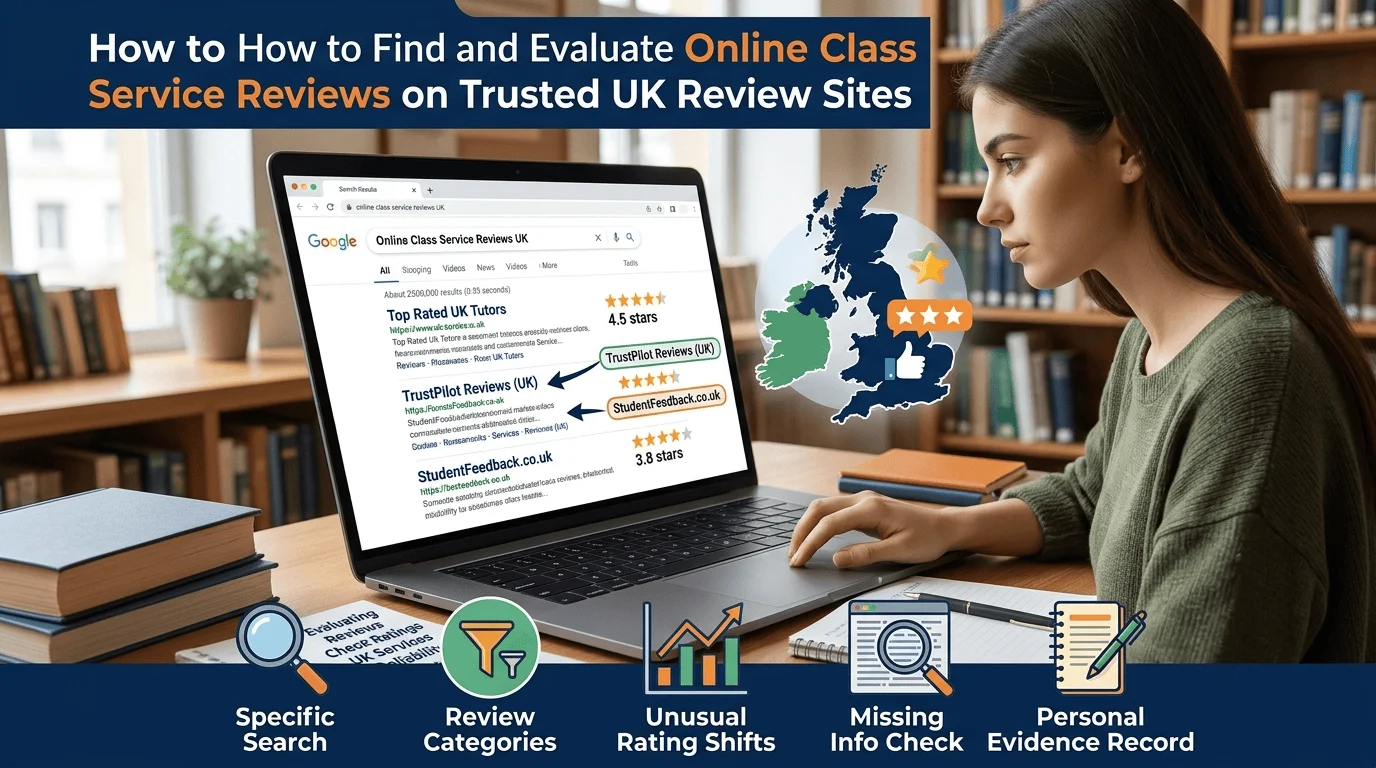
Choosing an online class service can be challenging when there are many competitors in the market advertising similar academic services. For UK students, finding ways to select a provider relatable to them, and knowing the differences between each service provider, is important. A popular service may not suit every learner, while a less popular service provider may provide unique features to some of the students.
In this post, let’s find and evaluate online class service reviews on reputable UK review sites, so that rather than wasting time on a service that doesn’t fulfil your requirements, find the one that is according to your expectations.
Search Using Specific Service Terms
Searching for just the name of the online class services will yield you the company ads and chosen testimonials. However, to find the most relevant information, add specific details to your search. Include a specific service, the UK market, and the aspect of the service that you want to research. Searches using terms like scheduling, customer communication, billing issues, or tutoring arrangements will provide you with more useful information.
A single search query will not provide you with the breadth of information. Students can include Takemyclassonline.us.com Reviews like searches to help find discussions about a particular service provider.
(bestassignmentwriter,2019)
Explore Different Review Categories
The best review sites UK typically have some sort of filtering system for feedback, and it's a good idea to take advantage of that and narrow down the search results based on dates or ratings, whichever is available. Check out the latest comments first to get an unbiased perspective on what is currently happening at the business. If the website has a feature which allows you to sort reviews based on their rating, take advantage of it.
You might not find an immediate answer, but you should know what exactly you are looking for by the end of your research.
Investigate Unusual Changes in Ratings
A sudden rise or decline in a provider's average rating should be investigated. It is required to assess the dates of reviews submitted around the time of the change. It is also essential to determine whether customers comment on a particular event, for instance, a policy change or an upgrade in customer service. Negative feedback indicates a possible issue that requires immediate attention.
Both positive and negative customer reviews are needed to identify whether a company is performing the same way as before or if some problems occurred.
Pay Attention to Missing Information
Sometimes, the most informative reviews are the ones that happen not to explain their point very clearly. This could mean that someone praises a company's professionalism without actually explaining the service they received, or simply criticises a company without explaining why exactly they're doing so. Such comments don't give readers enough information to base future decisions on, in comparison with more detailed reviews that explain what happened.
Obviously, a review that doesn't give much needed exposition is not necessarily untrue, but it should be taken less into account than those that allow for easy understanding.
Separate Repeated Complaints From Isolated Incidents
One bad review will not entirely rule out the provider. Different customers have different expectations; thus, a specific misunderstanding may arise from a particular case. It is essential to determine if multiple clients complained about the same issue on various dates independently.
If these reviews highlight several problems and specific details, it might be worth investigating the company’s terms of service to identify the source of the complaints. In contrast, reviews may seem similar while concerning different matters; therefore, it is necessary to distinguish between the two.
Assess the Usefulness of Positive Feedback
Positive reviews can often be helpful in that they frequently tell the exact things that the customers liked about the service they purchased. That is why it is crucial to pay attention to the positive reviews that mention easy scheduling, clear instruction, communication, explanation of details and other similar aspects of services. These aspects can then be related to one’s own needs and desires.
The positive reviews which simply state that everything was great and the service was highly recommended are less useful guides because they do not specify the details that set the quality of service high.
Understand the Limitations of Review Websites
Even established review platforms have their limitations. The ratings on such sites are produced by a subset of those customers who have dealt with the provider under consideration. The platforms’ policies regarding the gathering of reviews, their moderation, and the audiences for which they provide the information may also differ.
As a result, each of the websites may present a different side of a company, without either of them providing a complete picture. Before using any of the resources, it is essential to carefully read their rules on review verification, moderation policies, and dispute resolution.
Build a Personal Evidence Record
Instead of relying on memory, create a brief record for each provider you investigate. You can include this information: the review platform, publication dates, recurring strengths and concerns, and questions that weren't answered. Then, be sure to include links to the resources to help verify the information later. Compare the providers against the same criteria and ensure that the features that are most important are prioritised.
Avoid focusing on the slight differences in star ratings when the evidence is lacking. A consistent record will help you explain the reasoning and justify why another service may be preferable.