Sign up with Google
 Sign in with Zoho

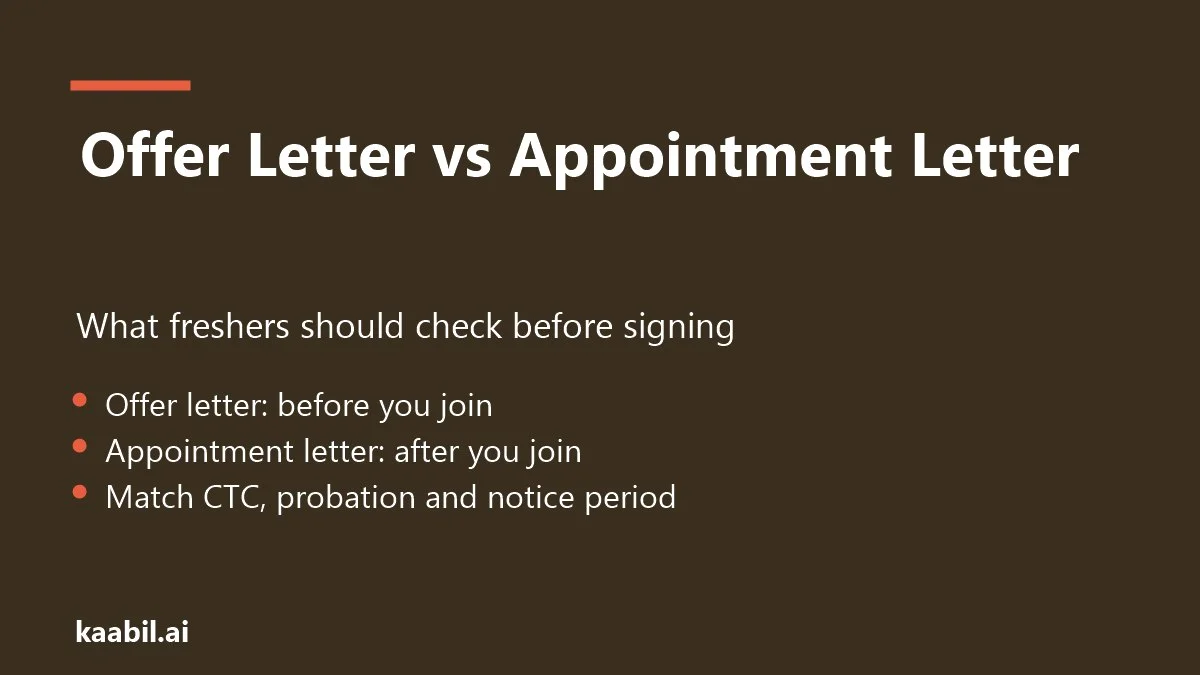
Many freshers receive two documents from the same company a few weeks apart: an offer letter and an appointment letter. They look similar, both mention your role and salary, and it is easy to assume they are the same thing. They are not, and knowing the difference can save you trouble later.
This guide explains what each letter is, when you get it, how they differ, and what to check before you sign.
What is an offer letter?
An offer letter is the company's formal proposal to hire you. It confirms that you have been selected and states the main terms: your role, CTC, location and expected joining date.
It usually arrives soon after your final interview. You are expected to accept it within a few days, often by signing and returning a copy or replying by email. At this stage you are a selected candidate, not yet an employee.
What is an appointment letter?
An appointment letter is the document that confirms your employment once you join. It sets out the detailed terms of your job, including duties, probation, notice period, leave, working hours and company policies.
Most companies issue it on your joining day or within your first few weeks. It becomes one of the main documents you will need later for background checks, loans and future job changes.
What is the difference between the two?
The offer letter is a proposal before you join; the appointment letter is the confirmation after you join. The offer letter is short and focused on the headline terms, while the appointment letter is longer and covers the rules of your employment in detail.
- Timing: offer letter before joining, appointment letter on or after joining.
- Purpose: offer letter invites you to accept; appointment letter confirms you are employed.
- Detail: offer letter has the key terms; appointment letter has the full terms and conditions.
- Use later: the appointment letter, along with salary slips, is usually what you show as proof of employment.
What should you check before signing?
Read both letters carefully and make sure the numbers and terms match what you were told. If something in the appointment letter differs from your offer letter, ask HR in writing before you sign.
- Your designation, department and work location.
- The CTC and the split between fixed and variable pay.
- The probation period and how confirmation works.
- The notice period during and after probation.
- Any service agreement, bond or training cost recovery clause.
Is an offer letter legally binding?
An offer letter creates expectations on both sides, but the detailed terms of your employment are usually set out in the appointment letter and your employment contract. Rules can differ by company, so if you are unsure about a specific clause, ask HR or seek proper advice before signing.
For a side-by-side comparison with sample wording from both letters, read this guide on the difference between an offer letter and an appointment letter.
What happens if the company changes the terms?
Sometimes the appointment letter shows a different salary structure, location or notice period than the offer letter. Do not ignore it. Point out the difference politely by email, keep a copy of both letters, and sign only when you are comfortable with the final terms.
Frequently asked questions
Can I join a company without an appointment letter?
Many companies issue it on the first day or soon after, so joining before you receive it is common. If weeks pass without one, follow up with HR, because you will need it later.
Which letter should I keep for future jobs?
Keep both, along with your salary slips. Future employers usually ask for proof of employment, and these documents together cover it.
Final thought
Treat both letters as important documents, read every line, and keep copies safely. A few minutes of checking now can prevent confusion about pay, probation and notice period later.