Sign up with Google
 Sign in with Zoho

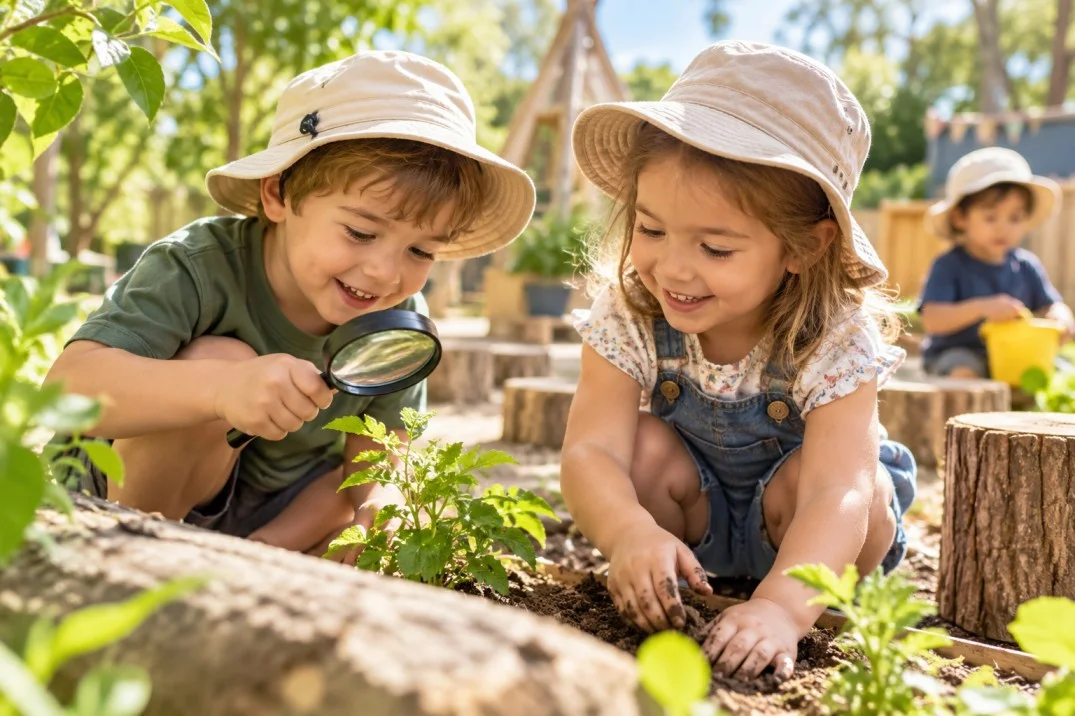
Children are naturally curious. Give them a patch of grass, a handful of leaves, some sticks and a little space, and they can turn it into a game within minutes. This is one of the reasons nature play is so important for early childhood development.
Nature play gives young children the chance to move, imagine, investigate and interact with the world around them. Unlike activities with a set beginning and ending, outdoor play often allows children to decide what they want to do and how they want to do it.
From collecting leaves and digging in soil to watching insects and balancing on logs, simple outdoor experiences can support physical, social, emotional and thinking skills.
For families looking at early learning and childcare, the outdoor environment is therefore an important part of a child's day. At Pines Early Learning, everyday play can give children opportunities to learn through movement, curiosity and hands-on experiences.
What Is Nature Play?
Nature play is simply play that takes place in or around natural environments.
It can happen in a large garden, a backyard, a park or an outdoor early learning space. Children might play with natural materials such as:
- Leaves
- Sticks
- Stones
- Sand
- Mud
- Water
- Flowers
- Grass
- Logs
- Seeds
The activity does not need to be complicated.
A child collecting different leaves is practising observation. A group of children building a small structure with sticks is working together. A child balancing along a log is developing body control.
The learning is often happening without children even realising it.
Why Outdoor Play Matters in Early Childhood
Young children learn by doing. They touch, move, ask questions, make mistakes and try again.
Nature provides an environment where children can do all of these things.
Outdoor play also offers something that indoor activities cannot always provide: plenty of room to move. Children can run, climb, jump, carry, dig and balance while enjoying fresh air and changing surroundings.
This combination of movement and discovery can support many areas of child development.
1. Nature Play Supports Physical Development
Running across grass, climbing, jumping over small obstacles and carrying objects all involve physical movement.
These activities help children practise both large and small body movements.
For example, when a child climbs a low structure, they are thinking about where to place their hands and feet. When they pick up small stones or seeds, they are using their fingers and hands carefully.
Regular outdoor activities can support:
- Balance
- Coordination
- Strength
- Body awareness
- Gross motor skills
- Fine motor skills
Physical development is an important part of the early years because children are building the basic movement skills they will use in everyday life.
2. It Encourages Curiosity and Questioning
Have you ever noticed how many questions children ask when they are outside?
“What's that?”
“Where did the ant go?”
“Why is this leaf yellow?”
“Where does the water go?”
Nature gives children plenty of reasons to ask questions.
An educator can use these moments to encourage conversations and simple investigations. A group might look closely at a leaf, compare its size with another one or watch what happens when rainwater flows through the garden.
These experiences can support early science and thinking skills in a way that feels natural to children.
3. Nature Encourages Imaginative Play
A stick can become a magic wand.
A cardboard box can become a boat.
A pile of leaves can become food for an imaginary dinosaur.
Children do not need expensive toys to create interesting games. Natural surroundings give them materials they can use in many different ways.
This type of imaginative play gives children freedom to create their own stories and ideas.
One day, a group of children might pretend the garden is a jungle. The next day, the same space could become a construction site or an animal hospital.
The possibilities change according to the children's interests.
4. Outdoor Play Helps Children Develop Social Skills
Nature play is not always a solo activity.
Children often work together when they are outdoors. They might build a pretend campsite, dig a hole together, collect natural materials or create a game with their friends.
These activities give children chances to practise:
- Sharing
- Taking turns
- Listening
- Talking
- Cooperating
- Solving small disagreements
- Making group decisions
Imagine three children trying to build a small bridge using wooden pieces. They may have different ideas about how it should look.
They need to listen to each other, make decisions and perhaps change their plans.
These everyday moments are valuable social learning experiences.
5. Nature Play Can Support Emotional Wellbeing
Young children experience plenty of emotions throughout the day.
They can become excited, frustrated, tired, nervous or proud within a matter of minutes.
Outdoor play gives children space to move their bodies and take part in activities that interest them. A quiet garden corner can also give a child a calmer place to sit, observe and take a break from a busy group environment.
There is no need for every outdoor activity to be loud or energetic.
Watching clouds, watering plants, listening to birds or sitting under a tree can also be meaningful experiences.
6. Children Learn About Risk and Problem-Solving
Safe, age-appropriate challenges are an important part of growing up.
When children climb, balance, carry objects or move across uneven ground, they need to make decisions.
“Is this too high?”
“Where should I put my foot?”
“Can I carry all of these?”
With appropriate adult supervision, these experiences can help children think about their actions and learn from what happens.
The aim is not to remove every challenge. Instead, children can be given suitable opportunities to try, assess and make choices within a safe setting.
7. Nature Play Builds Respect for the Natural World
Children are more likely to become interested in nature when they have regular opportunities to experience it.
Planting seeds, watering a garden or watching a butterfly can help children notice that living things need care.
An educator might talk about why plants need sunlight and water or explain why children should handle insects gently.
These small experiences can help children develop an understanding of caring for their surroundings.
Simple Nature Play Ideas for Children
Nature play does not need a large garden or expensive equipment.
Parents and educators can introduce simple activities such as:
Nature Treasure Hunt
Give children a simple list of things to find, such as a round leaf, a small stick or a smooth stone.
Mud Kitchen
With soil, water, old bowls and spoons, children can create their own pretend meals.
Leaf Art
Collect fallen leaves and use them to create pictures, patterns or simple collages.
Gardening
Children can help plant seeds, water plants and watch them change over time.
Outdoor Building
Provide sticks, blocks, stones or other suitable materials and let children create their own structures.
Bug Watching
Encourage children to observe insects from a safe distance and talk about what they notice.
These activities can be adjusted according to children's ages and interests.
How Parents Can Encourage Nature Play at Home
You do not need to plan a full activity every time your child goes outside.
Sometimes, simply giving them time to play is enough.
On a walk, let your child stop to look at an interesting tree. At home, ask them what they noticed outside. If they want to collect leaves, help them sort the leaves by colour or size.
You can also ask open questions:
“What do you think is under that rock?”
“Why do you think this leaf feels different?”
“What could we build with these sticks?”
There does not always need to be a correct answer. The conversation itself gives children a chance to think and share their ideas.
Nature Play and Early Learning at Pines Early Learning
For young children, learning does not only happen around a table or during a planned activity.
It can happen while digging, climbing, planting, building, running and talking with friends.
At Pines Early Learning, nature and outdoor play can be part of a broader early learning experience where children have opportunities to learn through everyday activities and hands-on play.
For parents considering childcare in Doncaster East, it is worth looking at how much importance a centre places on outdoor experiences. Ask about the outdoor environment, daily routines, play opportunities and how educators support children's learning outside.
A good outdoor space is more than somewhere for children to burn off energy. It can be another place for children to think, communicate, create and grow.
Why Nature Play Is Worth Making Time For
Childhood does not need to be filled with complicated activities.
Sometimes, the simplest experiences leave children with the most interesting questions.
A child digging in soil may discover a worm. Another may spend twenty minutes arranging stones. A group might turn a pile of sticks into an imaginary campsite.
These moments may look like ordinary play, but they can support physical development, social skills, communication, creativity, confidence and problem-solving.
Nature play gives children room to be active, curious and imaginative while building a stronger connection with the world around them.
For parents and early learning educators, making time for these experiences is a simple way to give children more opportunities to learn through play.
FAQs
1. Why is nature play important for early childhood development?
Nature play gives children opportunities to move, investigate, create and interact with others. These experiences can support physical, social, emotional and thinking skills during the early years.
2. What are some examples of nature play?
Children can garden, collect leaves, build with sticks, play with sand and mud, observe insects or create games outdoors. Simple activities can provide plenty of learning opportunities.
3. How does outdoor play help children's social skills?
Outdoor group activities encourage children to share, take turns, communicate and work towards common goals. Children also learn how to manage small disagreements during play.
4. Does nature play help physical development?
Yes. Running, climbing, balancing, jumping, digging and carrying objects give children opportunities to practise coordination, balance, strength and other movement skills.
5. Can parents encourage nature play at home?
Absolutely. A backyard, local park or simple walk can provide opportunities for outdoor learning. Let children observe, collect suitable natural materials and ask questions about what they see.




.webp)