Sign up with Google
 Sign in with Zoho

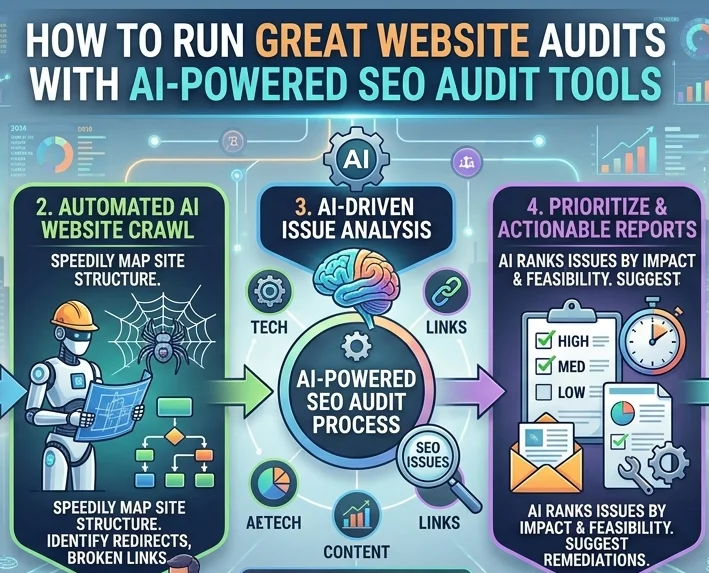
Website audits have always been one of the most important parts of search engine optimization. A well-executed audit uncovers technical issues, content gaps, user experience problems, and missed ranking opportunities before they become major obstacles. The challenge is that modern websites are much larger and more complex than they were just a few years ago.
This is where artificial intelligence is changing the process.
Instead of manually checking hundreds of pages, AI can identify patterns, prioritize critical issues, and analyze massive datasets within minutes. That doesn't replace SEO professionals—it simply helps them make faster, more informed decisions.
Whether you're managing a small business website, an eCommerce store, or a large enterprise portal, understanding how AI improves website audits can help you maintain better search visibility and user experience.
Why Website Audits Matter More Than Ever
Search engines evaluate thousands of ranking signals. A website may have excellent content, yet technical errors can still prevent pages from performing well.
A proper website audit helps identify:
- Broken internal links
- Crawlability problems
- Duplicate content
- Slow-loading pages
- Mobile usability issues
- Missing metadata
- Structured data errors
- Core Web Vitals concerns
Instead of reacting after rankings drop, regular audits allow you to discover issues before they affect organic traffic.
How AI website audit tool Is Changing Modern SEO
Traditional website audits relied heavily on manual reviews and spreadsheet analysis. AI has changed that approach by introducing automation and predictive analysis into everyday SEO workflows.
Some examples include:
- Detecting unusual crawling patterns
- Identifying duplicate content clusters
- Predicting pages likely to lose rankings
- Recommending internal linking opportunities
- Recognizing semantic keyword gaps
- Highlighting pages with declining engagement signals
Rather than replacing SEO expertise, AI provides another layer of analysis that helps professionals focus on solving problems instead of simply finding them.
The Core Components of an AI-Powered Website Audit
Technical SEO Analysis
Technical SEO remains the foundation of every successful website.
AI tools quickly analyze:
- XML sitemaps
- Robots.txt files
- Canonical tags
- Redirect chains
- HTTP status codes
- Crawl depth
- Indexability issues
Imagine auditing a website with 50,000 pages manually. It could take days. AI dramatically reduces that workload by prioritizing issues based on potential impact.
Content Quality Evaluation
Content audits have become much more sophisticated.
Instead of counting keywords, AI evaluates:
- Search intent alignment
- Content freshness
- Topical relevance
- Entity coverage
- Thin content
- Duplicate sections
- Missing subtopics
For example, if two articles target similar search intent, AI may identify keyword cannibalization before rankings begin to fluctuate.
User Experience Signals
SEO is no longer just about search engines.
AI can help identify user experience problems such as:
- Slow mobile rendering
- Large layout shifts
- Navigation bottlenecks
- Excessive JavaScript execution
- Image optimization issues
These factors contribute to improved engagement metrics and stronger overall website performance.
Using AI to Prioritize SEO Fixes
One common challenge during website audits is deciding what to fix first.
Not every issue deserves immediate attention.
AI models often rank recommendations by considering factors like:
- Traffic potential
- Severity
- Crawl frequency
- Business importance
- Historical performance
For example:
A missing meta description on a low-traffic archive page may not require urgent action.
A blocked product category generating thousands of monthly visits certainly does.
This prioritization allows SEO teams to allocate resources more efficiently.
Common Problems AI Detects Faster Than Manual Audits
Although experienced SEO professionals can identify many website issues, AI excels at spotting patterns across thousands of pages.
Common discoveries include:
- Orphan pages
- Internal link imbalance
- Duplicate title tags
- Missing schema markup
- Crawl budget waste
- Pagination issues
- Keyword cannibalization
- Broken image references
Some platforms even estimate how much organic traffic could be affected if these problems remain unresolved.
Practical Workflow for Running an AI Website Audit
A structured workflow keeps the audit organized and repeatable.
Step 1: Crawl the Entire Website
Start with a complete crawl to collect:
- URLs
- Status codes
- Metadata
- Internal links
- Canonicals
- Images
The larger the crawl dataset, the better the AI recommendations become.
Step 2: Analyze Technical Health
Review:
- Crawl errors
- Redirect loops
- Server responses
- Duplicate URLs
- Indexation problems
Fixing these issues first often creates the strongest SEO improvements.
Step 3: Review Content Performance
Compare content against user intent.
Look for:
- Thin pages
- Outdated information
- Missing keyword coverage
- Duplicate articles
This stage often reveals opportunities for consolidation rather than creating additional pages.
Step 4: Validate User Experience
Page speed and usability directly influence visitor satisfaction.
Review:
- Largest Contentful Paint (LCP)
- Interaction responsiveness
- Visual stability
- Mobile friendliness
Even small improvements in loading speed can reduce bounce rates.
AI and Predictive SEO
One interesting development is predictive SEO.
Rather than explaining what happened yesterday, AI increasingly forecasts what might happen next.
Examples include:
- Pages likely to lose rankings
- Seasonal traffic fluctuations
- Emerging keyword opportunities
- Declining click-through rates
- Content requiring updates
Think of it like weather forecasting.
No prediction is perfect, but having early warnings allows website owners to prepare instead of reacting after performance declines.
Building a Better Audit Process with a site audit tool checklist
Technology alone doesn't guarantee a thorough review. A consistent process matters just as much, which is why many SEO professionals rely on a structured site audit tool checklist alongside AI insights. A checklist helps verify technical health, review content quality, inspect internal linking, evaluate Core Web Vitals, confirm structured data implementation, and monitor indexing status. Combining automated analysis with human review creates a more reliable audit that catches both obvious errors and subtle optimization opportunities.
Best Practices for Smarter AI Website Audits
As AI continues evolving, successful SEO audits depend on balancing automation with human expertise.
Keep these practices in mind:
- Audit your website regularly rather than waiting for traffic drops.
- Verify AI recommendations before making large-scale changes.
- Monitor technical SEO alongside content quality.
- Compare historical audit reports to identify recurring issues.
- Focus on solving high-impact problems before cosmetic improvements.
- Keep structured data updated as website content changes.
- Review search intent whenever major algorithm updates occur.
AI can process enormous amounts of information, but strategic decision-making still depends on experience, context, and business goals.
Final Thoughts
Website audits have moved far beyond simple error reports. AI now helps uncover technical problems, evaluate content quality, recognize search patterns, and prioritize improvements that matter most.
The future of SEO is unlikely to be fully automated. Instead, it will combine machine intelligence with human judgment. AI identifies opportunities at scale, while SEO professionals interpret those findings, understand user intent, and make informed optimization decisions.
For anyone responsible for maintaining a website, learning how to integrate AI into the audit process is becoming an essential skill rather than an optional one. By combining regular technical reviews, thoughtful content analysis, and data-driven insights, websites can remain healthy, accessible, and better prepared for the changing demands of modern search engines.