Sign up with Google
 Sign in with Zoho

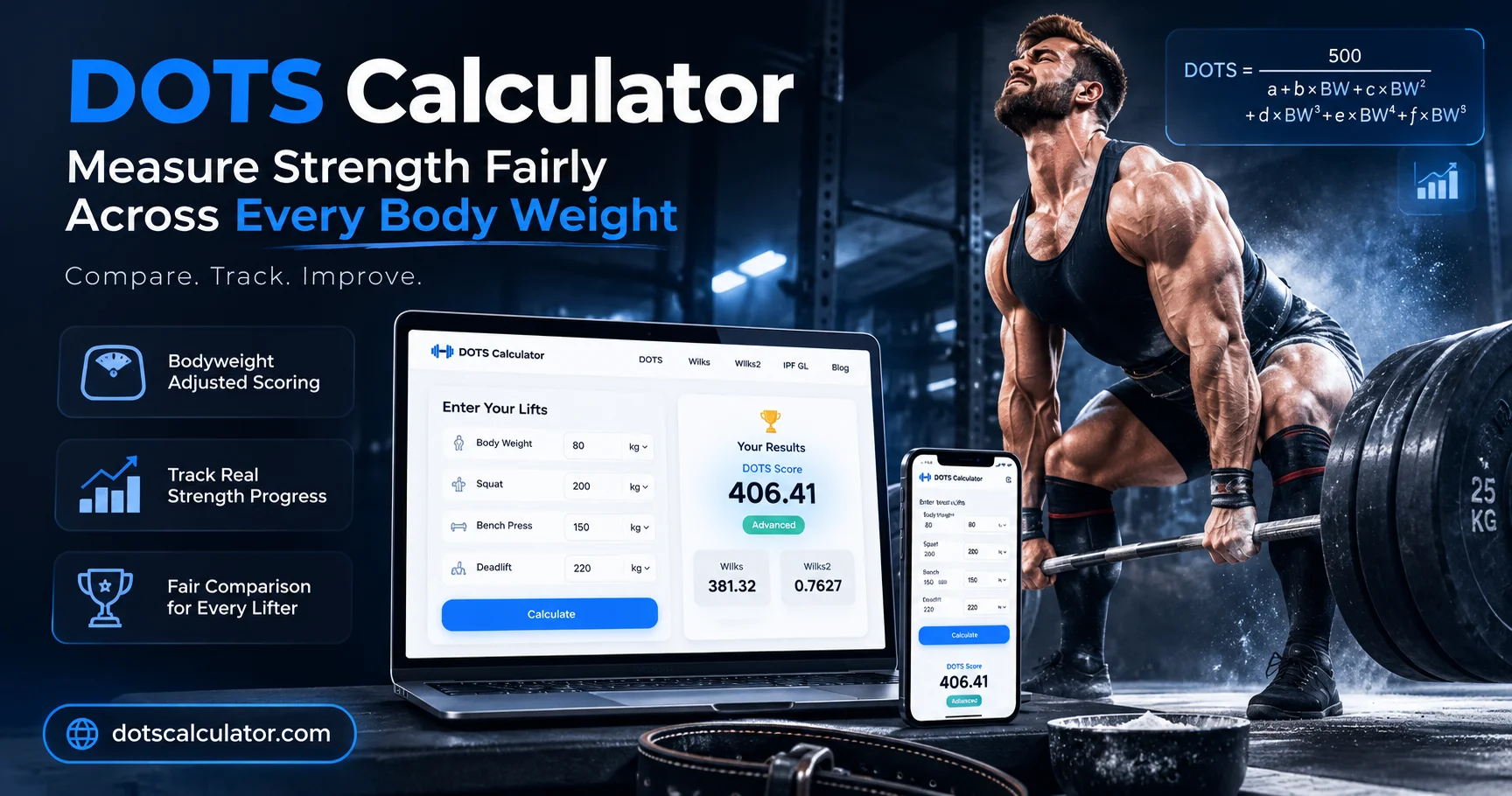
"How much do you lift?" It's the question every lifter gets asked, and total weight is the easy answer. But it's not the whole answer. Body weight changes everything about how impressive a number actually is.
That's why coaches and competitive powerlifters look past the total and check relative strength instead. It's a fairer way to stack athletes up against each other.
What Relative Strength Actually Means
Relative strength is your strength measured against your body weight, not just the number on the bar. It's how a 70kg lifter can out-perform a 100kg lifter even with a smaller total.
Take two lifters:
Lifter A: 70 kg bodyweight, 520 kg total. Lifter B: 100 kg bodyweight, 560 kg total.
On paper, Lifter B wins. Once you factor in bodyweight, Lifter A is arguably pulling off the better performance. That gap is the whole reason relative strength matters.
Where Total Weight Falls Short
Total weight isn't useless — it's just incomplete.
Bigger lifters carry more muscle mass and more leverage for absolute numbers. That's biology, not a knock on smaller lifters. But it means a straight comparison of totals rewards size more than skill or work ethic.
Relative strength fixes that gap.
What the DOTS Formula Does
DOTS is the go-to formula for comparing powerlifters across weight classes.
Instead of just adding up your squat, bench, and deadlift, DOTS runs your total through a bodyweight-based coefficient and spits out a single score you can compare against anyone, in any weight class.
Federations, coaches, and lifters use it because it actually reflects performance instead of just size.
Why Coaches Track DOTS Instead of Totals
A rising DOTS score usually means you're getting genuinely stronger — even if your bodyweight is moving up or down at the same time.
Tracking it helps you:
- See real progress over months, not just heavier numbers on the bar
- Compare yourself fairly against other lifters
- Judge strength across different weight classes
- Set goals that make sense for your body
- Keep tabs on strength through a cut or a bulk
It shifts the focus from "add weight to the bar" to "get more efficient with the strength you're building."
How to Actually Calculate It
The real DOTS formula involves coefficients most people aren't going to compute by hand.
That's what calculators are for. Plug in:
- Bodyweight
- Squat
- Bench press
- Deadlift
and you get your score instantly. The DOTS Calculator does this along with Wilks and Wilks2, so you can check your number against a few different standards in one place.
Not Just for Competitive Lifters
DOTS gets associated with competition, but it's just as useful if you never plan to step on a platform.
If your goal is getting stronger — not just heavier — relative strength tells you more than your total ever will. It's useful for:
- Powerlifters
- Strength athletes
- Personal trainers
- Coaches
- Regular gym-goers
- Anyone tracking progress from scratch
Competing or not, it gives you a real read on how your strength is developing.
A Couple of Things People Get Wrong
The biggest one: assuming the heaviest total means the strongest lifter. Bodyweight has always been part of that equation.
The other: thinking DOTS is only for elite lifters. It's just as useful for a beginner, since it gives you a consistent number to track no matter what your bodyweight is doing.
Watch it over time and you'll see how your strength is actually trending, separate from whatever the scale says.
Bottom Line
Total weight still matters. It just doesn't tell the whole story. Relative strength lets you compare lifters of any size fairly, and it shows what's really happening with your training.
DOTS has become the standard for measuring that. Getting ready for your first meet or just tracking gym progress on your own, your DOTS score is worth knowing.
Run your numbers through the https://dotscalculator.com and see where you actually stand.